
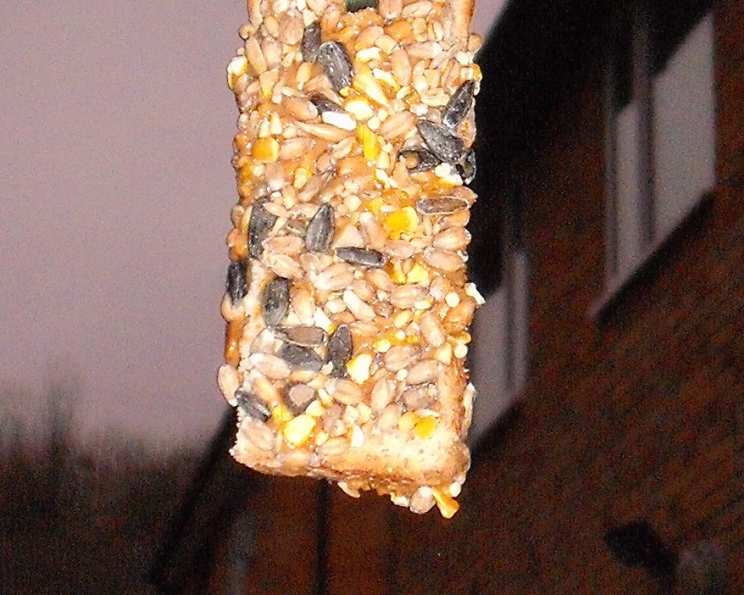
Treat the Birdies! Bird Feeder – Kids Can Make
I remember crafting these simple bird feeders with my own children on snowy afternoons. The joy on their faces as they watched the first brave little chickadee land on their creations was priceless. There’s something so rewarding about connecting with nature, especially when you can share that connection with the next generation. It’s more than just feeding birds; it’s about fostering a sense of empathy and responsibility for the world around us.
Recipe Overview:
- Prep Time: 5 minutes
- Yields: 3 bird feeders
- Serves: 3
Ingredients:
- 1 slice of bread
- ¼ – ½ cup natural-style peanut butter
- ½ – ¾ cup bird seed
Equipment Needed:
- Knife or spreader
- Small skewer or toothpick
- String or twine
Instructions:
- Take your slice of bread. If the bread is fresh, lightly toast it so it dries out. Alternatively, use stale or day-old bread. This will make the feeder more durable.
- Cut the slice of bread into 3 equal-sized pieces. Squares or rectangles work well for easy handling.
- Spread each side of each piece of bread generously with the natural-style peanut butter. Make sure to cover the entire surface, as the peanut butter acts as the “glue” for the bird seed.
- Drench each peanut butter-covered bread piece in the bird seed, ensuring that seeds cover all sides.
- Press the bird seed firmly onto the peanut butter-covered bread. This helps the seeds adhere better and prevents them from falling off easily.
- Poke a small hole through one end of each feeder using a small skewer or toothpick. Make sure the hole is large enough to thread your string or twine through.
- Hang the bird feeders with string or twine in a sheltered place, away from predators such as cats. Choose a spot that is easily visible from a window so that you and your children can enjoy watching the birds.
Expert Tips & Tricks:
- Use natural-style peanut butter: Avoid peanut butters with added sugars, salts, or hydrogenated oils, as these are not healthy for birds. Look for peanut butter that lists only peanuts and perhaps salt as ingredients.
- Toasting the bread: Toasting the bread lightly (not to the point of browning) will help it hold up better in damp weather. However, if you live in a very dry climate, this step may not be necessary.
- Bird seed variety: Use a high-quality bird seed mix that is appropriate for the birds in your area. Black oil sunflower seeds are a great option, as they are nutritious and attractive to many different species.
- Seed pressing: After pressing the seeds onto the bread, you can gently roll the feeder between your hands to further embed the seeds.
- Predator protection: When hanging the feeders, choose a location that is not easily accessible to cats or other predators. Hang them from a branch that is too thin for a cat to climb or use a baffle to deter climbing.
- Avoid large pieces of bread: Cutting the bread into smaller pieces will allow more birds to feed simultaneously.
- No bread?: A thick apple or orange slice can replace the bread.
Serving & Storage Suggestions:
These bird feeders are best served immediately. Because they are made with fresh ingredients, they are not suitable for long-term storage. If you have any leftover feeders that you don’t hang up right away, store them in an airtight container in the refrigerator for up to 24 hours. However, the bread may become soggy. It’s best to make only as many feeders as you plan to use within a day or two. Discard any uneaten feeders that show signs of mold or spoilage.
Nutritional Information:
| Nutrient | Amount per Serving (Estimate) |
|---|---|
| Calories | 200-250 kcal |
| Total Fat | 12-15g |
| Saturated Fat | 3-4g |
| Cholesterol | 0mg |
| Sodium | 50-70mg |
| Total Carbohydrate | 10-15g |
| Dietary Fiber | 2-3g |
| Sugars | 2-3g |
| Protein | 6-8g |
Please note that these values are estimates and may vary depending on the specific ingredients used.
Variations & Substitutions:
- Nut-free option: If you have nut allergies, you can substitute sunflower seed butter or tahini (sesame seed paste) for the peanut butter. Be sure to check the ingredients of any substitute to ensure it is free from added sugars or salts.
- Seed butter alternatives: Any type of seed butter, like pumpkin seed butter, could be a great substitute for peanut butter.
- Fruit and seed feeders: You can also create feeders using apple slices instead of bread. Simply core an apple slice, spread it with peanut butter (or a nut-free alternative), and press the bird seed onto the surface.
- Winter boost: In the winter, you can add a small amount of suet to the bird seed mixture for extra energy.
- Homemade bird seed mix: Create your own bird seed mix, tailored to your local birds, using seeds like sunflower, millet, nyjer, and cracked corn.
FAQs (Frequently Asked Questions):
Q: How long will these bird feeders last?
A: These bird feeders are best used within a day or two, as the bread can become soggy or moldy, especially in humid conditions.
Q: What types of birds will these feeders attract?
A: These feeders will attract a variety of birds that enjoy seeds and nuts, such as chickadees, finches, sparrows, and nuthatches.
Q: Can I use regular peanut butter instead of natural peanut butter?
A: It’s best to use natural peanut butter without added sugars, salts, or hydrogenated oils, as these ingredients are not healthy for birds.
Q: Where is the best place to hang these bird feeders?
A: Hang the feeders in a sheltered place away from predators, such as cats, and in a location where you can easily observe the birds.
Q: How do I know if the birds are actually eating from the feeders?
A: You will likely see birds landing on the feeders and pecking at the seeds. You may also notice that the feeders become lighter over time as the birds consume the seeds.
Final Thoughts:
Making these simple bird feeders is a fantastic way to connect with nature, teach children about wildlife, and provide a valuable food source for birds, especially during the colder months. I hope you and your family enjoy creating these feeders and watching the birds flock to your garden. Feel free to experiment with different ingredients and share your experiences! Perhaps you will find the perfect seed combination that will have your local birds chirping for joy.