
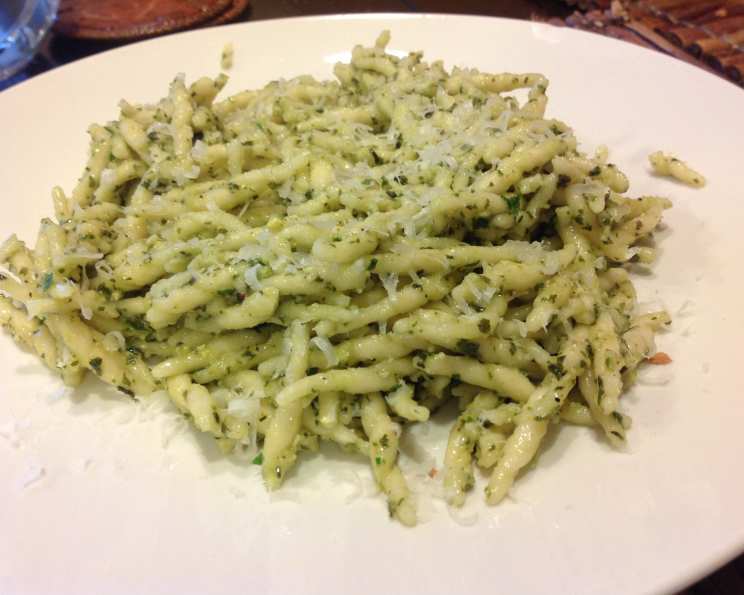
Trofie Al Pesto: A Taste of Liguria
The scent of basil always transports me back to a tiny trattoria I stumbled upon in Cinque Terre. Sunlight streamed through the window, illuminating dust motes dancing above checkered tablecloths, as the Nonna bustled about, her hands stained green from pesto-making. The dish she placed before me – a simple yet exquisite bowl of trofie al pesto – was a revelation. Each bite was an explosion of fresh, vibrant flavors, a true testament to the beauty of Italian cuisine. This recipe aims to capture that essence, bringing a little piece of Liguria to your own table.
Recipe Overview
- Prep Time: 15 minutes
- Cook Time: 10 minutes
- Total Time: 25 minutes
- Servings: 5
- Dietary Type: Vegetarian
Ingredients
- 500 g trofie pasta (small twisty pasta)
- 5 tablespoons olive oil
- 1 garlic clove (crushed)
- 1 cup freshly grated basil
- 50 g pecorino romano cheese (grated)
- 1 tablespoon chopped parsley
- 2 tablespoons pine nuts
- Salt and pepper to taste
Equipment Needed
- Large pot
- Another pot or large saucepan
- Colander
Instructions
-
Begin by cooking the trofie pasta in a large pot filled with plenty of boiling salted water. Follow the package directions for al dente cooking, usually around 8-10 minutes. Keep about a cup of the pasta water aside before draining, as you will need this later.
-
While the pasta is cooking, prepare the pesto sauce. In a separate pot or large saucepan, heat the olive oil over low heat. Be careful not to overheat the oil; you want it to gently warm, not sizzle.
-
Add the crushed garlic clove to the warm oil. Let it cook for about a minute, just until fragrant. Be cautious not to burn the garlic, as this will impart a bitter taste to the sauce.
-
Add the freshly grated basil, grated pecorino romano cheese, chopped parsley, and pine nuts to the pot. Season generously with salt and pepper.
-
Allow the sauce to simmer gently for about 8 minutes, stirring occasionally. This allows the flavors to meld together beautifully.
-
If the sauce appears too thick, gradually add some of the reserved pasta water, one tablespoon at a time, until you reach your desired consistency. The pasta water contains starch which helps the sauce to emulsify and cling to the pasta.
-
Once the trofie pasta is cooked al dente, drain it thoroughly in a colander.
-
Return the drained pasta to the pot.
-
Pour the prepared pesto sauce over the pasta and mix thoroughly to coat evenly. Ensure every strand of trofie is lovingly covered in the fragrant green sauce.
-
Serve immediately, garnishing with additional grated pecorino romano cheese, if desired.
Expert Tips & Tricks
- Pesto Perfection: For a truly vibrant pesto, use the freshest basil you can find. Ideally, pick it right before making the sauce.
- Cheese Choice: While pecorino romano is traditional, you can substitute with Parmigiano-Reggiano for a slightly milder flavor.
- Toast the Pine Nuts: Lightly toasting the pine nuts in a dry pan before adding them to the sauce enhances their nutty flavor. Watch them closely, as they burn easily.
- Emulsify the Sauce: The key to a creamy pesto is to emulsify the sauce with the pasta water. This creates a beautiful, velvety texture that clings to the pasta perfectly. Don’t be afraid to add more pasta water if needed.
- Garlic Intensity: Adjust the amount of garlic to your preference. One clove provides a subtle garlicky note, but you can add more for a bolder flavor.
- Vegan Option: Substitute the pecorino romano cheese with nutritional yeast for a vegan pesto.
Serving & Storage Suggestions
Serve Trofie al Pesto immediately after preparation for the best flavor and texture. A simple green salad and a glass of crisp white wine make a perfect accompaniment.
Leftovers can be stored in an airtight container in the refrigerator for up to 2 days. The pesto sauce may darken slightly due to oxidation, but the flavor will still be delicious. Reheat gently in a pan over low heat, adding a splash of water or olive oil to prevent it from drying out. Avoid microwaving, as this can make the pasta rubbery.
Freezing is not recommended, as the texture of the pesto and pasta can change upon thawing.
Nutritional Information
| Nutrient | Amount per Serving | % Daily Value |
|---|---|---|
| Calories | 555 kcal | N/A |
| Calories from Fat | 180 g | 33% |
| Total Fat | 20.1 g | 30% |
| Saturated Fat | 4 g | 20% |
| Cholesterol | 10.4 mg | 3% |
| Sodium | 127.4 mg | 5% |
| Total Carbohydrate | 76 g | 25% |
| Dietary Fiber | 3.5 g | 14% |
| Sugars | 2.9 g | N/A |
| Protein | 17 g | 34% |
Variations & Substitutions
- Gluten-Free: Use gluten-free trofie pasta for a gluten-free version of this dish.
- Pesto Rosso: For a different flavor profile, try using Pesto Rosso, a sun-dried tomato pesto.
- Vegetables: Add some steamed green beans or potatoes to the pasta for a more substantial meal. This is a classic Ligurian addition.
- Lemon Zest: A little lemon zest added to the pesto can brighten the flavors and add a citrusy note.
- Spicy Kick: Add a pinch of red pepper flakes to the pesto for a subtle spicy kick.
FAQs (Frequently Asked Questions)
Q: Can I make the pesto ahead of time?
A: Yes, you can make the pesto a day or two in advance. Store it in an airtight container in the refrigerator, with a thin layer of olive oil on top to prevent oxidation.
Q: What if I don’t have trofie pasta?
A: If you can’t find trofie pasta, you can substitute it with another short pasta shape, such as fusilli or penne.
Q: How do I prevent the pesto from turning brown?
A: Exposure to air causes pesto to oxidize and turn brown. To prevent this, store it in an airtight container with a thin layer of olive oil on top.
Q: Can I use a food processor to make the pesto?
A: While a food processor can be used, traditional pesto is made with a mortar and pestle for a coarser texture and more intense flavor.
Q: Is pecorino romano cheese necessary?
A: While pecorino romano is traditional, you can substitute it with Parmigiano-Reggiano or another hard Italian cheese if you prefer.
Final Thoughts
Trofie al Pesto is more than just a pasta dish; it’s a celebration of fresh, vibrant flavors and the simple joys of Italian cooking. I urge you to try this recipe and experience the taste of Liguria in your own kitchen. Feel free to experiment with variations and substitutions to make it your own. And don’t forget to share your creations and feedback – I’d love to hear how it turns out! Serve with a chilled glass of Vermentino wine for the perfect taste of the Italian Riviera. Buon appetito!