
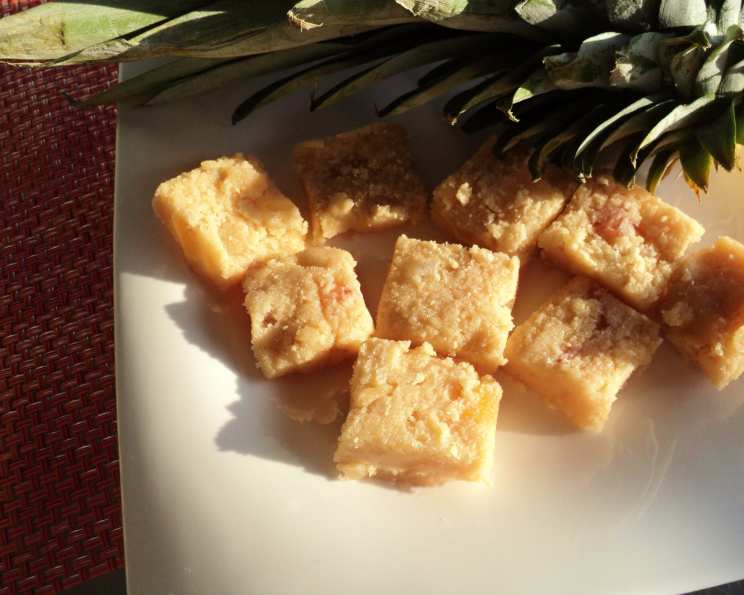
Tropical Fudge: A Taste of Sunshine in Every Bite
I’ll never forget the first time I tasted something similar to this Tropical Fudge. I was a wide-eyed child on a family vacation in Hawaii, and a local vendor offered me a small, melt-in-your-mouth square of a creamy, pineapple-studded confection. The burst of tropical flavor against the rich, almost caramel-like base was pure magic. I immediately associated that taste with sunshine, relaxation, and the joy of being on vacation. Years later, I experimented with replicating that flavor, and this recipe is the result – a little piece of tropical paradise you can make in your own kitchen, no plane ticket required! It may not have chocolate, but trust me, you won’t miss it.
Recipe Overview
- Prep Time: 15 minutes
- Cook Time: 25 minutes
- Total Time: 40 minutes (plus cooling time)
- Servings: Approximately 36 squares
- Yield: 1 (8-inch) pan
- Dietary Type: Not specified. Contains dairy and sugar.
Ingredients
- 1 cup evaporated milk
- 3 cups granulated sugar
- 1/4 cup unsweetened pineapple juice
- 2 tablespoons butter
- 1/2 cup candied pineapple, diced
- 2 teaspoons lemon juice
Equipment Needed
- 8-inch square cake pan
- Saucepan
- Candy thermometer
- Wooden spoon or heat-resistant spatula
- Knife
Instructions
-
Begin by preparing your pan. Grease an 8-inch square cake pan thoroughly. This prevents the fudge from sticking and ensures easy removal. You can use butter, shortening, or a non-stick cooking spray. I prefer lining the pan with parchment paper, leaving an overhang on two sides to use as handles for easy removal later.
-
In a medium saucepan, combine the evaporated milk, granulated sugar, and pineapple juice. Stir to ensure the sugar is somewhat dissolved before heating. This helps prevent scorching.
-
Place the saucepan over medium heat. Heat the mixture to 238°F (soft ball stage), stirring constantly. This is crucial! If you stop stirring, the sugar can burn and the fudge will be grainy. Use a candy thermometer to monitor the temperature accurately. The soft ball stage is reached when a small amount of the mixture dropped into cold water forms a soft, pliable ball.
-
Remove the saucepan from the heat immediately once the mixture reaches 238°F. This prevents overcooking, which can lead to a dry, crumbly fudge.
-
Stir in the butter until it is completely melted and incorporated into the mixture. The butter adds richness and helps create a smooth, creamy texture.
-
Let the mixture stand – without stirring – until it is completely cool. This is a critical step that many fudge recipes call for. Do not be tempted to stir it! This cooling period allows the sugar crystals to begin forming, which is essential for the proper texture of the fudge. Depending on your kitchen temperature, this can take several hours. Speed up the process by placing the pan in a bowl of ice water, being careful not to let any water splash into the fudge mixture.
-
Once the mixture is completely cool to the touch, add the diced candied pineapple and lemon juice.
-
Now comes the fun part: Beat the mixture until it crystallizes. This can be done with a sturdy wooden spoon or a stand mixer fitted with the paddle attachment. The mixture will gradually become thicker and lose its glossy sheen as it crystallizes. It will take on a matte appearance and become more difficult to stir. Be patient, this process can take several minutes.
-
Pour the crystallized fudge into the prepared pan and spread it evenly.
-
Before the fudge completely hardens, score the top with a knife in 1-inch squares. This makes it easier to cut the fudge into individual pieces later.
-
Let the fudge sit until it is completely hardened. This may take several hours, or even overnight, depending on the humidity in your kitchen. The fudge should be firm to the touch before cutting.
Expert Tips & Tricks
- Temperature is Key: The most crucial part of making fudge is reaching the correct temperature and maintaining it throughout the cooking process. Invest in a good quality candy thermometer for accurate readings.
- Don’t Stir When Cooling: Seriously, don’t do it! Stirring during the cooling process can disrupt the formation of sugar crystals and result in a grainy fudge.
- Beat Vigorously: When beating the cooled mixture, don’t be afraid to put some muscle into it. The more you beat it, the smoother and creamier the fudge will be.
- Candied Pineapple Hack: If you can’t find candied pineapple, you can make your own by simmering diced fresh pineapple in a sugar syrup until it becomes translucent.
- Preventing Graininess: A small pinch of cream of tartar added during the cooking process can help prevent the fudge from becoming grainy.
Serving & Storage Suggestions
To serve, carefully remove the hardened fudge from the pan using the parchment paper overhang, if you used it. Cut along the scored lines to create individual squares. This Tropical Fudge is best enjoyed at room temperature, where its creamy texture and tropical flavors can fully shine.
Store the fudge in an airtight container at room temperature for up to a week. For longer storage, you can refrigerate it for up to two weeks, but be aware that refrigeration can slightly dry out the fudge. You can also freeze the fudge for up to three months. Wrap it tightly in plastic wrap and then place it in a freezer-safe bag or container. Thaw overnight in the refrigerator before serving.
Nutritional Information
Note: Nutritional information is an estimate and may vary depending on specific ingredients and portion sizes.
| Nutrient | Amount per Serving | % Daily Value |
|---|---|---|
| Calories | 220 kcal | 11% |
| Total Fat | 5g | 8% |
| Saturated Fat | 3g | 15% |
| Cholesterol | 10mg | 3% |
| Sodium | 30mg | 1% |
| Total Carbohydrate | 45g | 15% |
| Dietary Fiber | 0g | 0% |
| Sugars | 40g | N/A |
| Protein | 1g | 2% |
Variations & Substitutions
- Other Tropical Fruits: Feel free to experiment with other candied tropical fruits, such as mango, papaya, or guava.
- Nuts: Add chopped macadamia nuts or toasted coconut flakes for extra flavor and texture.
- Citrus Zest: Incorporate the zest of a lemon, lime, or orange for a brighter, more intense citrus flavor.
- Spices: A pinch of ground ginger or nutmeg can add a warm, comforting touch.
FAQs (Frequently Asked Questions)
Q: Why is it important to stir the mixture constantly while cooking?
A: Constant stirring prevents the sugar from scorching and burning, which can result in a grainy texture. It also ensures even heat distribution.
Q: What happens if I don’t let the mixture cool completely before beating it?
A: If you beat the mixture while it’s still warm, the sugar crystals won’t form properly, resulting in a runny fudge.
Q: Can I use fresh pineapple instead of candied pineapple?
A: While you can, candied pineapple works better here because it contains less water. Using fresh pineapple might make your fudge too soft. If you do use fresh, make sure to cook it down first to remove excess moisture.
Q: My fudge is grainy. What did I do wrong?
A: Grainy fudge is often caused by not stirring constantly during cooking, or by not allowing the mixture to cool completely before beating. Overcooking can also lead to graininess.
Q: How do I know when the fudge is crystallized enough?
A: The mixture will become noticeably thicker and lose its glossy sheen. It will take on a matte appearance and become more difficult to stir. This indicates that the sugar crystals have formed.
Final Thoughts
This Tropical Fudge is a delightful treat that’s perfect for satisfying your sweet tooth or sharing with friends and family. Its unique combination of creamy richness and tropical flavors is sure to transport you to a sun-drenched paradise. Don’t be intimidated by the candy-making process; with a little patience and attention to detail, you can easily create this delicious fudge in your own kitchen. I encourage you to try this recipe and let me know what you think! Consider pairing it with a refreshing glass of iced tea or a scoop of vanilla ice cream for an extra-special treat.