
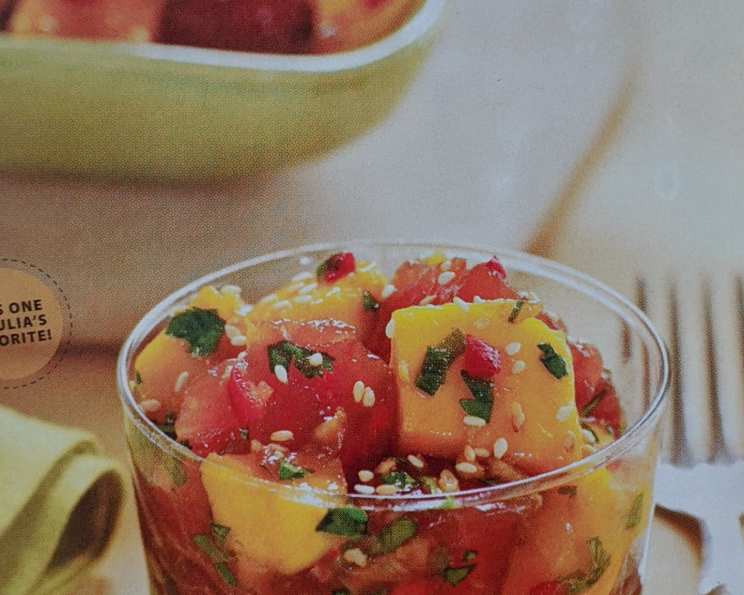
Tuna and Mango Sashimi Salad: A Tropical Culinary Escape
The first time I tasted tuna and mango together, it was on a tiny, sun-drenched beach in Maui. A local fisherman, noticing my wide-eyed wonder at the turquoise water, offered me a sliver of freshly caught ahi tuna, topped with a chunk of sweet, juicy mango he’d pulled from a nearby tree. The combination was pure magic – the richness of the tuna balanced perfectly by the tropical sweetness of the mango. It was a moment etched in my memory, and this Tuna and Mango Sashimi Salad is my attempt to recapture that taste of paradise.
Recipe Overview
- Prep Time: 16 minutes
- Servings: 4
- Dietary Type: Pescatarian
Ingredients
- 1 lb sushi-grade tuna, diced
- 2 tablespoons chopped green onions
- 2 tablespoons fresh cilantro, chopped
- 3-5 tablespoons soy sauce, to taste
- 2 tablespoons toasted sesame oil
- 1 teaspoon minced garlic
- 2 tablespoons finely chopped fresh ginger
- 1-2 large ripe mango, diced
- 1 tablespoon sesame seeds
Equipment Needed
- Medium bowl
- Small saucepan
- Whisk or fork
- Cutting board
- Sharp knife
Instructions
- In a medium bowl, gently combine the diced sushi-grade tuna, chopped green onions, and chopped fresh cilantro. Be careful not to overmix, as you want the tuna to retain its shape.
- In a small saucepan, heat the toasted sesame oil over medium heat for about 1 minute. You’ll know it’s ready when the oil shimmers and has a fragrant aroma. Be careful not to overheat the oil, as it can easily burn.
- Remove the saucepan from the heat and immediately stir in the minced garlic and finely chopped fresh ginger. The residual heat from the oil will gently cook the garlic and ginger, infusing the oil with their flavors.
- Pour the warm garlic-ginger infused oil over the tuna mixture in the bowl. Gently toss to coat all the ingredients evenly. Don’t overmix; a gentle hand ensures the tuna remains in appealing, bite-sized pieces.
- Add soy sauce to taste, starting with 3 tablespoons and adding more as needed. Remember that soy sauce can be salty, so taste as you go and adjust accordingly. The goal is to enhance the flavors of the tuna and mango, not to overpower them.
- Cover the bowl tightly with plastic wrap or transfer the mixture to an airtight container. Chill in the refrigerator for at least 2 hours to allow the flavors to meld and the tuna to firm up slightly.
- Just before serving, gently stir the diced ripe mango into the chilled tuna mixture. Be delicate when mixing to avoid bruising the mango.
- Toss the salad with sesame seeds to add a nutty flavor and visual appeal. Serve immediately.
Expert Tips & Tricks
- Source the freshest tuna possible: Since this is a sashimi-style salad, the quality of the tuna is paramount. Look for sushi-grade tuna from a reputable fishmonger and ask them when it was caught.
- Don’t skip the chilling time: Allowing the tuna to chill for at least 2 hours is crucial for developing the flavors and improving the texture. The tuna will firm up slightly, making it easier to handle and preventing it from becoming mushy.
- Toast your own sesame seeds: While you can buy pre-toasted sesame seeds, toasting them yourself will result in a more intense and flavorful experience. Simply spread the sesame seeds in a dry skillet over medium heat and toast for a few minutes, shaking the pan occasionally, until they are golden brown and fragrant.
- Mango ripeness is key: Choose mangoes that are ripe but still firm to the touch. Overripe mangoes will be too soft and mushy, while unripe mangoes will lack sweetness and flavor.
- Spice it up: For an extra kick, add a pinch of red pepper flakes to the oil mixture or a drizzle of sriracha to the finished salad.
Serving & Storage Suggestions
Serve the Tuna and Mango Sashimi Salad immediately after mixing in the mango and sesame seeds. Arrange it artfully on a plate or in individual serving bowls. You can garnish with extra cilantro sprigs or a few slices of lime for a pop of color.
This salad is best enjoyed fresh, but leftovers can be stored in an airtight container in the refrigerator for up to 24 hours. Be aware that the texture of the tuna and mango may change slightly over time. It is not recommended to freeze this salad.
Nutritional Information
| Nutrient | Amount per Serving | % Daily Value |
|---|---|---|
| Calories | 309.3 kcal | N/A |
| Calories from Fat | N/A | 40% |
| Total Fat | 13.9 g | 21% |
| Saturated Fat | 2.6 g | 13% |
| Cholesterol | 43.1 mg | 14% |
| Sodium | 800.8 mg | 33% |
| Total Carbohydrate | 17.4 g | 5% |
| Dietary Fiber | 2.1 g | 8% |
| Sugars | 14.1 g | 56% |
| Protein | 29.2 g | 58% |
Note: Nutritional information is an estimate and may vary based on specific ingredients and portion sizes.
Variations & Substitutions
- Spicy Tuna Salad: Add a tablespoon of sriracha or a pinch of red pepper flakes to the tuna mixture for a spicy kick.
- Avocado Addition: Incorporate diced avocado for extra creaminess and healthy fats.
- Citrus Twist: Add a tablespoon of lime or lemon juice to the soy sauce mixture for a brighter flavor.
- Cucumber Crunch: Add diced cucumber for a refreshing crunch and cooling element.
- Serving Suggestion: For a party appetizer, consider serving in wonton cups.
- Protein Variation: Try using salmon instead of tuna.
FAQs (Frequently Asked Questions)
Q: Can I use frozen tuna for this recipe?
A: While it’s best to use fresh sushi-grade tuna, you can use frozen tuna if it’s been properly thawed. Ensure the tuna is specifically labeled as sushi-grade, meaning it’s been flash-frozen to kill parasites. Thaw it in the refrigerator overnight.
Q: How can I tell if my mango is ripe?
A: A ripe mango will give slightly to gentle pressure. It should also have a fragrant aroma near the stem. Avoid mangoes that are rock hard or have bruises.
Q: Can I make this salad ahead of time?
A: You can prepare the tuna mixture ahead of time and store it in the refrigerator for up to 24 hours. However, it’s best to add the mango just before serving to prevent it from becoming mushy.
Q: What can I serve with this salad?
A: This salad is delicious on its own as a light lunch or appetizer. You can also serve it with rice crackers, seaweed salad, or as a topping for grilled avocado halves.
Q: Is sesame oil necessary?
A: The sesame oil adds a distinct nutty flavor that complements the other ingredients. However, if you don’t have sesame oil on hand, you can substitute it with another neutral oil, such as canola or vegetable oil, although the flavor profile will be slightly different.
Final Thoughts
This Tuna and Mango Sashimi Salad is more than just a recipe; it’s an invitation to transport yourself to a tropical paradise with every bite. The vibrant flavors and textures combine to create a truly unforgettable culinary experience. I encourage you to give this recipe a try and share your feedback! Perhaps pair it with a crisp Sauvignon Blanc or a refreshing cucumber-mint cooler for the perfect complement to this light and flavorful dish. Enjoy!