
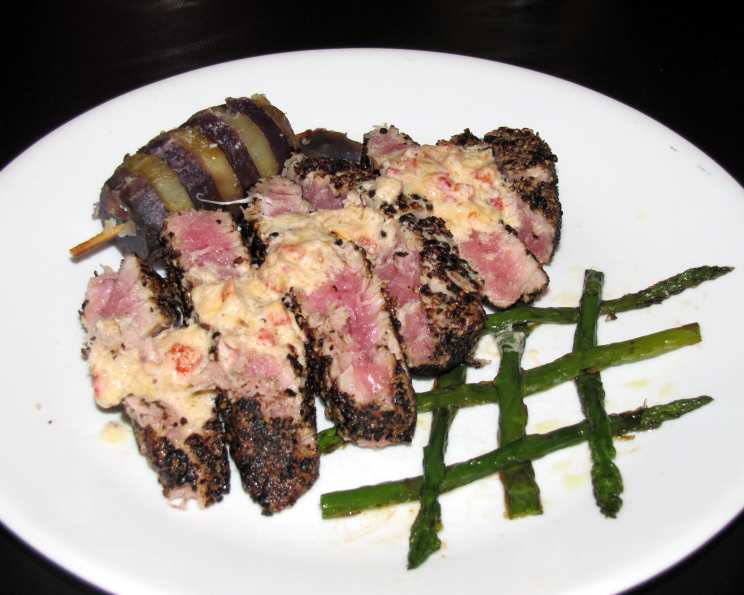
Tuna Au Poivre: A Peppery Culinary Journey
The first time I tasted Tuna Au Poivre, I was a wide-eyed culinary student, intimidated by the seemingly complex techniques of French cuisine. It was a revelation – the simplicity of perfectly seared tuna, elevated by the pungent bite of freshly cracked black pepper and a silky wine reduction. That initial bite, a symphony of textures and flavors, sparked my lifelong love affair with this dish, a testament to how simple ingredients, treated with respect, can create extraordinary results.
Recipe Overview: Tuna Au Poivre
- Prep Time: 5 minutes
- Cook Time: 20 minutes
- Total Time: 25 minutes
- Servings: 2
- Dietary Type: Pescatarian
Ingredients
- 2 tablespoons fresh coarse ground black pepper
- 1 tablespoon extra virgin olive oil
- 2 (8-10 ounce) tuna steaks (at least 1-inch thick)
- Salt
- 2 tablespoons unsalted butter or 2 tablespoons additional oil
- 1/4 cup minced shallot
- 3/4 cup dry red wine
Equipment Needed
- Flat plate
- Large skillet (preferably non-stick)
- Ovenproof plate
- Oven
Instructions
-
Begin by preheating your oven to 500 degrees Fahrenheit (260 degrees Celsius). This high heat will ensure a quick and even sear when we finish the tuna in the oven.
-
While the oven preheats, prepare your pepper crust. Spread the 2 tablespoons of fresh coarse ground black pepper evenly on a flat plate. Make sure the pepper is truly coarsely ground; finely ground pepper will burn easily and won’t provide the same textural contrast.
-
Place a large skillet, ideally non-stick, over medium-high heat. Add the 1 tablespoon of extra virgin olive oil to the hot pan. The oil should shimmer but not smoke.
-
Now, it’s time to coat the tuna steaks in pepper. Gently dredge both sides of each tuna steak in the prepared ground black pepper, pressing lightly to ensure good adherence. The pepper should form a thin, even coat on both sides. If needed, use a bit more pepper to achieve adequate coverage.
-
As soon as the tuna steaks are dredged, carefully place them in the hot skillet. Be cautious as the oil may splatter. Increase the heat to high.
-
Sear the tuna steaks for approximately 2 minutes on the first side, allowing a beautiful crust to form.
-
Flip the tuna steaks and immediately add salt to taste. Cook for just 1 minute on the second side. The timing is crucial here; we are aiming for a rare to medium-rare center.
-
Reduce the heat to low and carefully transfer the tuna steaks from the skillet to an ovenproof plate. Place the plate with the tuna steaks in the preheated oven.
-
While the tuna finishes cooking in the oven, return the skillet to the stovetop and add half of the unsalted butter (1 tablespoon) to the pan. If you are using additional oil instead of butter, add 1 tablespoon of your chosen oil at this stage.
-
Add the 1/4 cup of minced shallot to the melted butter (or oil). Lower the heat to medium and cook, stirring frequently, until the shallots soften and become translucent, about 2 minutes. Be careful not to brown them.
-
Raise the heat to medium-high and pour in the 3/4 cup of dry red wine. Let the wine bubble vigorously for a minute or so, allowing the alcohol to evaporate and the sauce to begin to reduce.
-
Add the remaining butter (1 tablespoon) to the pan. If using only oil, you’ve already added the full amount.
-
Continue to cook, stirring occasionally, until the butter melts and the sauce thickens slightly. This should take another minute or two. The sauce should coat the back of a spoon.
-
By this point, the tuna should be cooked to medium-rare. To check for doneness, carefully remove one of the tuna steaks from the oven and cut into the center. If it’s cooked to your liking, remove it. If you prefer it more well-done, return it to the oven for another minute or two, checking frequently.
-
Once the tuna is cooked to your desired level of doneness, remove it from the oven. Cut each tuna steak in half, and place each serving on a plate.
-
Spoon a generous amount of the prepared red wine reduction sauce over each serving of tuna. Serve immediately and enjoy.
Expert Tips & Tricks
- Pepper Selection is Key: Use freshly cracked, coarse ground black pepper for the best flavor and texture. Pre-ground pepper lacks the pungent aroma and bite. Experiment with different varieties of black pepper to find your favorite flavor profile.
- Don’t Overcook: Tuna is best served rare to medium-rare. Overcooked tuna becomes dry and loses its delicate flavor. The high heat sear followed by a quick oven finish is the best way to achieve this.
- Shallot Substitute: If shallots aren’t available, finely minced red onion can be used as a substitute, but the flavor will be slightly stronger.
- Wine Choice: A dry red wine like Pinot Noir or Cabernet Sauvignon works well. Avoid sweet wines, as they will alter the flavor of the sauce.
- Pan Sauce Perfection: Don’t rush the pan sauce. Allow the wine to reduce properly for the best flavor concentration.
- Consider adding a splash of balsamic vinegar at the end of cooking to brighten the flavor.
- Finish with a drizzle of high quality olive oil or a pat of cold butter for added richness.
Serving & Storage Suggestions
Serve Tuna Au Poivre immediately after cooking for the best flavor and texture. Garnish with fresh parsley or a sprig of thyme for visual appeal. This dish pairs well with roasted vegetables, such as asparagus or broccoli, or a simple green salad. For a more substantial meal, serve alongside creamy mashed potatoes or polenta.
Leftovers can be stored in an airtight container in the refrigerator for up to 24 hours. However, keep in mind that the tuna will continue to cook slightly even after refrigeration. Reheating is not recommended, as it will dry out the tuna. If you must reheat it, do so gently in a skillet over low heat or in a microwave, being careful not to overcook it. It is best enjoyed cold in a salad or sandwich.
Nutritional Information
| Nutrient | Amount per Serving | % Daily Value |
|---|---|---|
| Calories | 297.4 kcal | N/A |
| Calories from Fat | 133 g | 45% |
| Total Fat | 14.8 g | 22% |
| Saturated Fat | 5.6 g | 27% |
| Cholesterol | 58.4 mg | 19% |
| Sodium | 48.7 mg | 2% |
| Total Carbohydrate | 5 g | 1% |
| Dietary Fiber | 0.9 g | 3% |
| Sugars | 0.3 g | 1% |
| Protein | 27.2 g | 54% |
Note: Nutritional information is an estimate and may vary based on specific ingredients and preparation methods.
Variations & Substitutions
- Spice It Up: Add a pinch of red pepper flakes to the pepper crust for an extra kick of heat.
- Herbaceous Twist: Incorporate fresh herbs like rosemary or thyme into the pepper crust for a more complex flavor profile.
- Citrus Infusion: Add a squeeze of lemon juice or a splash of orange juice to the pan sauce for a bright, citrusy note.
- Creamy Sauce: For a richer sauce, add a tablespoon of heavy cream or crème fraîche to the pan sauce at the end of cooking.
- Gluten-Free Option: Ensure that the red wine is gluten-free, as some wines may contain gluten-based fining agents.
FAQs (Frequently Asked Questions)
Q: Can I use frozen tuna for this recipe?
A: Yes, you can use frozen tuna, but make sure to thaw it completely before cooking. Pat it dry with paper towels to remove excess moisture for a better sear.
Q: How do I prevent the pepper from burning in the pan?
A: Use coarse ground pepper and avoid high heat for too long during the initial searing process. Moving the tuna steaks to the oven finishes the cooking gently without burning the pepper.
Q: What’s the best way to tell if the tuna is cooked to medium-rare?
A: The internal temperature should be around 125-130°F (52-54°C). Alternatively, you can gently press the center of the tuna steak; it should feel slightly firm on the outside but still soft in the middle.
Q: Can I make the red wine sauce ahead of time?
A: Yes, you can prepare the red wine sauce up to a few hours in advance. Reheat it gently over low heat before serving.
Q: What side dishes pair well with Tuna Au Poivre?
A: Roasted vegetables like asparagus, green beans, or Brussels sprouts are excellent choices. Creamy mashed potatoes or polenta also complement the dish nicely. A simple green salad with a vinaigrette provides a refreshing contrast.
Final Thoughts
Tuna Au Poivre is more than just a recipe; it’s an invitation to experience the beauty of simple elegance in cooking. With just a handful of ingredients and a few straightforward techniques, you can create a dish that is both sophisticated and satisfying. Don’t be intimidated by the French name – this recipe is accessible to cooks of all levels. I encourage you to try it, experiment with the variations, and share your creations with friends and family. Bon appétit!