
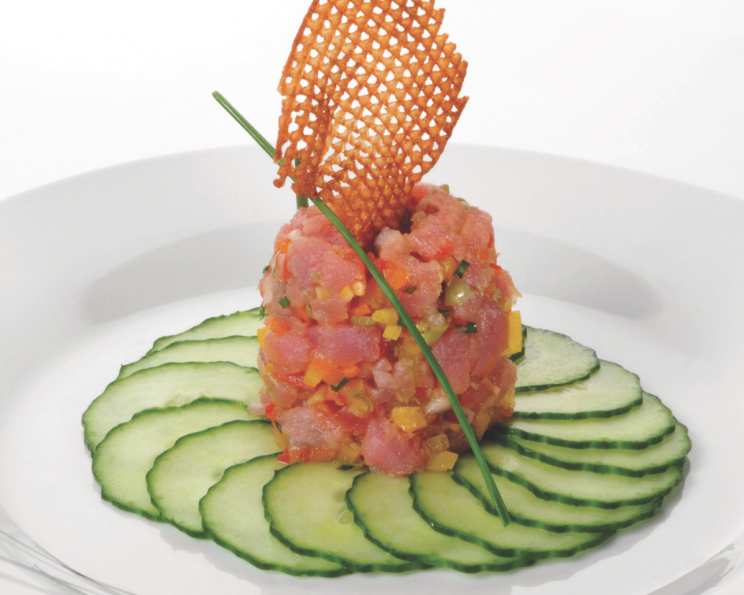
Tuna Tartare: A Symphony of Flavors
I remember the first time I had tuna tartare. It was in a tiny, unassuming restaurant tucked away on a side street in Marseilles. The briny air mingled with the scent of fresh herbs and the murmur of French conversation. The dish arrived – a vibrant mosaic of ruby-red tuna, studded with green capers and glistening with olive oil. One bite, and I was transported. The delicate sweetness of the tuna, the salty tang of the olives, the bright burst of lemon… it was an explosion of flavor that I’ve been chasing ever since. Now, I love recreating that experience in my own kitchen, and I’m excited to share this recipe with you.
Recipe Overview
- Prep Time: 20 minutes
- Cook Time: 0 minutes
- Total Time: 20 minutes
- Servings: 6
- Yield: 6 servings
- Dietary Type: Pescatarian, Gluten-Free (naturally)
Ingredients
- 4 tablespoons extra virgin olive oil
- 1 lb sushi grade tuna, cut into 1/2 inch dice
- 1 beefsteak tomato, peeled, seeded and diced
- 1 small shallot, minced
- 1⁄4 cup kalamata olive, pitted
- 2 tablespoons capers
- 4 large fresh basil leaves, torn into small pieces
- Grated zest of half a lemon
- 3 tablespoons fresh lemon juice
- 1 cucumber, sliced thin
- Salt and pepper to taste
Equipment Needed
- Large mixing bowl
- Sharp knife
- Cutting board
- Six chilled serving plates
Instructions
-
Begin by chilling six serving plates in your refrigerator. This will help to keep the tuna tartare refreshingly cold.
-
Arrange the thinly sliced cucumber in a circular pattern on each of the chilled plates. This forms the base for the tuna tartare. The cool, crisp cucumber provides a delightful textural contrast to the richness of the tuna.
-
In a large mixing bowl, gently combine the diced sushi grade tuna, diced beefsteak tomato, minced shallot, pitted kalamata olives, capers, torn fresh basil leaves, grated lemon zest, and fresh lemon juice.
-
Carefully mix all the ingredients together, ensuring not to overwork the tuna. Overmixing can make the tuna mushy.
-
Season the tuna mixture generously with salt and pepper to taste. Remember, salt enhances the flavors of all the ingredients, while pepper adds a subtle kick.
-
To serve, spoon the tuna mixture generously on top of the cucumber slices arranged on each chilled plate.
Expert Tips & Tricks
- Source the best tuna: The key to exceptional tuna tartare is using the freshest, highest-quality sushi grade tuna you can find. Look for tuna that is vibrant in color and has a firm texture. Your local fishmonger is your best resource!
- Dice evenly: Consistent dicing ensures a uniform texture and appearance. Aim for roughly 1/2-inch cubes.
- Don’t overmix: Overmixing the tuna will result in a mushy texture. Gently toss the ingredients together until they are just combined.
- Chill everything: Keeping all ingredients, including the serving plates, cold will enhance the overall freshness and flavor of the dish.
- Taste as you go: Taste and adjust the seasoning as needed. You may want to add a pinch more salt, a squeeze more lemon juice, or a dash of your favorite hot sauce for an extra kick.
- Make ahead secret: You can prep all the ingredients (dicing the tuna, tomatoes, shallots) ahead of time and store them separately in the refrigerator. Combine them just before serving to prevent the tuna from becoming soggy.
Serving & Storage Suggestions
Tuna tartare is best served immediately after preparation. The vibrant flavors and textures are at their peak when the dish is freshly made.
If you have any leftovers, store them in an airtight container in the refrigerator. However, keep in mind that the texture and flavor of the tuna will change over time, so it is best to consume it within a few hours. Do not leave at room temperature for more than an hour. Due to the raw nature of the dish, freezing is not recommended.
For a visually appealing presentation, consider garnishing the tuna tartare with a sprinkle of sesame seeds, a drizzle of balsamic glaze, or a few sprigs of fresh dill. It pairs beautifully with crispy baguette slices, wonton chips, or even avocado toast. A crisp, dry white wine like Sauvignon Blanc or Pinot Grigio is the perfect accompaniment.
Nutritional Information
| Nutrient | Amount per Serving | % Daily Value |
|---|---|---|
| Calories | 210 kcal | N/A |
| Calories from Fat | 120 kcal | N/A |
| Total Fat | 13.4g | 20% |
| Saturated Fat | 2.3g | 11% |
| Cholesterol | 28.7mg | 9% |
| Sodium | 158.2mg | 6% |
| Total Carbohydrate | 4g | 1% |
| Dietary Fiber | 0.8g | 3% |
| Sugars | 1.6g | N/A |
| Protein | 18.4g | 36% |
Note: Percent Daily Values are based on a 2,000 calorie diet. Values may vary based on specific ingredients and portion sizes.
Variations & Substitutions
- Spice it up: Add a finely chopped jalapeño or a dash of Sriracha to the tuna mixture for a spicy kick.
- Asian-inspired: Replace the olives and capers with finely chopped ginger, scallions, and a splash of soy sauce and sesame oil.
- Avocado boost: Add diced avocado to the tuna mixture for a creamy texture and healthy fats.
- Herby delight: Experiment with different fresh herbs like chives, parsley, or mint.
- Citrus twist: Use lime juice instead of lemon juice for a different citrusy flavor.
- Tuna Alternative: While this recipe highlights tuna, you can explore other high-quality fish. Ahi tuna and Yellowfin tuna are excellent substitutes that offer a similar flavor profile and texture.
FAQs (Frequently Asked Questions)
Q: Can I use frozen tuna for tuna tartare?
A: Yes, you can use frozen sushi grade tuna, but make sure it is properly thawed in the refrigerator before using. Proper thawing is crucial to maintain texture and prevent bacterial growth.
Q: How can I tell if tuna is sushi grade?
A: Sushi grade tuna should be clearly labeled as such by a reputable fishmonger. It should be vibrant in color, firm to the touch, and have a fresh, clean smell. If you’re unsure, ask your fishmonger for guidance.
Q: Can I make tuna tartare ahead of time?
A: While it’s best served immediately, you can prep the ingredients in advance. Store the diced tuna separately in the refrigerator and combine it with the other ingredients just before serving to prevent it from becoming soggy.
Q: Is tuna tartare safe to eat?
A: When prepared with fresh, high-quality sushi grade tuna and handled properly, tuna tartare is generally safe to eat. However, consuming raw fish always carries a small risk of foodborne illness.
Q: What can I serve with tuna tartare?
A: Tuna tartare is delicious served with crispy baguette slices, wonton chips, avocado toast, or even as a topping for a salad. It also pairs well with a crisp, dry white wine.
Final Thoughts
I hope you’ll try this recipe for tuna tartare! It’s a surprisingly simple dish to make, yet it’s packed with flavor and elegance. Whether you’re hosting a dinner party or simply treating yourself to a special meal, this tuna tartare is sure to impress. Don’t be afraid to experiment with different variations and substitutions to create your own unique version. And most importantly, enjoy the process and savor every bite! Let me know what you think and what variations you tried! Bon appétit!