
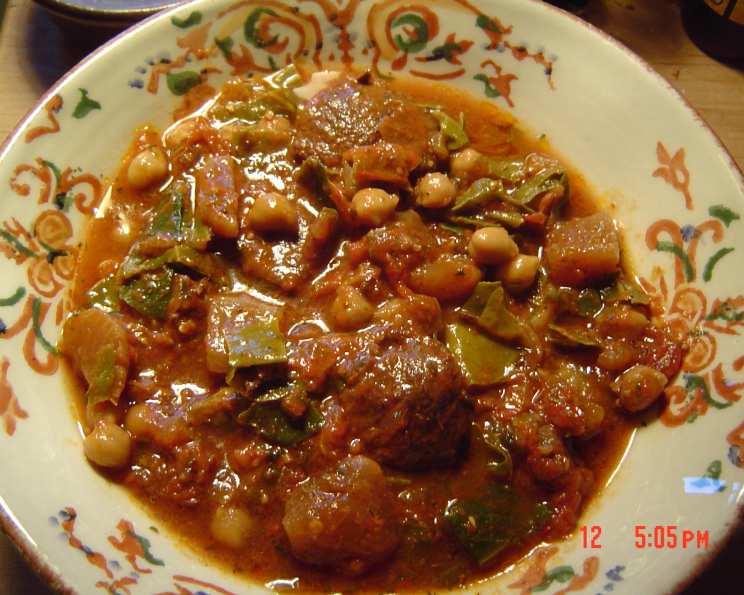
Tunisian Beef Stew (Liftiyya): A Culinary Journey to North Africa
The scent of cumin, coriander, and a touch of chili hangs in the air, instantly transporting me back to a small, sun-drenched kitchen in Sidi Bou Said. I was an eager culinary student, lucky enough to be learning from a Tunisian grandmother, Khalti Fatima. She patiently showed me how to coax the rich, complex flavors from simple ingredients, and this beef stew, fragrant with Tabil and a hint of harissa, was one of her masterpieces. Each spoonful was a story of generations, a taste of home, and a lesson in the power of slow cooking. It’s a memory I cherish, and a flavor I strive to recreate every time I make this dish.
Recipe Overview
- Prep Time: 20 minutes
- Cook Time: 2 hours 15 minutes
- Total Time: 2 hours 35 minutes
- Servings: 4
- Yield: Approximately 8 cups
- Dietary Type: Gluten-Free (naturally), Dairy-Free
Ingredients
- 1 lb stew meat, cut into 1-inch cubes
- 2 tablespoons tabil (Tunisian Spice Mix)
- ½ teaspoon black pepper
- ¼ cup extra virgin olive oil, plus 2 tablespoons extra virgin olive oil
- 1 onion, chopped
- 1 lb fresh tomato, chopped
- 1 ½ cups water
- 2 teaspoons harissa, Harissa Paste
- ½ cup canned chick-peas, drained and rinsed
- 2 teaspoons cayenne pepper
- 1 ½ lbs turnips, peeled and quartered
- ⅔ cup parsley, finely chopped
- 10 ounces spinach, cut into strips
- 2 teaspoons kosher salt
- 1 lemon, juice of
Equipment Needed
- Large Casserole Dish or Dutch Oven
- Cutting Board
- Sharp Knife
- Measuring Spoons and Cups
- Wooden Spoon or Spatula
Instructions
-
Begin by preparing the stew meat. In a medium bowl, roll the meat in tabil and black pepper, ensuring each cube is well coated. This step is crucial for infusing the beef with the signature Tunisian flavors.
-
In a large casserole dish or Dutch oven, heat ¼ cup of extra virgin olive oil over medium heat. Once the oil is shimmering, add the meat and onions. Brown the meat with the onions, stirring frequently, until the meat is nicely seared on all sides and the onions are softened and translucent. This should take approximately 5 to 6 minutes. Aim for a coating of slightly syrupy gravy to form at the bottom of the pot.
-
Add the chopped tomatoes, 1 cup of the water, the harissa paste, chickpeas, and cayenne pepper to the pot. Bring the mixture to a boil, stirring to combine all the ingredients. The harissa and cayenne will add a delightful kick, so adjust the amount to your preferred spice level.
-
Once boiling, reduce the heat to low, cover the casserole dish, and simmer gently until the meat is tender, about 1 ½ hours. Check the meat periodically to ensure it’s not sticking to the bottom of the pot. If necessary, add a splash more water.
-
After 1 ½ hours, add the remaining ½ cup of water, the turnips, parsley, spinach, and kosher salt. Season with additional black pepper to taste. Cover the pot again and continue to cook until the turnips are easily pierced with a skewer, about an hour.
-
Finally, stir in the lemon juice. This brightens the stew and adds a final layer of flavor complexity. Serve hot.
Expert Tips & Tricks
- Spice Level Adjustment: Harissa paste varies in intensity. Start with a smaller amount and add more to taste. A pinch of red pepper flakes can be used as a substitute if harissa is unavailable.
- Meat Browning: Don’t overcrowd the pan when browning the meat. Brown in batches if necessary to achieve a good sear on all sides. This enhances the flavor significantly.
- Tabil Substitute: If you can’t find Tabil spice mix, you can create your own blend. A combination of coriander, caraway, cumin, and chili powder will approximate the flavor profile.
- Slow Cooker Adaptation: This recipe translates beautifully to a slow cooker. Brown the meat and onions on the stovetop as directed, then transfer everything to a slow cooker. Cook on low for 6-8 hours or on high for 3-4 hours. Add the spinach and chickpeas during the last 30 minutes of cooking.
- Vegetarian Option: Substitute the stew meat with hearty vegetables like butternut squash and sweet potatoes. Add a can of lentils for added protein and texture.
Serving & Storage Suggestions
Serve this Tunisian Beef Stew hot, garnished with a sprinkle of fresh parsley and a drizzle of extra virgin olive oil. It pairs perfectly with crusty bread for soaking up the flavorful broth, or with a side of couscous or rice.
Leftovers can be stored in an airtight container in the refrigerator for up to 3 days. For longer storage, freeze the stew in individual portions for up to 2 months. Thaw overnight in the refrigerator before reheating. To reheat, gently warm the stew on the stovetop over low heat, stirring occasionally, until heated through. A splash of water may be needed to loosen the stew if it has thickened.
Nutritional Information
| Nutrient | Amount per Serving | % Daily Value |
|---|---|---|
| Calories | 605.4 kcal | N/A |
| Calories from Fat | 390 g | 64% |
| Total Fat | 43.4 g | 66% |
| Saturated Fat | 11.8 g | 59% |
| Cholesterol | 76 mg | 25% |
| Sodium | 1210.2 mg | 50% |
| Total Carbohydrate | 29.9 g | 9% |
| Dietary Fiber | 8.4 g | 33% |
| Sugars | 11.4 g | N/A |
| Protein | 27.5 g | 54% |
Note: Nutritional information is an estimate and may vary based on specific ingredients and preparation methods.
Variations & Substitutions
- Spicy Twist: Increase the amount of harissa or cayenne pepper for a spicier stew. A chopped chili pepper can also be added.
- Vegetable Medley: Add other vegetables like carrots, potatoes, or zucchini for a heartier stew.
- Lamb Variation: Substitute the beef stew meat with lamb shoulder for a richer flavor.
- Lemon Preserves: For an extra layer of authentic Tunisian flavor, add a tablespoon of chopped preserved lemon during the last 15 minutes of cooking.
- Spinach Alternative: Kale or chard can be used instead of spinach.
FAQs (Frequently Asked Questions)
Q: Can I make this stew ahead of time?
A: Absolutely! In fact, the flavors often meld and deepen when made a day in advance. Store in the refrigerator and reheat before serving.
Q: Is it possible to make this recipe vegetarian/vegan?
A: Yes, substitute the beef with hearty vegetables like squash and lentils. Use vegetable broth instead of water and adjust seasonings accordingly.
Q: I can’t find Tabil spice mix. What can I use as a substitute?
A: Create a blend of coriander, caraway, cumin, and a pinch of chili powder. Experiment to find the balance you prefer.
Q: How can I reduce the sodium content?
A: Use low-sodium chickpeas, and be mindful of the amount of salt you add. Taste as you go and adjust accordingly. You can also use fresh herbs to boost flavor without adding salt.
Q: What’s the best way to thicken the stew if it’s too thin?
A: You can remove a cup of the stew liquid and whisk in a tablespoon of cornstarch, then return the mixture to the pot and simmer until thickened. Alternatively, mash a few of the turnips to release their starches and thicken the stew naturally.
Final Thoughts
This Tunisian Beef Stew, Liftiyya, is more than just a recipe; it’s an invitation to experience the vibrant flavors and warm hospitality of North Africa. Don’t be intimidated by the ingredient list – each component plays a crucial role in creating a deeply satisfying and aromatic dish. I encourage you to try this recipe, experiment with the spice levels, and share it with your loved ones. Pair it with a crisp, dry rosé or a refreshing mint tea for a complete culinary experience. And please, let me know what you think – I love hearing about your cooking adventures!