
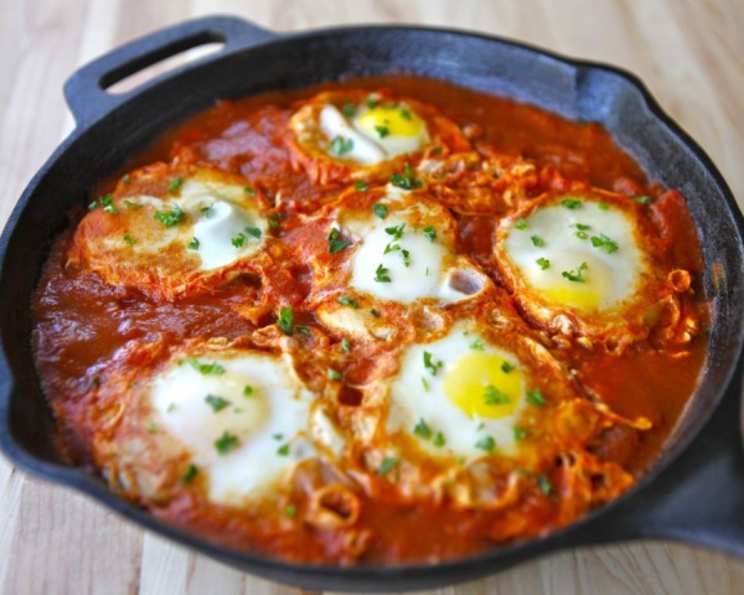
Tunisian Chakchouka: A Culinary Journey to the Mediterranean
The memory is as vivid as the midday sun beating down on the white-washed walls of a Tunisian cafe. The air, thick with the scent of spices, buzzed with the sounds of life. Before me sat a simple earthenware bowl filled with a bubbling, vibrant stew, a single perfectly poached egg nestled within its depths. It was chakchouka, and it was more than just a meal; it was an experience, a taste of the sun-drenched land and the warmth of its people. I remember tearing off a piece of crusty bread, dipping it into the rich, tomatoey sauce, and savoring the explosion of flavors – the sweetness of the peppers, the subtle heat of the harissa, and the earthy depth of the cumin. It was a culinary awakening.
Recipe Overview
- Prep Time: 15 minutes
- Cook Time: 20 minutes
- Total Time: 35 minutes
- Servings: 4
- Dietary Type: Vegetarian
Ingredients
- 4 large ripe tomatoes
- 4 eggs
- 2 sweet peppers (any color), deseeded
- 2 medium onions, chopped
- 1-2 hot green peppers (adjust to your spice preference), deseeded
- 1 head garlic, all cloves crushed and cut
- 1 tablespoon tomato concentrate
- 1 tablespoon harissa (or more, to taste)
- 1 tablespoon cumin
- 1-3 bay leaves
- Thyme, to taste (fresh or dried)
- 1 teaspoon salt, to taste
- 1-4 tablespoons olive oil
Equipment Needed
- Medium-sized pot with a lid
- Cutting board
- Knife
- Long spoon
Instructions
- Begin by preparing your vegetables. Cut the tomatoes into large pieces. No need to be precise; they’ll break down during cooking. Deseed and dice all the peppers (both sweet and hot) into roughly the same size. This ensures even cooking.
- Now, let’s build the flavor base. Heat the olive oil in a medium-sized pot over medium heat. Don’t skimp on the oil; it’s crucial for both flavor and preventing sticking. Add the chopped onions and crushed garlic. Cook until they soften and become fragrant, but be careful not to brown them.
- Before the onion and garlic brown, add the cumin. Toasting the cumin briefly in the hot oil intensifies its flavor and releases its aroma. Stir constantly to prevent burning.
- Next, introduce the main players. Add the chopped tomatoes and peppers (both sweet and hot), the tomato concentrate, and the harissa to the pot. Stir well to combine all the ingredients.
- Season with salt, add the bay leaves, and thyme. The bay leaves add a subtle depth of flavor, while the thyme provides an earthy, aromatic note.
- Blend the ingredients with a long spoon, making sure everything is well incorporated.
- Reduce the heat to low, cover the pot, and simmer until the vegetables are cooked and the sauce has thickened slightly. This usually takes around 10-15 minutes. Stir occasionally to prevent sticking.
- Now for the star of the show: the eggs. Once the vegetables are cooked and the consistency of the sauce is a bit thickened, make small wells in the sauce using the back of a spoon.
- Gently crack each egg into a separate well, spacing them evenly around the pot. This prevents them from merging into one giant egg.
- Put the lid on the pot and let the eggs poach in the simmering sauce. The cooking time will vary depending on your desired yolk consistency and the heat level.
- Wait for the egg whites to set, which can take up to 15 minutes depending on the heat. The yolks should remain runny for the ultimate indulgence. Keep a close eye on them to avoid overcooking.
- To serve, dish up an amount of the vegetable part into a wide soup dish, then carefully center an egg into this. Repeat for each serving.
- Serve immediately with plenty of fresh, crusty bread for dipping into the delicious sauce and runny egg yolks.
Expert Tips & Tricks
- Spice it up (or down): The amount of harissa is crucial to the dish, but it is also very spicy! Adjust the amount to your liking. Remember you can always add more, but you can’t take it away. If you are unsure, start with a smaller amount and taste as you go.
- Sweetness Boost: Roasting the peppers before adding them to the pot will enhance their sweetness and add a smoky note.
- Egg Perfection: For perfectly poached eggs, ensure the sauce is simmering gently, not boiling vigorously.
- Fresh Herbs: Don’t be afraid to experiment with other fresh herbs like parsley or cilantro for a burst of freshness.
- Make Ahead: The vegetable base can be made a day in advance. Simply reheat and add the eggs just before serving.
Serving & Storage Suggestions
Chakchouka is best served hot, straight from the pot, with plenty of crusty bread for dipping. It’s a fantastic brunch dish, a light lunch, or even a simple supper.
- Leftovers: Store leftover chakchouka in an airtight container in the refrigerator for up to 3 days.
- Reheating: Reheat gently on the stovetop over low heat, or in the microwave. Be careful not to overcook the eggs when reheating.
- Freezing: Freezing is not recommended once the eggs are cooked, as the texture will change. However, the vegetable base can be frozen for up to 2 months. Thaw completely before reheating and adding fresh eggs.
Nutritional Information
Please note that the nutritional information is an estimate and may vary based on specific ingredients and portion sizes.
| Nutrient | Amount per Serving | % Daily Value |
|---|---|---|
| Calories | 280 kcal | 14% |
| Total Fat | 18g | 28% |
| Saturated Fat | 4g | 20% |
| Cholesterol | 185mg | 62% |
| Sodium | 550mg | 23% |
| Total Carbohydrate | 18g | 6% |
| Dietary Fiber | 4g | 16% |
| Sugars | 9g | N/A |
| Protein | 12g | 24% |
Variations & Substitutions
- Vegan Chakchouka: Omit the eggs and add chickpeas or white beans for protein.
- Spicy Italian: Substitute the harissa with a pinch of red pepper flakes and add Italian sausage.
- Mediterranean Twist: Incorporate feta cheese crumbles and Kalamata olives for a salty, briny flavor.
- Smoked Paprika: A dash of smoked paprika gives a wonderful depth.
- Different peppers: Bell peppers come in different colours, red, yellow and orange. Use what you have!
- Add meat: Merguez sausage is a delicious meat that can be cooked in the sauce.
FAQs (Frequently Asked Questions)
Q: Can I use canned tomatoes instead of fresh?
A: While fresh tomatoes are ideal, you can use canned diced tomatoes in a pinch. Be sure to drain them well before adding them to the pot.
Q: How do I prevent the eggs from overcooking?
A: Keep the heat low and cover the pot tightly. Check the eggs frequently to ensure they reach your desired level of doneness.
Q: Can I make this dish ahead of time?
A: Yes, the vegetable base can be made a day in advance and stored in the refrigerator. Reheat and add the eggs just before serving.
Q: What if I don’t like spicy food?
A: Reduce or omit the harissa altogether. You can also use a milder chili pepper or sweet paprika for flavor without the heat.
Q: What’s the best way to serve chakchouka?
A: Serve it hot in individual bowls with plenty of crusty bread for dipping. Garnish with fresh herbs like parsley or cilantro for a pop of color and freshness.
Final Thoughts
Tunisian chakchouka is more than just a recipe; it’s an invitation to explore the vibrant flavors of the Mediterranean. The simplicity of the ingredients belies the depth of flavor, creating a dish that is both comforting and exciting. So, gather your ingredients, invite some friends, and embark on this culinary adventure. Don’t be afraid to experiment with different variations and make it your own. And most importantly, enjoy every delicious bite!