
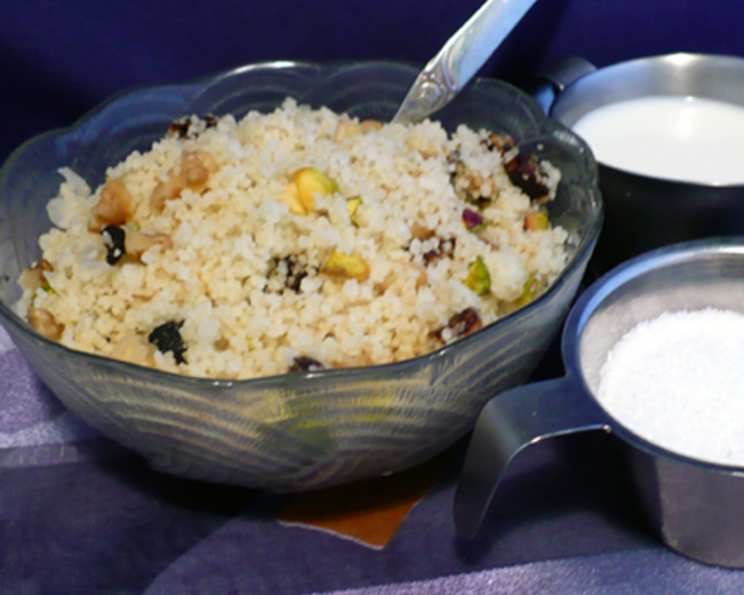
Tunisian Farka: A Sweet Start to the Day
The first time I tasted Farka was in a small, sun-drenched kitchen in Sidi Bou Said. The aroma of toasted nuts and warm milk filled the air as my host, a sweet grandmother named Fatima, carefully spooned the couscous mixture into a worn ceramic bowl. As I took my first bite, the delicate sweetness, the crunch of the nuts, and the comforting warmth of the milk transported me. It was more than just breakfast; it was a taste of Tunisian hospitality and a memory I cherish to this day.
Recipe Overview
- Prep Time: 15 minutes
- Cook Time: 20 minutes
- Total Time: 35 minutes
- Servings: 8
- Dietary Type: Vegetarian
Ingredients
- 2 2/3 cups couscous (about 1 pound)
- 2 2/3 cups water
- 1/2 cup sugar
- 1/4 cup vegetable oil
- 1 1/2 cups chopped toasted mixed nuts (such as walnuts, blanched almonds, hazelnuts, pistachios and pine nuts)
- 1 (8 ounce) box pitted dates, cut into pieces
- 2 cups milk, hot
- Additional sugar for serving (optional)
Equipment Needed
- Large bowl
- Heavy large saucepan
- Fork
- 13x9x2-inch baking dish
- Foil
Instructions
- Begin by placing the couscous in a large bowl.
- In a heavy large saucepan, combine the water, 1/2 cup of sugar, and vegetable oil. Bring the mixture to a boil over medium-high heat, stirring constantly until the sugar is completely dissolved. This step ensures that the couscous will be evenly sweetened and the oil will help prevent it from sticking together.
- Once the mixture is boiling and the sugar is dissolved, immediately pour it over the couscous in the bowl. Stir well to ensure that all the couscous is thoroughly coated with the liquid.
- Cover the bowl tightly and let it stand for 10 minutes. This allows the couscous to absorb the liquid and steam, resulting in a light and fluffy texture. Don’t skip this step!
- After 10 minutes, use a fork to fluff the couscous, separating the grains. This prevents the couscous from clumping and helps to create a more appealing texture.
- Now, add the chopped toasted mixed nuts and the cut dates to the couscous. Mix gently but thoroughly to distribute the nuts and dates evenly throughout the mixture. The toasted nuts add a lovely crunch and nutty flavor, while the dates provide a natural sweetness and chewiness.
- Transfer the couscous mixture to a 13x9x2-inch baking dish. Spread it out evenly in the dish.
- Allow the couscous to cool completely. Once cooled, cover the baking dish tightly with foil. At this point, you can prepare the Farka up to 4 hours in advance. Let it stand at room temperature until you are ready to bake it.
- When you’re ready to bake, preheat your oven to 350°F (175°C).
- Bake the couscous, covered with foil, until it is heated through, about 20 minutes. This will ensure that the Farka is warm and ready to eat.
- Remove the baking dish from the oven. Spoon the warm Farka into individual bowls.
- Serve immediately, passing hot milk and additional sugar separately, allowing each person to customize the sweetness and creaminess of their dish to their liking.
Expert Tips & Tricks
- Toasting the nuts is crucial for enhancing their flavor and adding a delightful crunch. Spread the nuts on a baking sheet and toast them in a 350°F (175°C) oven for 5-7 minutes, or until they are lightly golden and fragrant. Watch them carefully to prevent burning!
- If you’re short on time, you can use pre-chopped and toasted nuts. However, freshly toasted nuts will always offer the best flavor.
- For a richer flavor, try using brown sugar instead of white sugar. You can also add a pinch of cinnamon or cardamom to the couscous mixture for a warm, aromatic touch.
- If you don’t have dates on hand, you can substitute them with other dried fruits, such as raisins, dried apricots, or dried figs.
- To prevent the couscous from sticking to the baking dish, you can lightly grease the dish with vegetable oil or cooking spray before transferring the mixture.
Serving & Storage Suggestions
Tunisian Farka is best served warm, with hot milk and additional sugar offered on the side. The warm milk softens the couscous and adds a creamy texture, while the extra sugar allows each person to adjust the sweetness to their preference.
Leftover Farka can be stored in an airtight container in the refrigerator for up to 3 days. To reheat, you can microwave it for a minute or two, or warm it gently in a saucepan over low heat, adding a splash of milk to prevent it from drying out. Freezing is not recommended as it can alter the texture of the couscous.
Nutritional Information
| Nutrient | Amount per Serving | % Daily Value |
|---|---|---|
| Calories | 597 kcal | N/A |
| Calories from Fat | 204 g | 34% |
| Total Fat | 22.7 g | 34% |
| Saturated Fat | 4.1 g | 20% |
| Cholesterol | 8.5 mg | 2% |
| Sodium | 209.7 mg | 8% |
| Total Carbohydrate | 87.8 g | 29% |
| Dietary Fiber | 7.5 g | 29% |
| Sugars | 31.6 g | 126% |
| Protein | 14.5 g | 28% |
Note: % Daily Value is based on a 2000 calorie diet.
Variations & Substitutions
- For a vegan version, use non-dairy milk, such as almond milk, soy milk, or oat milk. You can also substitute the sugar with maple syrup or agave nectar.
- If you’re looking for a gluten-free option, make sure to use gluten-free couscous.
- Experiment with different types of nuts, such as pecans, macadamia nuts, or Brazil nuts.
- Add a touch of spice by including a pinch of ground ginger or nutmeg to the couscous mixture.
- In the summer, serve the Farka cold with chilled milk for a refreshing treat.
FAQs (Frequently Asked Questions)
Q: Can I use instant couscous for this recipe?
A: While you can use instant couscous, the texture will be slightly different. Regular couscous holds its shape better and provides a more satisfying bite.
Q: Can I make this recipe without nuts?
A: Yes, you can omit the nuts if you have allergies or simply don’t prefer them. However, they do add a significant amount of flavor and texture to the dish.
Q: How can I prevent the couscous from becoming mushy?
A: The key is to use the correct ratio of water to couscous and to avoid overcooking it. Follow the recipe instructions carefully and be sure to fluff the couscous with a fork after it has steamed.
Q: Can I add other fruits to this recipe?
A: Absolutely! Feel free to add other dried or fresh fruits, such as chopped apples, pears, or berries.
Q: Is this recipe suitable for meal prep?
A: Yes, Farka is a great option for meal prep. You can prepare it ahead of time and store it in the refrigerator for several days. Simply reheat it when you’re ready to eat.
Final Thoughts
Tunisian Farka is more than just a breakfast dish; it’s a celebration of flavor and tradition. Its simple ingredients and straightforward preparation make it an accessible and satisfying meal for any occasion. I encourage you to try this recipe and experience the warmth and hospitality of Tunisian cuisine. Don’t be afraid to experiment with different variations and substitutions to create your own unique version. Enjoy!