
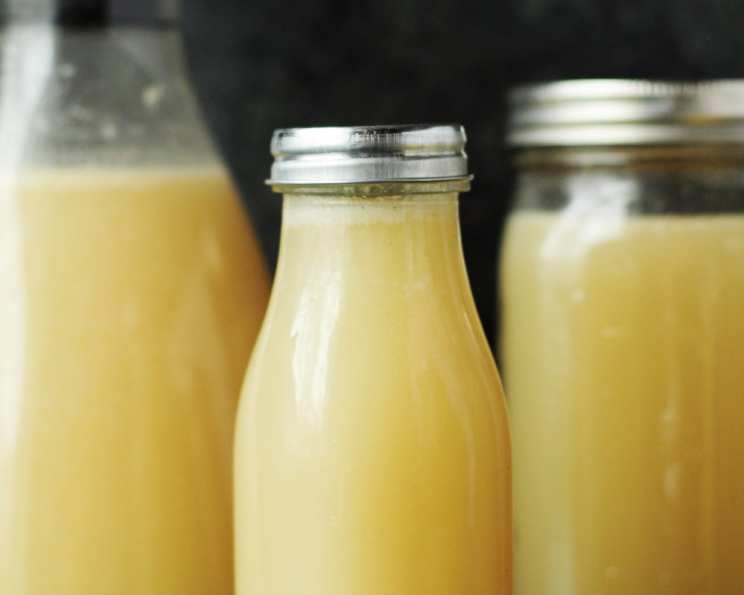
The Heartwarming Magic of Homemade Turkey Bone Broth
The scent of roasting turkey always brings me back to my grandmother’s kitchen, a warm and bustling space filled with love and laughter. But the feast didn’t truly end with the last slice of perfectly browned meat. For her, the real magic happened the next day, as she transformed the leftover carcass into a rich, nourishing bone broth. The gentle simmer, the bubbling pot releasing its earthy aroma, was a ritual passed down through generations, a testament to the power of simple ingredients and resourceful cooking. That simmering pot was the start of many wonderful meals to come.
Recipe Overview
- Prep Time: 15 minutes
- Cook Time: 8-10 hours
- Total Time: 8 hours 15 minutes – 10 hours 15 minutes
- Yields: 5 Quarts
- Dietary Type: Dairy-Free, Gluten-Free
Ingredients
- 1 turkey carcass, from a roasted bird (OK to have some meat and skin attached to the bones)
- 1 turkey giblets
- 1 large onion, coarsely chopped (or quartered)
- 6 garlic cloves, smashed
- 1 cup parsley (1 small bunch) (optional)
- 1 orange peel (optional) or 1 lemon peel (optional)
- 2 bay leaves (optional)
- 7 quarts filtered water
- 2 carrots, rough cut (optional)
- 2 celery ribs, rough cut (optional)
Equipment Needed
- Large stockpot
- Fine-mesh strainer
- Large container (bowl or pot)
- Mason jars or other airtight containers for storage
- Ladle
Instructions
-
Begin by placing the turkey carcass and giblets in a large stockpot. Don’t worry if there’s still some meat clinging to the bones; it will only enrich the broth.
-
Add the coarsely chopped large onion, smashed garlic cloves, and, if desired, a cup of parsley, orange peel (or lemon peel), and bay leaves. These aromatics will infuse the broth with layers of flavor.
-
Pour 7 quarts of cold filtered water over the ingredients in the pot, ensuring the turkey carcass is fully submerged. Using cold water helps to draw out the collagen and other nutrients from the bones.
-
Bring the mixture to a boil over high heat. Once boiling, immediately reduce the heat to medium-low to maintain a gentle simmer. This slow, gentle simmering process is crucial for extracting the maximum flavor and nutrients from the bones.
-
Simmer the broth for 8-10 hours. You can also use a slow cooker for this long simmer; just set it to low. This extended cooking time allows the collagen in the bones to break down into gelatin, giving the broth its characteristic rich, silky texture.
-
After the simmering is complete, carefully discard the solids using a slotted spoon or tongs.
-
Strain the broth through a fine-mesh strainer into a large container, such as a bowl or another pot. This step removes any remaining small particles of bone or vegetable matter, resulting in a clear, smooth broth.
-
Using a ladle, transfer the strained broth into mason jars or other airtight containers. Be sure to leave some headspace at the top of the jars, especially if you plan to freeze the broth.
-
Allow the broth to cool completely at room temperature before refrigerating or freezing. Once cooled, you’ll notice a layer of fat solidifying on the surface. This fat is a natural part of the bone broth and can be easily removed with a spoon if desired. It’s also incredibly flavorful and can be used for cooking other dishes.
-
Refrigerate the broth for up to 5 days or freeze for up to 3 months.
Expert Tips & Tricks
- Don’t be afraid to experiment with aromatics. Feel free to add other vegetables like leeks, parsnips, or mushrooms to the pot for added depth of flavor.
- Roast the bones before making the broth. Roasting the turkey carcass in the oven before simmering will enhance the flavor and give the broth a richer, deeper color.
- Add a splash of apple cider vinegar. A tablespoon or two of apple cider vinegar can help to extract more minerals from the bones.
- Skim off any foam or scum that rises to the surface during the simmering process. This will help to keep the broth clear and prevent any off-flavors from developing.
- Use a cheesecloth-lined strainer for an even clearer broth.
- Save vegetable scraps in the freezer to add to your bone broth. Onion peels, carrot tops, and celery ends are all great additions.
- If you don’t have a full turkey carcass, you can use turkey necks, backs, or wings.
- If you want a stronger flavor, you can reduce the broth after straining it by simmering it uncovered until it reaches your desired consistency.
Serving & Storage Suggestions
Serve the turkey bone broth warm as a comforting beverage on a cold day. It’s also a fantastic base for soups, stews, sauces, and risottos. You can use it to cook grains like rice or quinoa for added flavor and nutrients.
Storage:
- Room Temperature: Do not store at room temperature for more than 2 hours.
- Refrigerator: Store in an airtight container in the refrigerator for up to 5 days.
- Freezer: Store in an airtight container or freezer-safe bags for up to 3 months.
Reheating:
- Stovetop: Reheat gently over medium heat until warmed through.
- Microwave: Reheat in a microwave-safe container in short intervals, stirring occasionally.
Nutritional Information
| Nutrient | Amount per Serving | % Daily Value |
|---|---|---|
| Calories | 21.3 kcal | N/A |
| Total Fat | 0.3 g | 0% |
| Saturated Fat | 0.1 g | 0% |
| Cholesterol | 5.8 mg | 1% |
| Sodium | 42.9 mg | 1% |
| Total Carbohydrate | 4 g | 1% |
| Dietary Fiber | 0.6 g | 2% |
| Sugars | 1.3 g | 5% |
| Protein | 1 g | 1% |
Note: Nutritional information is an estimate and may vary based on specific ingredients and cooking methods.
Variations & Substitutions
- Chicken Bone Broth: Substitute a chicken carcass for the turkey carcass.
- Beef Bone Broth: Substitute beef bones for the turkey carcass.
- Vegetarian Broth: Omit the turkey carcass and use a variety of vegetables like mushrooms, onions, carrots, celery, and herbs.
- Spicy Broth: Add a pinch of red pepper flakes or a chopped chili pepper to the pot for a spicy kick.
- Asian-Inspired Broth: Add ginger, garlic, soy sauce, and sesame oil for an Asian-inspired flavor.
FAQs (Frequently Asked Questions)
Q: Can I use a pressure cooker or Instant Pot to make bone broth?
A: Yes, you can. Reduce the cooking time significantly – typically 2-3 hours on high pressure. Ensure you follow your appliance’s safety guidelines.
Q: How do I know when the bone broth is done?
A: The broth is done when it has a rich color and flavor, and the bones are easily broken. The broth should also have a slightly gelatinous texture when cooled.
Q: Can I add salt to the bone broth?
A: It’s best to add salt to the bone broth when you’re using it in a recipe, rather than during the simmering process. This allows you to control the saltiness of the final dish.
Q: What is the white foamy stuff that forms on top of the broth while simmering?
A: This is mostly impurities and proteins. Skimming it off occasionally results in a clearer broth, though it’s not essential.
Q: Can I reuse the bones to make another batch of broth?
A: While you can, the second batch will be less flavorful and nutritious. It’s generally best to use fresh bones for the best results.
Final Thoughts
Making turkey bone broth is a simple yet rewarding process that transforms leftovers into a nourishing elixir. It’s a way to honor the ingredients, reduce waste, and create something truly special. So, the next time you roast a turkey, don’t throw away that carcass! Embrace the tradition, gather your ingredients, and simmer your way to a pot of liquid gold. Share it with your loved ones, use it in your favorite recipes, and savor the rich flavors and countless benefits of homemade turkey bone broth. I encourage you to experiment with different aromatics and vegetables to create your own signature broth. Happy cooking!