
The Ultimate Deboned and Rolled Turkey: A Thanksgiving Masterpiece
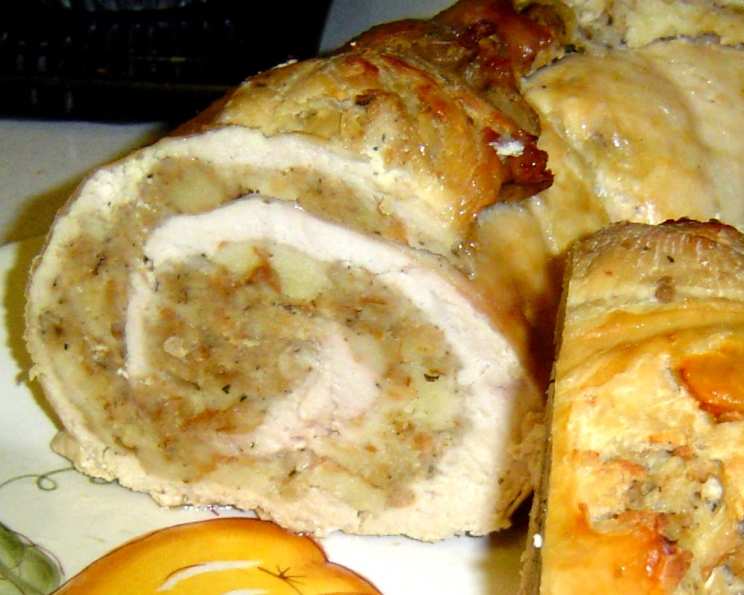
I still remember the first time I attempted to debone a turkey. It was Thanksgiving Eve, years ago, and I was determined to impress my family with a perfectly even, succulent roast. The image of a beautifully rolled turkey, showcasing both light and dark meat in every slice, was burned into my mind. The reality, however, was a bit more… chaotic. Feathers flew, the carcass seemed to fight back, and my kitchen looked like a crime scene. But amidst the mess and mild panic, I persevered. And when that first slice was finally cut, revealing a pinwheel of stuffing nestled within moist, flavorful turkey, all the effort was instantly worth it. Now, years later, this dish is a holiday tradition, and the deboning process is a skill I wield with (slightly) more grace.
Recipe Overview
- Prep Time: 2 hours
- Cook Time: 2 hours 40 minutes
- Total Time: 4 hours 40 minutes
- Servings: 12
- Yield: 1 rolled turkey
- Dietary Type: Varies based on stuffing ingredients. Naturally Gluten-Free & Dairy-Free (without the cream in the stuffing).
Ingredients
- 1 (12-14 lb) whole turkey
- 3 tablespoons olive oil
- 1 medium onion, coarsely chopped
- 3-5 medium garlic cloves, minced
- 3 tablespoons chopped fresh rosemary, plus 3 sprigs fresh rosemary
- 1 tablespoon chopped fresh sage
- 1 tablespoon Dijon mustard
- 1 lb ground turkey
- 1 lb ground pork
- 1 cup dried breadcrumbs
- 3 large eggs
- 1 cup heavy cream
- 3 1⁄2 teaspoons salt
- 1 3⁄4 teaspoons fresh ground black pepper
- 1⁄4 cup maple syrup
- Kitchen twine
Equipment Needed
- Sharp knife (boning knife recommended)
- Cutting board
- Skillet
- Large bowl
- Plastic wrap
- Meat mallet or rolling pin
- Roasting rack
- Large roasting pan
- Thermometer
- Toothpicks or wooden skewers
Instructions
-
Debone the Turkey: Position the turkey, breast side down, on a stable work surface with the tail facing you. Using a sharp knife, slice the skin along the backbone from neck to tail. Carefully cut and pull the flesh away from the carcass.
-
Cut the flesh from the shoulder blade near the wing and remove the bone. When you reach the wing joint, sever the ball-and-socket joint so the wings are separated from the carcass but remain attached to the skin. Continue cutting the breast meat away from the bone, working your way up to the ridge of the breastbone.
-
Turn the turkey around and repeat the process on the other side, mirroring the cuts you made previously.
-
The turkey should now be butterflied, with the carcass attached only at the sternum, and the wings and drumsticks still containing bones. Gently pull to separate the breastbone and carcass, taking care not to tear the meat beneath the sternum.
-
Cut off the wing tip and middle section, leaving the largest wing bone (the humerus) attached. Holding the outside of the wing bone, cut through the tendons and scrape the meat from the bone, pushing it away. Remove the bone completely using your knife to carefully free it.
-
Holding the inside end of the leg bone, cut through the tendons attaching the flesh to the bone. Use a knife to scrape the meat from the bone, pushing it away from the end of the bone. Cut the bone free of the skin. Cut out any sinews still remaining on the leg. Repeat this process on the other side. Finally, push the leg and wing skin side out, so the meat is exposed.
-
Butterfly the Breast: Butterfly the breast meat so that it completely covers the skin. Cover the entire deboned turkey with plastic wrap and lightly pound the meat with a meat mallet or rolling pin until it is an even thickness. This ensures even cooking.
-
Preheat the Oven: Preheat your oven to 375 degrees F (190 degrees C).
-
Prepare the Stuffing: In a skillet, heat 1 tablespoon of olive oil over medium heat. Sauté the chopped onion, minced garlic, 1 tablespoon of chopped fresh rosemary, sage, and Dijon mustard in the oil. Cook for approximately 10 minutes, stirring occasionally, until the onion is soft and translucent but not browned. Transfer the mixture to a large bowl and allow it to cool slightly.
-
Add the ground turkey and ground pork, dried breadcrumbs, eggs, heavy cream, 1 ½ teaspoons of salt, and ¼ teaspoon of pepper to the bowl with the sautéed vegetables. Stir well to thoroughly combine all the ingredients.
-
Roll the Turkey: Lay the deboned turkey on a clean work surface, skin side down. Season the meat generously with 1 teaspoon of salt, ½ teaspoon of pepper, and the remaining 2 tablespoons of chopped fresh rosemary.
-
Evenly distribute the stuffing down the middle of the turkey. Carefully roll the turkey up, closing the neck and tail ends together. The goal is to create a tight roll where each slice will feature both dark and white meat, as well as stuffing. Secure the roll with toothpicks or wooden skewers to hold it in place.
-
Tie the rolled turkey every 2 inches with kitchen twine. This will help it maintain its shape during cooking.
-
Drizzle the remaining 2 tablespoons of olive oil over the rolled turkey. Season with the remaining teaspoon of salt and ½ teaspoon of pepper. Tuck the rosemary sprigs along the top of the roll under the twine for added flavor and visual appeal.
-
Place the rolled turkey on a roasting rack set inside a large roasting pan. If your roasting pan is not large enough to accommodate the rolled turkey in a straight line, gently curve it into a “U” shape.
-
Roast the Turkey: Roast the turkey in the preheated oven until a meat thermometer inserted into the thickest part of the roll registers 150 degrees F (66 degrees C). This will take approximately 2 to 2 ½ hours.
-
Remove the turkey from the oven and brush it generously with maple syrup. Return the turkey to the oven for an additional 20 minutes, or until the thermometer reads 160-165 degrees F (71-74 degrees C). The maple syrup glaze will impart a wonderful, rich color and slightly sweet flavor to the roll.
-
Rest and Serve: Remove the turkey from the oven and let it rest for 10 minutes before carving. This allows the juices to redistribute, resulting in a more moist and tender final product. Transfer the turkey to a cutting board, remove the twine and rosemary sprigs, and cut the roll crosswise into ½ to 1-inch-thick slices.
Expert Tips & Tricks
- Deboning Mastery: Don’t be intimidated by the deboning process! Watch a few videos beforehand to get a visual understanding. A sharp boning knife is your best friend here. Take your time and work carefully to avoid tearing the skin.
- Stuffing Variations: Feel free to customize the stuffing to your liking. Add dried cranberries, chopped nuts, or different herbs for a unique flavor profile. Cooked sausage or mushrooms can also be great additions.
- Preventing Dryness: Basting the turkey with its own juices or melted butter every 30 minutes during roasting can help to keep it moist. However, be sure to return the turkey to the oven quickly after basting to maintain a consistent temperature.
- Even Cooking: Pounding the breast meat to an even thickness is crucial for ensuring even cooking throughout the entire roll.
Serving & Storage Suggestions
Serve the sliced, rolled turkey immediately, accompanied by your favorite Thanksgiving sides, such as mashed potatoes, gravy, cranberry sauce, and green bean casserole.
Leftover sliced turkey can be stored in an airtight container in the refrigerator for up to 3-4 days. To reheat, gently warm the slices in a skillet with a little broth or gravy to prevent them from drying out. You can also reheat them in a microwave.
For longer storage, the sliced turkey can be frozen for up to 2-3 months. Thaw it in the refrigerator overnight before reheating.
Nutritional Information
| Nutrient | Amount per Serving | % Daily Value |
|---|---|---|
| Calories | 863 kcal | N/A |
| Calories from Fat | 450 kcal | 52% |
| Total Fat | 50 g | 76% |
| Saturated Fat | 16.8 g | 84% |
| Cholesterol | 352.8 mg | 117% |
| Sodium | 1044.1 mg | 43% |
| Total Carbohydrate | 13.1 g | 4% |
| Dietary Fiber | 0.8 g | 3% |
| Sugars | 5 g | N/A |
| Protein | 85.1 g | 170% |
Note: Nutritional information is an estimate and may vary based on specific ingredients and portion sizes.
Variations & Substitutions
- Gluten-Free: Use gluten-free breadcrumbs in the stuffing.
- Dairy-Free: Omit the heavy cream in the stuffing and substitute with a plant-based cream alternative like cashew cream or coconut cream.
- Stuffing Alternatives: Experiment with different types of stuffing. Wild rice stuffing, cornbread stuffing, or even a fruit-based stuffing would all be delicious.
- Spice It Up: Add a pinch of red pepper flakes to the stuffing for a touch of heat.
FAQs (Frequently Asked Questions)
Q: Is deboning a turkey really that difficult?
A: While it may seem daunting, deboning a turkey is manageable with patience and a sharp knife. Watching instructional videos beforehand can be very helpful.
Q: Can I make the stuffing ahead of time?
A: Yes, you can prepare the stuffing a day in advance. Store it in an airtight container in the refrigerator.
Q: How do I prevent the turkey from drying out during roasting?
A: Basting the turkey with its own juices or melted butter every 30 minutes can help. Also, ensure you are not overcooking the turkey; use a meat thermometer to check for doneness.
Q: What if I don’t have fresh rosemary and sage?
A: You can use dried herbs instead. Use about 1 teaspoon of dried herbs for every tablespoon of fresh herbs.
Q: How can I tell when the turkey is fully cooked?
A: The best way is to use a meat thermometer. Insert it into the thickest part of the roll, avoiding any bones. The turkey is done when the thermometer registers 160-165 degrees F (71-74 degrees C).
Final Thoughts
Deboning and rolling a turkey may seem like a grand culinary undertaking, but the results are undeniably worth the effort. The even cooking, the beautiful presentation, and the delicious combination of flavors make this dish a true showstopper. Gather your ingredients, sharpen your knives, and embrace the challenge – you might just find yourself starting a new Thanksgiving tradition. Don’t be afraid to experiment with different stuffing combinations to find your own signature flavor. And most importantly, enjoy the process! A perfectly rolled turkey is a testament to your culinary skills and a delicious centerpiece for your holiday table.