
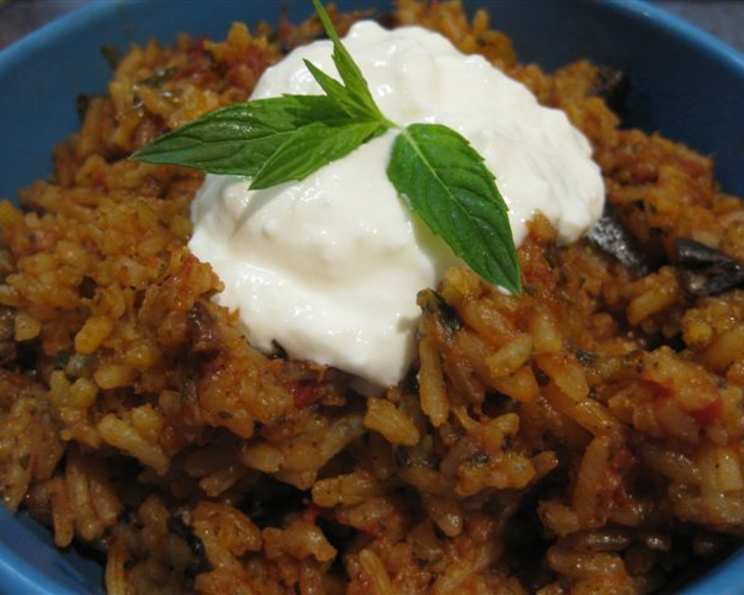
Turkish Eggplant (Aubergine) Pilaf (Patlicanli Pilav): A Culinary Journey
The scent of eggplant frying in olive oil always transports me back to my travels through Turkey. I remember sitting at a small, family-run restaurant in Istanbul, the air thick with the aroma of spices, as a kind woman placed a steaming bowl of Patlicanli Pilav before me. The tender eggplant, the fragrant rice, and the bright herbs created a symphony of flavors that instantly felt like home, even thousands of miles away. That first taste ignited a passion for Turkish cuisine that I’ve carried with me ever since.
Recipe Overview
- Prep Time: 40 minutes
- Cook Time: 30 minutes
- Total Time: 70 minutes
- Servings: 6
- Dietary Type: Vegetarian
Ingredients
- 2 oval eggplants (aubergines, 1 lb in all)
- Salt
- 1 large onion
- 1/3 cup olive oil (be sure to use a good one!)
- 2 cups tomatoes, peeled and chopped
- 1 1/2 teaspoons salt
- Fresh ground black pepper
- 2 tablespoons parsley, chopped
- 2 teaspoons of fresh mint, chopped
- 2 cups basmati rice
- 2 1/2 cups chicken stock
- 6 paper towels
- Yogurt, for serving (or Cucumber Salad With Yogurt (Middle East, Palestine) which is even better)
Equipment Needed
- Colander
- Heavy-bottomed pan with a lid
- Serving dish
Instructions
-
Begin by preparing the eggplant. Cut the eggplants into large cubes, leaving the skin on. This will help them retain their shape during cooking.
-
Place the eggplant cubes in a colander and sprinkle liberally with salt. This crucial step helps to draw out excess moisture and bitterness from the eggplant, resulting in a sweeter, more pleasant flavor.
-
Let the salted eggplant sit for 30 minutes. This allows the salt to effectively do its job.
-
After 30 minutes, rinse the eggplant cubes thoroughly under cold water to remove the salt. Pat them completely dry with paper towels. This is essential for achieving a good sear when frying.
-
Prepare the onion. Halve the onion lengthwise and then slice it thinly.
-
Heat 1/4 cup of the olive oil in a heavy-bottomed pan over medium heat. Once the oil is hot, add the eggplant cubes and fry until they are lightly browned on all sides. You may need to do this in batches to avoid overcrowding the pan.
-
Remove the fried eggplant from the pan and set aside.
-
Add the remaining olive oil (about 1/12 cup) to the pan. Add the sliced onion and gently fry until it becomes transparent and softened, about 5-7 minutes. Be careful not to brown the onion.
-
Add the chopped tomatoes, 1 1/2 teaspoons of salt, black pepper to taste, the chopped parsley, and the chopped mint to the pan with the onions. Bring the mixture to a boil.
-
Add the fried eggplant back into the pan with the tomato mixture.
-
Wash the basmati rice under cold running water until the water runs clear. This removes excess starch, preventing the pilaf from becoming sticky.
-
Drain the rice well and then carefully spread it evenly over the eggplant mixture in the pan.
-
Pour the chicken stock over the rice.
-
Bring the mixture to a boil without stirring. Stirring at this point can release more starch and lead to a stickier pilaf.
-
Once boiling, reduce the heat to low, cover the pan tightly with a lid, and let the pilaf simmer gently for 30 minutes. It’s crucial to keep the lid on during this time to allow the rice to steam properly.
-
After 30 minutes, turn off the heat but do NOT remove the lid. Place a few paper towels over the rim of the pan and then replace the lid on top of the paper towels. This step is extremely important. The paper towels will absorb any excess moisture, ensuring a fluffy and light pilaf. Let it sit like this for about 10 minutes.
-
Remove the lid and paper towels. Gently stir the pilaf with a fork to fluff the rice and combine all the ingredients.
-
Transfer the Patlicanli Pilav to a heated serving dish.
-
Serve hot with a dollop of yogurt or, even better, with Cucumber Salad With Yogurt (Middle East, Palestine). Enjoy!
Expert Tips & Tricks
- For an even richer flavor, consider using homemade chicken stock. The depth of flavor will elevate the entire dish.
- If you don’t have fresh mint, dried mint can be used, but use half the amount as the flavor is more concentrated.
- To prevent the rice from sticking to the bottom of the pan, use a heavy-bottomed pan and ensure the heat is low and even during the simmering process.
- If you find your rice is still slightly undercooked after 30 minutes, add a little more chicken stock (about 1/4 cup) and continue to simmer for a few more minutes, checking frequently.
- If you don’t have time to peel and chop fresh tomatoes, you can substitute canned diced tomatoes.
Serving & Storage Suggestions
Serve the Patlicanli Pilav hot as a main course or a side dish. It pairs beautifully with grilled meats, roasted vegetables, or other Turkish specialties. Leftovers can be stored in an airtight container in the refrigerator for up to 3 days. To reheat, simply microwave until heated through or gently warm in a pan on the stovetop with a splash of water or stock to prevent drying out. This pilaf can also be frozen for up to 2 months. Thaw completely in the refrigerator before reheating.
Nutritional Information
| Nutrient | Amount per Serving | % Daily Value |
|---|---|---|
| Calories | 428.8 kcal | N/A |
| Calories from Fat | 138 g | 32% |
| Total Fat | 15.4 g | 23% |
| Saturated Fat | 2.4 g | 12% |
| Cholesterol | 3 mg | 1% |
| Sodium | 736.6 mg | 30% |
| Total Carbohydrate | 64.9 g | 21% |
| Dietary Fiber | 8.5 g | 34% |
| Sugars | 8.3 g | N/A |
| Protein | 9.8 g | 19% |
Variations & Substitutions
- Vegetarian/Vegan: Ensure that you are using vegetable stock instead of chicken stock to make it 100% Vegetarian.
- Spicy: Add a pinch of red pepper flakes or a finely chopped chili pepper to the tomato mixture for a touch of heat.
- Herby: Experiment with different herbs such as dill, oregano, or thyme to customize the flavor profile.
- Nutty: Garnish with toasted pine nuts or slivered almonds for added texture and flavor.
- Eggplant Variety: While oval eggplants are traditional, you can also use other varieties like globe eggplant or Italian eggplant.
FAQs (Frequently Asked Questions)
Q: Why do I need to salt the eggplant before cooking?
A: Salting the eggplant draws out excess moisture and bitterness, resulting in a sweeter and more flavorful dish. It also helps the eggplant to brown better when fried.
Q: Can I use brown rice instead of basmati rice?
A: Yes, you can use brown rice, but the cooking time will need to be adjusted. Brown rice typically requires a longer cooking time than basmati rice, so you’ll need to add more liquid and simmer for a longer period.
Q: What can I use instead of chicken stock?
A: Vegetable stock is a great substitute for chicken stock, especially if you want to make the dish vegetarian or vegan. You can also use water in a pinch, but the flavor won’t be as rich.
Q: How do I prevent the rice from sticking to the bottom of the pan?
A: Using a heavy-bottomed pan and maintaining a low, even heat during simmering will help prevent the rice from sticking. Also, avoid stirring the rice while it’s simmering.
Q: Can I make this dish ahead of time?
A: Yes, you can prepare the pilaf ahead of time and reheat it when you’re ready to serve. Store it in an airtight container in the refrigerator and reheat gently on the stovetop or in the microwave.
Final Thoughts
This Turkish Eggplant Pilaf is more than just a recipe; it’s a journey to the heart of Turkish cuisine. The combination of tender eggplant, fragrant rice, and aromatic herbs creates a dish that is both comforting and satisfying. I encourage you to try this recipe and experience the flavors of Turkey in your own kitchen. Feel free to experiment with different herbs and spices to personalize the dish to your liking. And please, share your feedback and any variations you try – I’d love to hear how you make this classic dish your own. Pair it with a glass of chilled Turkish white wine or a refreshing ayran (a yogurt-based drink) for a truly authentic experience! Afiyet olsun!