
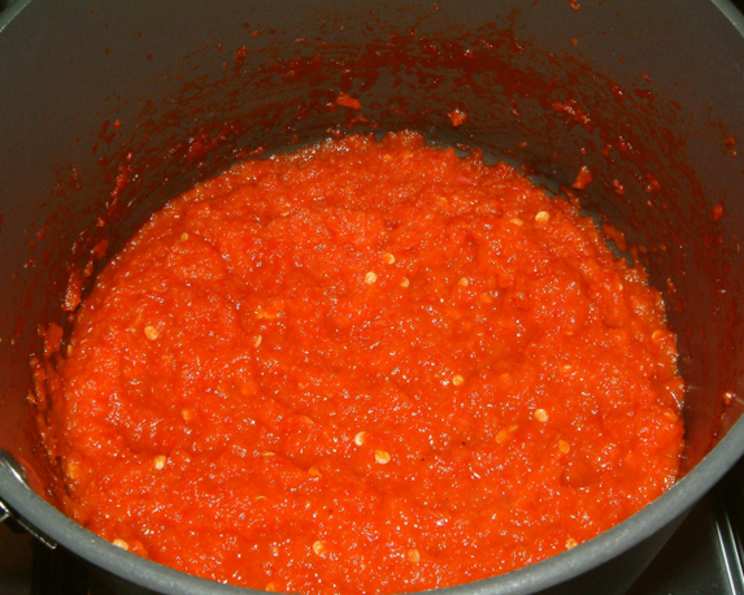
The Fiery Heart of Turkish Cuisine: Homemade Red Pepper Paste (Biber Salçası)
The scent of roasting peppers always transports me back to a tiny village nestled in the hills of Turkey, where I spent a summer learning the secrets of traditional cooking from a wizened old woman named Ayşe. Every autumn, the entire village would transform into a vibrant tapestry of crimson as families harvested their bumper crop of red peppers. The air would be thick with the sweet, smoky aroma, and everyone, young and old, would gather to prepare biber salçası, the essential red pepper paste that forms the backbone of so many Turkish dishes. It was a truly communal experience, filled with laughter, shared stories, and the satisfying burn of chili on your fingertips – a memory I cherish and try to recreate in my own kitchen every year.
Recipe Overview
- Prep Time: 20 minutes
- Cook Time: 1 hour
- Total Time: 1 hour 20 minutes
- Servings: Varies
- Yield: Approximately 175ml
- Dietary Type: Vegan, Gluten-Free
Ingredients
- 4 red bell peppers
- 4 red chilies
- 40 ml water
- 1 teaspoon salt
- 1 teaspoon sugar
- 20 ml olive oil
Equipment Needed
- Food processor
- Saucepan
- Spatula
- Sealable container
Instructions
-
Begin by preparing the red bell peppers. Cut them into large chunks, carefully discarding the seed core and any white membranes. This step is important as the membranes can add a bitter flavor to the final paste.
-
Next, prepare the red chilies. Slice them in half lengthwise, and for a milder paste, remove the seeds. If you enjoy a significant kick, leave some or all of the seeds intact. Trim any stems from the chilies. Remember to handle chilies with care, avoiding touching your eyes or face afterward.
-
Now, it’s time to create the initial mixture. Place the chunks of red bell pepper, halved red chilies, water, salt, sugar, and olive oil into a food processor.
-
Process the ingredients until you achieve a completely smooth consistency. This may take a minute or two, depending on the power of your food processor. Scrape down the sides of the bowl as needed to ensure everything is evenly processed.
-
Transfer the vibrant red mixture from the food processor to a medium-sized saucepan.
-
Place the saucepan over low heat. It’s crucial to simmer the mixture gently. A rapid boil will cause splattering and potentially burn the paste.
-
Allow the mixture to simmer for approximately 1 hour, or until it has significantly reduced in volume and thickened into a rich, concentrated paste. The time may vary slightly depending on the heat and the water content of your peppers.
-
During the simmering process, it’s essential to stir the mixture frequently. This prevents it from sticking to the bottom of the pan and burning, which would ruin the flavor of the entire batch. Be especially vigilant towards the end of the cooking time as the mixture thickens and becomes more prone to sticking.
-
Once the mixture has reduced to a thick paste, remove the saucepan from the heat. The paste should be quite dense and hold its shape somewhat when stirred.
-
Allow the red pepper paste to cool completely before transferring it to a sealable container. This will prevent condensation from forming inside the container, which could lead to spoilage.
-
Once cooled, transfer the paste to a sealable container.
Expert Tips & Tricks
- Roasting for Deeper Flavor: For an even richer and smokier flavor, roast the bell peppers and chilies in the oven or over an open flame before processing. Blacken the skins, then peel them off before proceeding with the recipe.
- Sun-Drying (Traditional Method): For a truly authentic biber salçası, traditionally the paste is spread thinly on large trays and sun-dried for several days. This concentrates the flavors and creates a unique texture. However, this method requires hot, dry weather and protection from insects.
- Spice Level Adjustment: Easily customize the heat level by adjusting the number and type of chilies used. Serrano or cayenne peppers can add a more intense kick.
- Salt as Preservative: The salt acts as a natural preservative. Don’t skimp on it, but adjust to your taste.
- Test for Doneness: A good indicator that the paste is ready is when you drag a spoon across the bottom of the pan and the paste doesn’t immediately flow back to fill the gap.
Serving & Storage Suggestions
Use your homemade red pepper paste to add depth and flavor to a wide variety of dishes. It’s a key ingredient in many Turkish stews, soups, and sauces, and it also works beautifully as a marinade for meats and vegetables.
Storage:
- Refrigerator: Store in a sealed container in the refrigerator for up to 1 week.
- Freezer: For longer storage, freeze the paste in small, sealable plastic containers or ice cube trays. This allows you to easily thaw only the amount you need. It can be stored in the freezer for up to 3 months.
- Serving: Serve a dollop of red pepper paste as a condiment alongside grilled meats or vegetables, or use it as a base for dips and spreads.
Nutritional Information
Please note that the following nutritional information is an estimate and may vary based on the specific ingredients used.
| Nutrient | Amount per Serving | % Daily Value |
|---|---|---|
| Calories | ~35 kcal | ~2% |
| Total Fat | ~1.5g | ~2% |
| Saturated Fat | ~0.2g | ~1% |
| Cholesterol | 0mg | 0% |
| Sodium | ~120mg | ~5% |
| Total Carbohydrate | ~6g | ~2% |
| Dietary Fiber | ~2g | ~7% |
| Sugars | ~3g | – |
| Protein | ~0.5g | ~1% |
Variations & Substitutions
- Smoked Paprika: For a smoky flavor without roasting, add a teaspoon of smoked paprika to the mixture during processing.
- Vinegar: A splash of red wine vinegar towards the end of the cooking process can add a touch of acidity and enhance the flavor. Start with 1 teaspoon and adjust to taste.
- Garlic: Add 1-2 cloves of minced garlic to the food processor for an extra layer of flavor.
- Herbs: Experiment with adding dried herbs like oregano or thyme to the mixture during the simmering process.
- Sweetener: If you prefer a less sweet paste, reduce or omit the sugar.
FAQs (Frequently Asked Questions)
Q: Can I use different types of red peppers?
A: Absolutely! Feel free to experiment with different varieties of red bell peppers and chilies to create a paste with your preferred level of sweetness and heat.
Q: How do I know when the paste is done cooking?
A: The paste is done when it has significantly reduced in volume, thickened to a spreadable consistency, and a spoon dragged across the bottom of the pan leaves a clear trail that doesn’t immediately fill in.
Q: My paste is too spicy! What can I do?
A: If your paste is too spicy, try adding a touch of honey or sugar to balance the heat. You can also mix it with plain yogurt or tomato paste to dilute the spiciness in your dishes.
Q: Can I make this recipe in a slow cooker?
A: While not traditional, you can adapt this recipe for a slow cooker. Cook on low for 6-8 hours, stirring occasionally, until the paste has thickened. Remove the lid during the last hour to allow excess moisture to evaporate.
Q: Why is my red pepper paste bitter?
A: Bitterness can be caused by the white membranes inside the bell peppers. Ensure you remove these thoroughly before processing. Overcooking can also concentrate any bitterness.
Final Thoughts
Making your own red pepper paste is a rewarding experience that unlocks a world of flavor in your cooking. It’s a versatile ingredient that can transform simple dishes into culinary masterpieces. Don’t be afraid to experiment with different variations and find the perfect balance of sweetness and heat to suit your taste. I encourage you to try this recipe and share your creations with friends and family. Pair it with a hearty lentil soup, use it as a marinade for kebabs, or simply spread it on crusty bread for a delicious snack. Afiyet olsun! (Bon appétit!)