
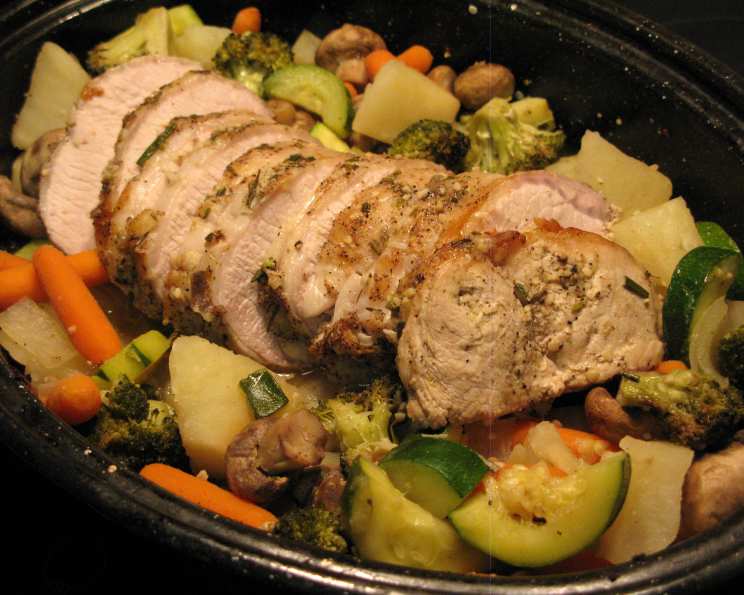
Tuscan Pork Roast (Weight Watchers)
The aroma of rosemary and garlic mingling with roasting pork always transports me back to a small trattoria I stumbled upon in the Tuscan countryside. I was lost, famished, and slightly overwhelmed, but the moment I stepped inside, I was enveloped in warmth. The friendly owner, nonna-like in her demeanor, insisted I try her arrosto di maiale – a simple pork roast perfumed with herbs from her garden. It was rustic, comforting, and unforgettable, and this recipe, with its lighter take, allows me to recreate a little bit of that magic at home, without the guilt.
Recipe Overview
- Prep Time: 15 minutes
- Cook Time: 1 hour 45 minutes
- Total Time: 2 hours
- Servings: 6
- Dietary Type: Weight Watchers
Ingredients
- 1 1/2 lbs boneless pork sirloin tip roast
- 3 garlic cloves, slivered lengthwise
- 3 teaspoons olive oil
- 2 tablespoons minced fresh rosemary
- Salt
- Freshly ground pepper
- 3/4 cup white wine, divided
Equipment Needed
- Small sharp knife
- Shallow roasting pan
- Instant-read thermometer
Instructions
-
Preheat your oven to 350°F (175°C). Make sure your oven rack is positioned in the center of the oven for even cooking.
-
Using a small, sharp knife, create several small incisions all over the surface of the pork sirloin tip roast. These incisions should be just deep enough to accommodate a sliver of garlic.
-
Insert a sliver of garlic into each incision. This ensures that the garlic infuses the pork with its aromatic flavor during the roasting process. Try to distribute the garlic evenly across the roast.
-
If desired, rub the entire pork roast with olive oil. This step helps the rosemary and other seasonings adhere to the pork and promotes browning. Use all 3 teaspoons of the olive oil for best results.
-
In a small bowl, combine the minced fresh rosemary, salt, and freshly ground pepper. Mix well to ensure the seasonings are evenly distributed.
-
Sprinkle the rosemary mixture generously over the entire pork roast, pressing it gently into the surface so that it adheres well. Make sure all sides of the roast are covered with the seasoning mixture.
-
Place the seasoned pork roast in a shallow roasting pan. A roasting pan with low sides is ideal for promoting even browning.
-
Pour 1/4 cup of the white wine into the bottom of the roasting pan. The wine will help to keep the pork moist during roasting and will add a subtle layer of flavor to the pan juices.
-
Roast the pork, basting occasionally with the pan juices. After half an hour, add another 1/4 cup of the white wine to the pan. This continuous basting will keep the pork moist and flavorful.
-
A few minutes before the roast is expected to be done, add the final 1/4 cup of white wine to the pan. This final addition of wine will help to deglaze the pan and create a delicious sauce.
-
Continue to roast until the pork is cooked through and an instant-read thermometer inserted into the thickest part of the pork (making sure not to touch bone) registers 160°F (71°C). This should take approximately 1 3/4 hours, but cooking times may vary depending on the thickness of the roast and the accuracy of your oven.
-
Once the pork reaches 160°F (71°C), remove it from the oven and transfer it to a cutting board.
-
Let the pork stand for 10 minutes before slicing. This resting period allows the juices to redistribute throughout the meat, resulting in a more tender and flavorful roast.
-
After resting, slice the pork roast thinly against the grain and serve immediately.
Expert Tips & Tricks
- Don’t skip the resting time! Those ten minutes are crucial for a juicy roast. Tent the roast loosely with foil during resting to keep it warm without steaming it.
- For extra flavor, consider adding a sprig or two of fresh rosemary to the roasting pan along with the wine.
- If your roast starts to brown too quickly, loosely tent it with aluminum foil during the latter part of the cooking time.
- If you want a richer sauce, you can thicken the pan juices after removing the roast. Place the roasting pan on the stovetop over medium heat. Whisk in a tablespoon of cornstarch mixed with a tablespoon of cold water. Bring to a simmer, stirring constantly, until the sauce thickens. Strain the sauce before serving.
- For a more intense garlic flavor, you can use roasted garlic cloves instead of fresh. Roast a head of garlic in the oven until softened and caramelized, then squeeze out the cloves and use them to stuff the pork.
Serving & Storage Suggestions
Serve the sliced Tuscan pork roast immediately alongside roasted vegetables like potatoes, carrots, and Brussels sprouts. A simple green salad also makes a lovely accompaniment. For a truly Tuscan experience, serve with crusty bread for soaking up the delicious pan juices.
Leftover pork roast can be stored in an airtight container in the refrigerator for up to 3-4 days. It’s best to slice the remaining roast before storing it, as it slices more easily when it’s cold. To reheat, you can gently warm the slices in a skillet with a little bit of olive oil, or you can microwave them in short intervals until heated through. Be careful not to overheat, as this can dry out the pork. The pork can also be frozen. Wrap well in cling film, then foil. Freeze for up to 2 months. Thaw completely before reheating.
Nutritional Information
| Nutrient | Amount per Serving | % Daily Value |
|---|---|---|
| Calories | 211.4 kcal | – |
| Calories from Fat | 85 kcal | – |
| Total Fat | 9.4 g | 14% |
| Saturated Fat | 2.8 g | 13% |
| Cholesterol | 72.6 mg | 24% |
| Sodium | 58.6 mg | 2% |
| Total Carbohydrate | 1.4 g | 0% |
| Dietary Fiber | 0.1 g | 0% |
| Sugars | 0.3 g | 1% |
| Protein | 23.5 g | 46% |
Variations & Substitutions
- Herb Variations: While rosemary is traditional, you can experiment with other Tuscan herbs such as sage, thyme, or oregano. A combination of herbs can create a complex and flavorful profile.
- Wine Substitute: If you don’t have white wine on hand, you can use chicken broth or vegetable broth as a substitute. The broth will still provide moisture and flavor to the roast.
- Spice it Up: For a little heat, add a pinch of red pepper flakes to the rosemary mixture before rubbing it on the pork.
- Marinade Option: For a more intense flavor, you can marinate the pork roast in the white wine, rosemary, garlic, salt, and pepper mixture for several hours or overnight before roasting.
- Vegetable Additions: Consider adding root vegetables like carrots, potatoes, and onions directly to the roasting pan for the last hour of cooking. These will soak up the flavorful pan juices and make for a complete meal.
FAQs (Frequently Asked Questions)
Q: Can I use a different cut of pork for this recipe?
A: While the sirloin tip roast works well for this recipe, you could also use a pork loin roast or a pork tenderloin. Pork loin will require a slightly longer cooking time, while pork tenderloin will cook more quickly. Adjust cooking times accordingly and always check the internal temperature with an instant-read thermometer.
Q: What if I don’t have fresh rosemary?
A: Dried rosemary can be used in place of fresh rosemary. Use about 1 tablespoon of dried rosemary for every 2 tablespoons of fresh rosemary. Keep in mind that dried herbs have a more concentrated flavor than fresh herbs.
Q: How do I know when the pork is cooked through?
A: The best way to ensure that the pork is cooked through is to use an instant-read thermometer. Insert the thermometer into the thickest part of the pork, making sure not to touch bone. The pork should register 160°F (71°C).
Q: Can I make this recipe ahead of time?
A: You can prepare the pork roast up to the point of roasting it. Season the roast and store it in the refrigerator until you’re ready to cook it. Allow the roast to come to room temperature for about 30 minutes before roasting.
Q: Is it necessary to baste the pork during roasting?
A: Basting helps to keep the pork moist and flavorful during roasting. If you don’t have time to baste frequently, you can cover the roast with foil for the first half of the cooking time and then remove the foil for the second half to allow the pork to brown.
Final Thoughts
This Tuscan Pork Roast is a testament to the power of simple ingredients and classic techniques. It’s a dish that is both comforting and elegant, perfect for a weeknight dinner or a special occasion. Don’t be intimidated by the roasting process; with a little attention and a good thermometer, you can create a truly memorable meal. I encourage you to try this recipe and share your experiences with friends and family. Pair it with a crisp Italian white wine and some roasted vegetables for a complete and satisfying feast. Buon appetito!