
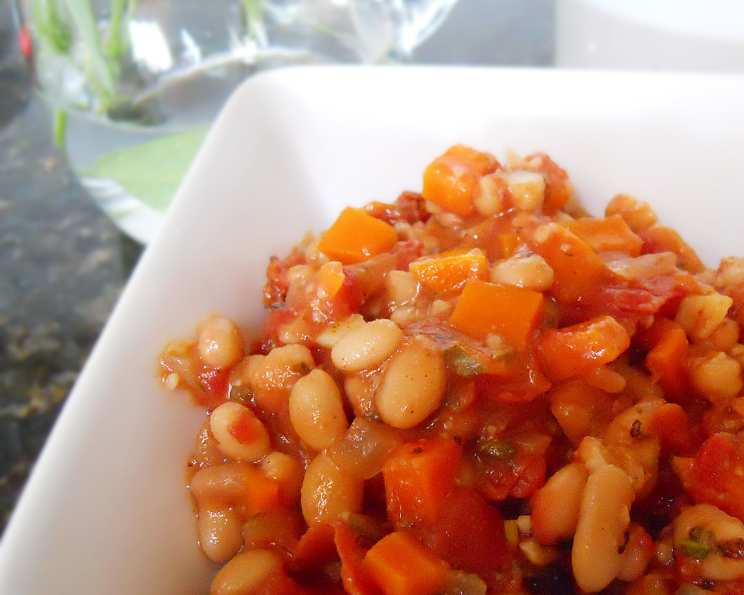
Tuscan White Beans With Sage: A Taste of Italian Comfort
The first time I tasted Tuscan white beans with sage, I was wandering through a tiny trattoria in Florence, escaping a sudden downpour. The aroma alone was enough to draw me in – earthy sage, sweet onions, and a hint of garlic simmering in olive oil. I ordered a bowl, and the simple, rustic flavors transported me. Each spoonful was a warm hug, and I knew instantly I needed to recreate this magic back home. This recipe is my humble attempt to capture that perfect bowl of Italian comfort.
Recipe Overview:
- Prep Time: 15 minutes
- Cook Time: 30 minutes
- Total Time: 45 minutes
- Servings: 8
- Dietary Type: Vegan
Ingredients:
- 2 tablespoons extra virgin olive oil
- 1 large yellow onion, chopped
- 3 garlic cloves, minced (or 2 tablespoons minced garlic)
- 1 cup carrot, chopped
- 2 tablespoons fresh sage, minced
- 28 ounces petite diced tomatoes (undrained)
- 2 (15 7/8 ounce) cans white beans (cannellini or great northern)
- 1 1/2 tablespoons fresh lemon juice
Equipment Needed:
- Large pot or Dutch oven
- Cutting board
- Knife
- Measuring spoons and cups
Instructions:
-
Begin by heating the olive oil in a large pot or Dutch oven over medium heat. The olive oil should shimmer gently.
-
Add the chopped onion, garlic, and carrot to the pot. Sauté the vegetables, stirring occasionally, until the onions become translucent. This usually takes about 5-7 minutes. Don’t rush this step; allowing the vegetables to soften and release their flavors is key.
-
Add the minced fresh sage to the pot and cook until aromatic, about 1 minute. Stir constantly to prevent the sage from burning, as burnt sage can impart a bitter flavor.
-
Pour in the undrained can of petite diced tomatoes. Stir well to combine all the ingredients and bring the mixture to a simmer.
-
Add the white beans (cannellini or great northern, drained or undrained, depending on your preference for a thicker or thinner stew) to the pot. Return the mixture to a simmer.
-
Reduce the heat to low and simmer for as long as you like. The longer it simmers, the more the flavors will meld together and intensify. The recipe suggests a minimum cooking time, but feel free to let it simmer for an hour or more, stirring occasionally to prevent sticking.
-
Just before serving, stir in the fresh lemon juice. This brightens the flavors and adds a touch of acidity that balances the richness of the beans and olive oil.
-
Taste and adjust seasoning as needed. You might want to add a pinch of salt and freshly ground black pepper to enhance the flavors.
Expert Tips & Tricks:
- Fresh Sage is Key: Do not substitute dry sage for fresh sage in this recipe. The flavor of fresh sage is far superior and essential for achieving the authentic Tuscan taste.
- Long, Slow Simmer: The flavor of this stew improves significantly with a long, slow simmer. If you have the time, let it simmer for at least an hour.
- Texture Adjustment: For a creamier texture, you can use an immersion blender to partially puree the stew. Be careful not to over-blend, as you want to retain some of the chunky texture.
- Make-Ahead Magic: This stew is perfect for making ahead of time. The flavors deepen and become even more delicious as it sits.
- Enhance the Flavor: To enhance the depth of flavor, consider adding a Parmesan rind while the stew simmers. Remember to remove the rind before serving.
- Spice it Up: For a bit of heat, add a pinch of red pepper flakes along with the sage.
- Bean Quality: The quality of your beans matters. If possible, use beans that have been cooked from dried for the best flavor and texture. Canned beans work perfectly well if you’re short on time, but try to opt for organic or high-quality brands.
Serving & Storage Suggestions:
Serve the Tuscan white beans with sage hot in deep bowls, drizzled with a little extra virgin olive oil and a sprinkle of freshly chopped parsley or extra sage. A crusty loaf of bread is essential for soaking up the delicious sauce. This dish pairs beautifully with chunky pasta shapes like rigatoni or penne.
Storage: Leftovers can be stored in an airtight container in the refrigerator for up to 3-4 days. The flavors will continue to develop and deepen over time. You can also freeze the stew for longer storage, up to 2-3 months. Thaw overnight in the refrigerator before reheating.
Reheating: Reheat gently on the stovetop over medium-low heat, stirring occasionally, until heated through. You may need to add a splash of water or vegetable broth if the stew has thickened too much. You can also reheat it in the microwave, but be sure to stir it halfway through to ensure even heating.
Nutritional Information:
| Nutrient | Amount per Serving | % Daily Value |
|---|---|---|
| Calories | 220 kcal | 11% |
| Total Fat | 8g | 10% |
| Saturated Fat | 1g | 5% |
| Cholesterol | 0mg | 0% |
| Sodium | 450mg | 20% |
| Carbohydrates | 30g | 11% |
| Fiber | 8g | 29% |
| Sugar | 5g | – |
| Protein | 12g | 24% |
Note: Nutritional information is an estimate and may vary based on specific ingredients and preparation methods.
Variations & Substitutions:
- Add Greens: Stir in a handful of chopped spinach, kale, or chard during the last few minutes of cooking for added nutrients and flavor.
- Celery Variation: Add a stalk of celery, diced, along with the onions and carrots.
- Rosemary Infusion: Add a little dried rosemary with the white beans for a different herbal note.
- Make it Spicy: Add a pinch of red pepper flakes for a little kick.
- For Meat-Eaters: This dish is delicious with a few shrimp sautéed in butter and garlic served on top. Or, consider adding pancetta or Italian sausage for added richness.
- Use Different Beans: While cannellini or great northern beans are traditional, you can experiment with other types of white beans, such as navy beans or butter beans.
FAQs (Frequently Asked Questions):
Q: Can I use dried beans instead of canned beans?
A: Absolutely! Dried beans will result in a richer flavor and creamier texture. Soak them overnight and cook them until tender before adding them to the recipe.
Q: Can I freeze this stew?
A: Yes, this stew freezes very well. Allow it to cool completely before transferring it to an airtight container and freezing for up to 2-3 months.
Q: Can I make this recipe in a slow cooker?
A: Yes, you can adapt this recipe for a slow cooker. Sauté the onions, garlic, and carrots in a skillet first, then transfer them to the slow cooker along with the remaining ingredients. Cook on low for 6-8 hours or on high for 3-4 hours.
Q: What if I don’t have fresh sage?
A: While fresh sage is highly recommended, you can use dried sage in a pinch. Use about 1 teaspoon of dried sage, and add it along with the tomatoes. Keep in mind that the flavor will be different.
Q: Can I add vegetable broth for more liquid?
A: Yes, if you prefer a soupier consistency, you can add vegetable broth to the pot. Start with about 1/2 cup and add more as needed until you reach your desired consistency.
Final Thoughts:
This Tuscan white bean stew is more than just a recipe; it’s a taste of Italian warmth and simplicity. It’s a dish that nourishes the body and soul, perfect for a chilly evening or a comforting lunch. I encourage you to try this recipe and make it your own. Don’t be afraid to experiment with different herbs, vegetables, or toppings to create a version that you love. And most importantly, share it with friends and family, because good food is always best enjoyed together. Buon appetito!