
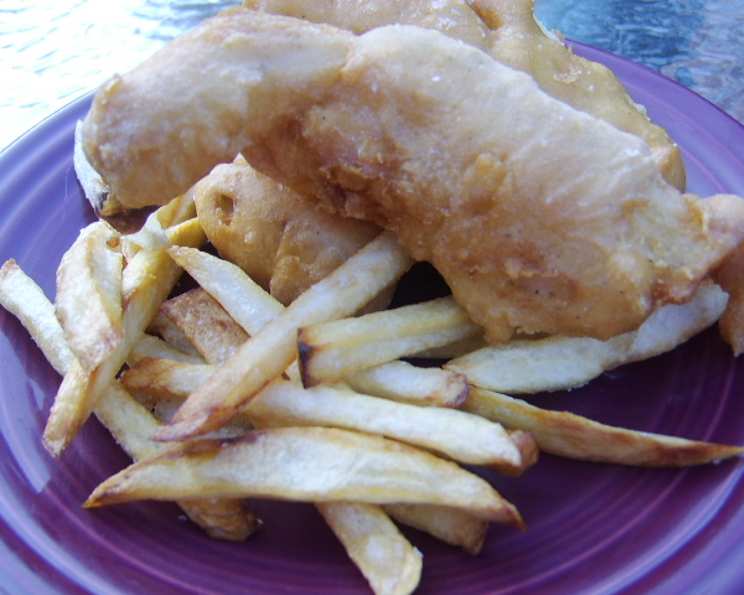
Tyler Florence’s Ultimate Fish and Chips: A Culinary Deep Dive
The aroma of perfectly fried fish and chips always transports me back to a small, bustling pub in Ireland. Rain was lashing against the windows, but inside, warmth radiated from the friendly faces and the sizzling sounds emanating from the kitchen. That first bite – the shatteringly crisp batter giving way to flaky, succulent cod – was pure culinary bliss. It wasn’t just food; it was an experience, a comforting hug on a blustery day. This recipe aims to recreate that very experience, bringing the magic of authentic fish and chips right to your home.
Recipe Overview
- Prep Time: 20 minutes
- Cook Time: 20 minutes
- Total Time: 40 minutes
- Servings: 4
- Dietary Type: Not specified
Ingredients
- Vegetable oil, for deep frying
- 4 large russet potatoes
- 2 cups flour
- 1 tablespoon baking powder
- 1 teaspoon salt, plus more for seasoning
- ½ teaspoon fresh ground black pepper, plus more for seasoning
- 1 large egg, lightly beaten
- 1 (12 ounce) can soda water
- ½ cup rice flour, for dredging
- 2 (8 ounce) cod fish fillets or 2 (8 ounce) haddock fillets, cut in 1/2 on an angle
- Malt vinegar, for serving
For the Tartar Sauce:
- 1 cup mayonnaise
- 1 tablespoon capers, chopped
- 1 tablespoon cornichon, chopped
- 2 tablespoons flat leaf parsley, finely chopped
- ½ lemon, juiced
- 1 dash hot sauce
Equipment Needed
- Deep fryer or deep pot
- Spider strainer or slotted spoon
- Paper towels
- Large mixing bowl
- Small mixing bowl
Instructions
-
First, begin by preparing your frying setup. Heat approximately 3 inches of vegetable oil in a deep fryer. If you don’t have a deep fryer, a deep pot will work just as well, ensuring the oil is deep enough to fully submerge the fish and chips. The ideal temperature for frying is around 350°F (175°C). Use a thermometer to monitor the oil temperature for consistent results.
-
While the oil is heating, turn your attention to the potatoes. Peel the 4 large russet potatoes and cut them into chips, aiming for a size roughly equivalent to your index finger – this ensures they cook evenly.
-
Carefully place the cut potatoes into the heated oil. Fry them for an initial 2 to 3 minutes. The goal at this stage isn’t to fully cook them, but rather to par-cook them. They should not be crisp or brown at this point.
-
Using a spider strainer or a slotted spoon, remove the potatoes from the oil and transfer them to a platter lined with paper towels to drain excess oil. This step is crucial for achieving truly crispy chips later on.
-
Now, it’s time for the second frying. Return the chips to the fryer and cook for an additional 4 to 5 minutes, or until they are crispy and beautifully golden brown. Keep a close eye on them to prevent burning.
-
Remove the chips from the fryer once again, placing them on paper towels to drain. Set them aside while you prepare the fish.
-
Next, prepare the batter. In a large mixing bowl, whisk together 2 cups of flour, 1 tablespoon of baking powder, 1 teaspoon of salt, and ½ teaspoon of freshly ground black pepper. This dry mixture forms the base of your crispy batter.
-
Add 1 lightly beaten large egg to the dry ingredients. Then, slowly pour in 1 (12 ounce) can of soda water, whisking continuously until you achieve a smooth batter. Avoid over-mixing, as this can develop the gluten in the flour and result in a tougher batter. A few lumps are perfectly acceptable.
-
Prepare a dredging station by spreading ½ cup of rice flour on a plate. This will help the batter adhere to the fish and create an even crispier coating.
-
Dredge each piece of cod or haddock in the rice flour, ensuring it’s fully coated. Then, dip the fish into the batter, allowing any excess to drip off. This prevents the fish from becoming overly greasy during frying.
-
Carefully submerge the battered fish into the bubbling oil. Fry for 4 to 5 minutes, or until the batter is golden brown and crispy, and the fish is cooked through and flakes easily with a fork. The internal temperature of the fish should reach 145°F (63°C).
-
Remove the fish from the fryer and drain it on paper towels alongside the chips. Season both the fish and chips lightly with salt to enhance their flavor.
-
To make the tartar sauce, in a small mixing bowl, combine 1 cup of mayonnaise, 1 tablespoon of chopped capers, 1 tablespoon of chopped cornichon, 2 tablespoons of finely chopped flat leaf parsley, the juice of ½ a lemon, and 1 dash of hot sauce. Stir well to combine.
-
Chill the tartar sauce before serving to allow the flavors to meld together. This will also help to thicken the sauce slightly.
-
Serve the fish and chips immediately, traditionally wrapped in a newspaper cone (food-safe paper is recommended for hygiene purposes). Offer malt vinegar and the chilled tartar sauce on the side for dipping.
Expert Tips & Tricks
- Temperature Control: Maintaining a consistent oil temperature is key. If the oil is too cool, the fish and chips will be greasy. If it’s too hot, they’ll burn before cooking through. Use a thermometer and adjust the heat as needed.
- Double Frying: The double-frying method for the chips is crucial for achieving that perfect crispy exterior and fluffy interior. Don’t skip the first fry!
- Batter Consistency: The batter should be thick enough to coat the fish without being too heavy. If it’s too thick, add a little more soda water. If it’s too thin, add a little more flour.
- Rice Flour Dredging: Using rice flour for dredging creates a lighter, crispier coating compared to using regular flour.
- Fish Selection: Cod and haddock are traditional choices, but you can also use other white fish fillets like pollock or whiting. Just be sure to adjust cooking times as needed depending on the thickness of the fillet.
Serving & Storage Suggestions
Serve your freshly fried fish and chips immediately for the best texture and flavor. Traditionally, they’re served wrapped in newspaper (though using food-safe paper is a more hygienic option). Accompany with malt vinegar and homemade tartar sauce.
Leftover fish and chips are best stored in the refrigerator in an airtight container. They will last for up to 2 days. Reheating in the oven at 350°F (175°C) for about 10-15 minutes will help to restore some of the crispness, but they won’t be quite as good as freshly made. Microwaving is not recommended, as it will make them soggy. The tartar sauce should also be stored in the refrigerator and will last for up to 3 days.
Nutritional Information
| Nutrient | Amount per Serving | % Daily Value |
|---|---|---|
| Calories | 1240.8 kcal | N/A |
| Calories from Fat | 274 g | 22% |
| Total Fat | 30.5 g | 46% |
| Saturated Fat | 4.9 g | 24% |
| Cholesterol | 147.9 mg | 49% |
| Sodium | 1982.5 mg | 82% |
| Total Carbohydrate | 192.1 g | 64% |
| Dietary Fiber | 14.3 g | 57% |
| Sugars | 9.5 g | 37% |
| Protein | 50.4 g | 100% |
Note: Nutritional information is an estimate and may vary based on specific ingredients and portion sizes.
Variations & Substitutions
- Gluten-Free: Use a gluten-free flour blend in place of regular flour for both the batter and dredging.
- Vegetarian “Fish”: Substitute the fish with thick slices of halloumi cheese, which fries up beautifully and has a similar texture.
- Spiced Batter: Add a pinch of cayenne pepper or smoked paprika to the batter for a hint of heat.
- Sweet Potato Chips: Use sweet potatoes instead of russet potatoes for a slightly sweeter and more nutritious twist.
- Herbaceous Tartar Sauce: Experiment with different herbs in the tartar sauce, such as dill, chives, or tarragon.
FAQs (Frequently Asked Questions)
Q: What’s the secret to getting really crispy chips?
A: The key is the double-frying method! The first fry par-cooks the potatoes, while the second fry crisps them up to perfection.
Q: Can I use a different type of fish?
A: Absolutely! Cod and haddock are traditional, but pollock, whiting, or even tilapia can work well. Just adjust the cooking time based on the thickness of the fillet.
Q: Why is soda water used in the batter?
A: The carbonation in soda water creates a light and airy batter that results in a crispier coating.
Q: Can I make the tartar sauce ahead of time?
A: Yes, in fact, it’s recommended! Making the tartar sauce a few hours in advance allows the flavors to meld together, resulting in a more flavorful sauce.
Q: How do I prevent the fish from sticking to the fryer?
A: Make sure the oil is hot enough and that the fish is properly dredged in rice flour before dipping it in the batter.
Final Thoughts
Tyler Florence’s Ultimate Fish and Chips is more than just a recipe; it’s an invitation to create a culinary experience that will transport you to a cozy pub, no matter where you are. The combination of crispy battered fish and perfectly golden chips is simply irresistible. Don’t be intimidated by the steps – each one is crucial for achieving that perfect balance of texture and flavor. Gather your ingredients, put on some good music, and get ready to create a dish that will impress your friends and family. We encourage you to try it out and share your results or any exciting variations you come up with. And why not pair it with a refreshing pint of beer or a crisp glass of white wine for the complete experience?