
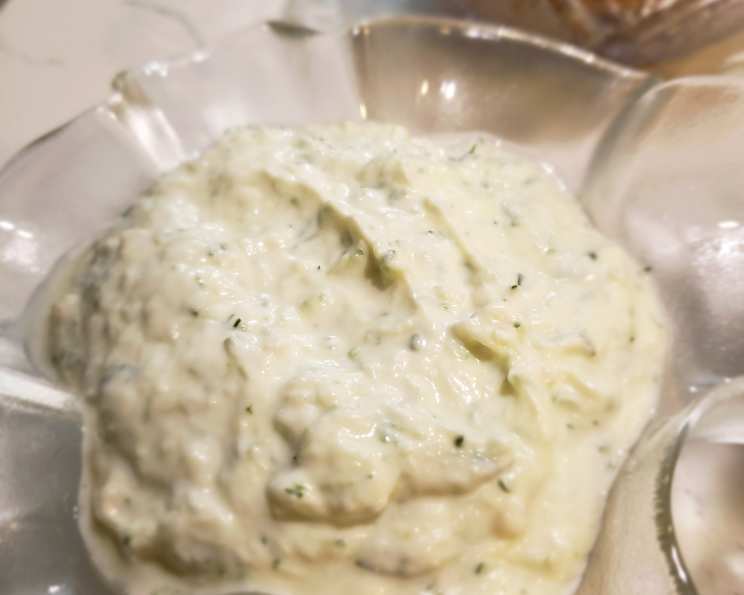
The Cool Kiss of Tzatziki: A Journey to Greece in Every Bite
My grandmother, Yiayia Eleni, had a way of making simple things extraordinary. One of my fondest memories is sitting on her sun-drenched porch in Crete, the air thick with the scent of olive groves and the distant murmur of the Aegean Sea. She’d bring out a bowl of homemade tzatziki, its creamy coolness a welcome respite from the Mediterranean heat. It wasn’t just a dip; it was a taste of home, a symbol of family, and a testament to the magic of fresh, simple ingredients. This recipe is my attempt to capture that essence, to share a little piece of Yiayia Eleni’s kitchen with you.
Recipe Overview
- Prep Time: 10 minutes
- Total Time: 10 minutes (plus 2-3 hours chilling)
- Yields: 1 1/2 pints
- Serves: 12
- Dietary Type: Vegetarian, Gluten-Free
Ingredients
- 1 pint sour cream (or Greek-style super thick yoghurt)
- 1 English cucumber, peeled, grated on a box grater, salted lightly for 5 minutes and squeezed between the hands to remove excess moisture (the long, thin, almost seedless kind)
- 3 garlic cloves, mashed to a paste
- 1/3 cup olive oil
- 1 tablespoon red wine vinegar
- 1 tablespoon minced fresh dill (optional)
- Salt, to taste
Equipment Needed
- Box grater
- Colander (optional)
- Mixing bowl
- Resealable container
Instructions
- In a large mixing bowl, combine the sour cream (or Greek yoghurt), grated cucumber, garlic paste, olive oil, red wine vinegar, and dill (if using).
- Mix all the ingredients thoroughly until well blended and the olive oil has emulsified into the yoghurt or sour cream.
- Taste the mixture for seasoning and add salt if needed. Remember that the flavors will develop and intensify as the tzatziki sits, so err on the side of caution when adding salt initially.
- Transfer the tzatziki to a resealable container.
- Refrigerate for at least 2-3 hours before serving. This allows the flavors to meld and deepen, resulting in a more complex and delicious tzatziki. The longer it sits (up to 24 hours), the better!
Expert Tips & Tricks
- Cucumber Preparation is Key: The most common mistake people make with tzatziki is ending up with a watery dip. Properly draining the cucumber is crucial. Salting the grated cucumber for 5-10 minutes draws out the excess moisture. Squeezing it between your hands (or in cheesecloth) gets rid of even more water, resulting in a thicker, creamier tzatziki.
- Garlic Intensity: The raw garlic flavor can be quite pungent. Mashing it into a paste helps to distribute the flavor evenly and mellow it out. If you prefer a milder garlic taste, you can use roasted garlic instead.
- Yoghurt Choice Matters: Greek yoghurt is the traditional choice for tzatziki. Its thick, creamy texture provides the perfect base. If you’re using regular yoghurt, you may need to strain it through cheesecloth for a few hours to remove some of the whey and achieve the desired consistency. Sour cream offers a different tang, but provides a very similar creamy texture.
- Olive Oil Quality: A good quality extra virgin olive oil adds a fruity and peppery note to the tzatziki. Don’t skimp on the olive oil; it makes a big difference!
- Fresh Dill: While optional, fresh dill adds a bright, herbaceous flavor that complements the other ingredients beautifully. If you don’t have fresh dill, you can use dried dill, but use only about 1 teaspoon, as dried herbs are more concentrated.
- Make Ahead: Tzatziki is a great make-ahead dish. In fact, it tastes even better after it has had time to sit in the refrigerator for a few hours or even overnight.
- Troubleshooting: If your tzatziki is too thick, add a tablespoon or two of water or milk until you reach the desired consistency. If it is too thin, add a tablespoon of yoghurt or sour cream.
Serving & Storage Suggestions
Tzatziki is incredibly versatile and can be served in countless ways.
- As a dip: Serve it with warm pita bread, crudités (carrots, celery, cucumbers, bell peppers), or grilled vegetables.
- As a sauce: Use it as a sauce for grilled meats (souvlaki, gyros, kebabs), fish, or chicken.
- As a topping: Dollop it on top of fried zucchini or eggplant slices, baked potatoes, or falafel.
- As a salad dressing: Thin it out with a little water or lemon juice and use it as a refreshing salad dressing.
Leftover tzatziki should be stored in an airtight container in the refrigerator. It will keep for up to 3-4 days. While freezing is possible, it is not recommended as the texture can change and become watery upon thawing.
Nutritional Information
| Nutrient | Amount per Serving | % Daily Value |
|---|---|---|
| Calories | 132 kcal | – |
| Calories from Fat | – g | -% |
| Total Fat | 13.6 g | 20% |
| Saturated Fat | 5.2 g | 26% |
| Cholesterol | 19.9 mg | 6% |
| Sodium | 31.5 mg | 1% |
| Total Carbohydrate | 2.3 g | 0% |
| Dietary Fiber | 0.1 g | 0% |
| Sugars | 1.8 g | -% |
| Protein | 1 g | 2% |
Note: Nutritional information is an estimate and may vary based on specific ingredients and preparation methods.
Variations & Substitutions
- Vegan Tzatziki: Substitute the sour cream or yoghurt with a plant-based alternative, such as cashew cream, soy yoghurt, or coconut yoghurt. Be sure to choose an unsweetened and unflavored variety.
- Lemon Tzatziki: Add a tablespoon of lemon juice to the mixture for a brighter, tangier flavor.
- Mint Tzatziki: Replace the dill with fresh mint for a different herbaceous note.
- Spicy Tzatziki: Add a pinch of red pepper flakes or a dash of hot sauce for a little kick.
- Different Vinegars: Experiment with different vinegars, such as white wine vinegar or apple cider vinegar, for subtle flavor variations.
- Cucumber Variety: While English cucumbers are preferred due to their lower seed content and thinner skin, you can use other types of cucumbers as well. Just be sure to peel and seed them before grating.
FAQs (Frequently Asked Questions)
Q: Why is my tzatziki watery?
A: This is usually due to excess moisture in the cucumber. Make sure to salt the grated cucumber and squeeze out as much water as possible before adding it to the other ingredients.
Q: Can I use dried dill instead of fresh?
A: Yes, but use only about 1 teaspoon of dried dill, as it is more concentrated than fresh.
Q: How long does tzatziki last in the refrigerator?
A: Tzatziki will keep in the refrigerator for up to 3-4 days.
Q: Can I freeze tzatziki?
A: Freezing is not recommended as the texture can change and become watery upon thawing.
Q: Is tzatziki healthy?
A: Tzatziki is a relatively healthy dip, as it is low in calories and fat and contains beneficial probiotics from the yoghurt. However, it is important to use it in moderation, as it can be high in sodium.
Final Thoughts
I hope this recipe inspires you to create your own version of this classic Greek dip. It’s a simple dish, but one that is full of flavor and history. Whether you’re serving it as a party appetizer, a side dish for dinner, or a snack for yourself, I’m confident that it will bring a little bit of sunshine to your table. Don’t be afraid to experiment with the ingredients and make it your own. And if you do, please share your creations with me – I’d love to hear about them! Kali Orexi! (Good Appetite!)