
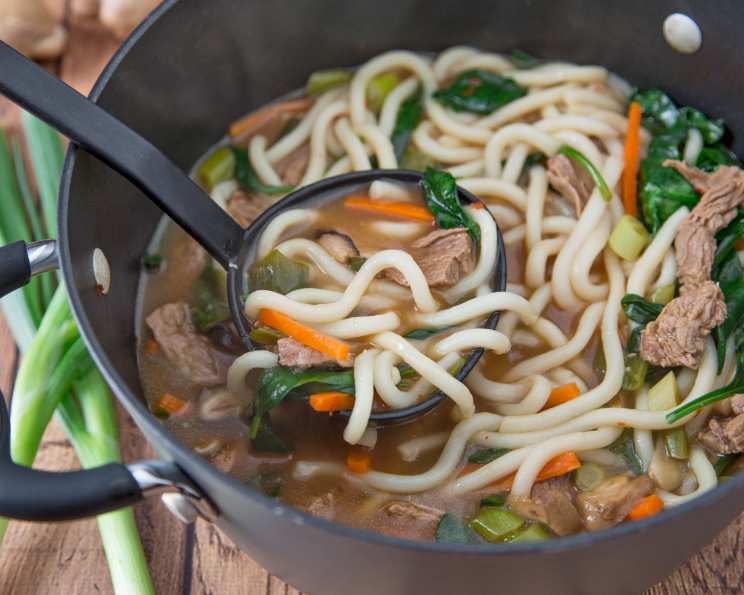
Udon-Beef Noodle Bowl: A Symphony of Flavor
The first time I encountered a dish like this, I was backpacking through Japan. It was a chilly evening in Kyoto, and the aroma wafting from a tiny, unassuming noodle shop pulled me in like a siren song. Slurping down that steaming bowl of udon noodles in savory broth, topped with tender beef and vibrant greens, was an experience I’ll never forget. It was more than just food; it was comfort, culture, and pure deliciousness all in one. This Udon-Beef Noodle Bowl recipe aims to capture that same magic, bringing a taste of Japan to your kitchen.
Recipe Overview
- Prep Time: 15 minutes
- Cook Time: 31 minutes
- Total Time: 46 minutes
- Servings: 5
- Dietary Type: Hearty, Savory
Ingredients
- 8 ounces uncooked udon noodles (or 8 ounces spaghetti)
- 1 1/2 teaspoons minced garlic
- 1/2 teaspoon crushed red pepper flakes
- 2 (14 1/2 ounce) cans low sodium beef broth
- 3 tablespoons low sodium soy sauce
- 3 tablespoons sake (or 3 tablespoons dry sherry)
- 1 tablespoon honey
- 3 cups sliced shiitake mushroom caps
- 1/2 cup thinly sliced carrot
- 8 ounces top round beef, thinly sliced
- 3/4 cup diagonally cut green onion
- 1 (6 ounce) bag prewashed Baby Spinach
Equipment Needed
- Large saucepan
- Small bowl
- Whisk
- Large nonstick skillet
- Cooking spray
Instructions
- Begin by cooking the udon noodles according to the package directions. If you are using spaghetti, cook al dente. Once cooked, drain the noodles thoroughly and set aside.
- In a large saucepan, combine the minced garlic, crushed red pepper flakes, and low sodium beef broth. Bring the mixture to a boil over high heat.
- Once boiling, reduce the heat to low and let the broth simmer for 10 minutes, allowing the flavors to meld together.
- While the broth is simmering, prepare the sauce. In a small bowl, combine the low sodium soy sauce, sake (or dry sherry), and honey. Use a whisk to stir the ingredients together until the honey is fully dissolved and the sauce is well combined.
- Heat a large nonstick skillet over medium-high heat. Coat the skillet lightly with cooking spray.
- Add the sliced shiitake mushroom caps and thinly sliced carrot to the heated skillet. Sauté the vegetables for approximately 2 minutes, stirring frequently, until they begin to soften slightly.
- Pour the soy sauce mixture over the mushrooms and carrots in the skillet. Cook for an additional 2 minutes, stirring constantly to prevent burning, until the sauce thickens slightly and coats the vegetables.
- Transfer the vegetable mixture from the skillet into the saucepan with the simmering broth. Stir to combine the vegetables and broth thoroughly.
- Add the thinly sliced top round beef to the saucepan. Cook for approximately 2 minutes, or until the beef loses its pink color. Be careful not to overcook the beef, as it will become tough.
- Stir in the cooked udon noodles, diagonally cut green onions, and prewashed baby spinach into the saucepan. Ensure all ingredients are well incorporated and heated through. The spinach should wilt slightly.
- Serve the Udon-Beef Noodle Bowl immediately in individual bowls. Garnish with extra green onions, if desired.
Expert Tips & Tricks
- For an extra depth of flavor, consider adding a small knob of grated ginger to the broth while it simmers.
- If you prefer a spicier dish, increase the amount of crushed red pepper flakes or add a dash of chili oil.
- To save time, you can use pre-cut vegetables or buy pre-sliced beef from the grocery store.
- Don’t overcrowd the skillet when sautéing the mushrooms and carrots. If necessary, cook them in batches to ensure even browning.
- If you are using sake, choose a dry sake for the best flavor. If you are using dry sherry, a medium-dry sherry will also work well.
- To prevent the beef from becoming tough, ensure the skillet is hot before adding it and don’t overcook it. It should be cooked just until it loses its pink color.
- For a richer broth, you can add a tablespoon of sesame oil to the saucepan along with the soy sauce mixture.
Serving & Storage Suggestions
Serve the Udon-Beef Noodle Bowl hot, right after it’s prepared, for the best flavor and texture. Garnish with extra sliced green onions or a sprinkle of sesame seeds for visual appeal. For a complete meal, consider serving it with a side of steamed edamame or a simple seaweed salad.
Leftovers can be stored in an airtight container in the refrigerator for up to 2 days. To reheat, gently warm the noodle bowl in a saucepan over low heat, stirring occasionally, until heated through. You may need to add a splash of beef broth or water to prevent the noodles from drying out. Reheating in the microwave is also possible, but it may affect the texture of the noodles. It’s not recommended to freeze the leftovers, as the noodles may become mushy.
Nutritional Information
| Nutrient | Amount per Serving | % Daily Value |
|---|---|---|
| Calories | 321.2 kcal | N/A |
| Calories from Fat | 23g | 7% |
| Total Fat | 2.6 g | 4% |
| Saturated Fat | 0.8 g | 3% |
| Cholesterol | 24.9 mg | 8% |
| Sodium | 1228.9 mg | 51% |
| Total Carbohydrate | 54.9 g | 18% |
| Dietary Fiber | 5.4 g | 21% |
| Sugars | 8.1 g | N/A |
| Protein | 18.9 g | 37% |
Variations & Substitutions
- Vegetarian: Substitute the beef with tofu or tempeh. Use vegetable broth instead of beef broth.
- Gluten-Free: Use gluten-free udon noodles or rice noodles. Tamari can be used in place of soy sauce.
- Spicy: Add a dash of sriracha or gochujang to the broth for extra heat.
- Seafood: Replace the beef with shrimp or scallops.
- Vegetables: Add other vegetables such as bok choy, bean sprouts, or snow peas.
- Flavor Enhancers: Experiment with adding a small amount of fish sauce or oyster sauce (if not vegetarian) for a more umami-rich flavor.
FAQs (Frequently Asked Questions)
Q: Can I use a different type of noodle?
A: Yes, while udon noodles are traditional, you can substitute them with other types of noodles like soba, ramen, or even spaghetti. Just adjust the cooking time accordingly.
Q: Can I make this dish ahead of time?
A: While it’s best served immediately, you can prepare the broth and vegetable mixture ahead of time. Store it in the refrigerator, and then add the beef, noodles, and spinach just before serving.
Q: Is it possible to use frozen spinach?
A: Yes, you can use frozen spinach. Make sure to thaw it completely and squeeze out any excess water before adding it to the noodle bowl.
Q: Can I use a different cut of beef?
A: Yes, you can use other cuts of beef such as sirloin or flank steak. Just make sure to slice it thinly against the grain for maximum tenderness.
Q: What if I don’t have sake or dry sherry?
A: If you don’t have sake or dry sherry, you can substitute it with a small amount of rice vinegar or even just a little extra soy sauce.
Final Thoughts
I truly believe food connects us to memories and moments. This Udon-Beef Noodle Bowl is more than just a recipe; it’s a journey, a taste of a faraway land, and a warm hug in a bowl. So, gather your ingredients, follow the steps, and let the aroma fill your kitchen. I hope this dish brings you as much comfort and joy as it has brought me. Feel free to experiment with the variations and make it your own. I’d love to hear your feedback and see your creations! Pair it with a crisp Japanese beer or a refreshing glass of iced green tea for the perfect culinary experience.