
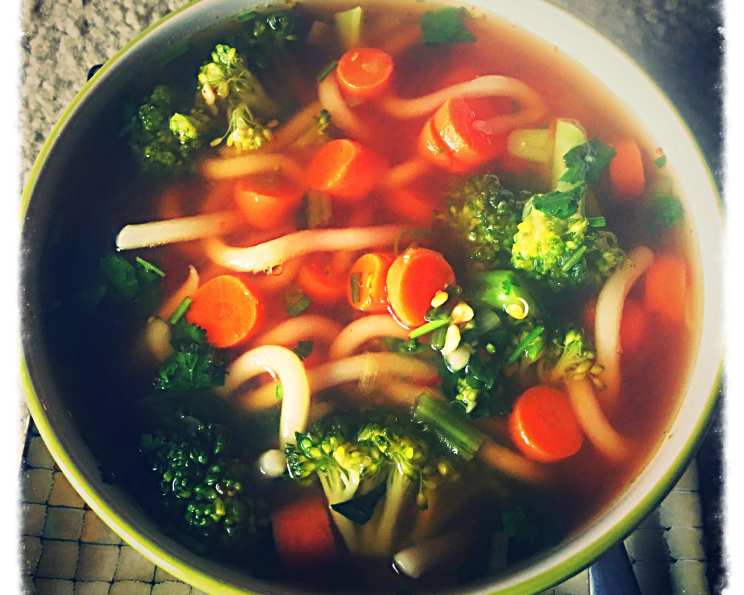
Slurping My Way Home: A Heartwarming Bowl of Udon Noodle Soup
There’s a particular memory etched in my mind: a chilly Tokyo evening, rain slicking the neon-lit streets, and the comforting steam rising from a bowl of udon noodle soup in a tiny, hole-in-the-wall restaurant. The thick, chewy noodles, the savory broth, the simple yet perfect combination of flavors – it was more than just a meal; it was a warm hug on a cold night. I remember thinking, “This is exactly what my soul needed.” That experience sparked a lifelong love affair with udon and a desire to recreate that feeling of comfort and simple joy.
Recipe Overview
- Prep Time: 15 minutes
- Cook Time: 15 minutes
- Total Time: 30 minutes
- Servings: 2
- Dietary Type: Vegetarian
Ingredients
- 2 tablespoons extra virgin olive oil
- 2 garlic cloves, finely chopped
- 1 cup fresh broccoli, stems and florets separated and chopped into bite-size pieces
- 1 carrot, thinly sliced
- 1⁄2 cup finely chopped onion
- 2 (7 ounce) packages fresh udon noodles
- 3-4 tablespoons soy sauce
- 4-5 cups low sodium vegetable broth
- Salt, to taste
- Freshly ground pepper, to taste (optional)
Equipment Needed
- Small pan
- Medium saucepan
Instructions
-
Begin by preparing the vegetable broth. In a small pan, bring the vegetable broth to a boil, then immediately lower the heat to a gentle simmer. This simmering broth will be ready to incorporate later, infusing all the flavors together beautifully.
-
While the broth simmers, move on to the vegetables and noodles. Heat the extra virgin olive oil in a medium saucepan over medium heat. Ensure the pan is heated sufficiently before adding the oil to prevent sticking.
-
Add the finely chopped garlic and onion to the heated oil. Sauté until the onion becomes translucent and the garlic turns a light golden brown. Watch carefully to avoid burning the garlic, as this can impart a bitter taste.
-
Introduce the remaining vegetables – the chopped broccoli (both stems and florets) and the thinly sliced carrot – to the saucepan.
-
Now, add the fresh udon noodles to the pan, nestling them amongst the vegetables. Pour in the soy sauce, ensuring it coats the noodles and vegetables evenly.
-
Season with salt to your liking. Remember that soy sauce also contains salt, so start with a smaller amount and adjust as needed.
-
Cook until the vegetables are tender, which should take approximately 3-4 minutes. Stir frequently to prevent sticking and ensure even cooking. The udon noodles will begin to soften and absorb the flavors from the soy sauce and vegetables.
-
Pour the simmering vegetable broth into the saucepan, combining it with the vegetables and udon noodles.
-
Allow the entire mixture to simmer for 5-6 minutes. This allows the flavors to meld together, creating a rich and harmonious soup. Be sure to check the noodles for thorough cooking, ensuring they are tender and chewy, but not mushy.
-
Finally, season with freshly ground pepper, if desired, and add additional salt to taste. Remember to taste as you go, adjusting the seasoning to achieve your preferred flavor profile.
Expert Tips & Tricks
- Boost the Broth: For a richer, more complex broth, consider adding a small piece of kombu (dried kelp) to the vegetable broth as it simmers. Remove the kombu before serving.
- Veggie Power: Feel free to customize the vegetables based on your preferences and what’s in season. Mushrooms, spinach, snap peas, or bell peppers would all be delicious additions.
- Noodle Nirvana: To prevent the udon noodles from sticking together, you can briefly rinse them under cold water before adding them to the saucepan.
- Flavor Infusion: A small knob of freshly grated ginger added with the garlic and onion will add a warm, spicy note.
- Spice it Up: A pinch of red pepper flakes or a dash of Sriracha can add a welcome kick of heat.
Serving & Storage Suggestions
Serve the udon noodle soup hot, garnished with fresh scallions or a sprinkle of sesame seeds for added flavor and visual appeal.
Leftovers can be stored in an airtight container in the refrigerator for up to 2-3 days. The noodles may absorb some of the broth during storage, so you may need to add a splash of vegetable broth or water when reheating.
To reheat, simply warm the soup in a saucepan over medium heat, stirring occasionally, until heated through. You can also reheat it in the microwave in a microwave-safe bowl.
Nutritional Information
| Nutrient | Amount per Serving | % Daily Value |
|---|---|---|
| Calories | 390 kcal | 19% |
| Total Fat | 16g | 25% |
| Saturated Fat | 3g | 15% |
| Cholesterol | 0mg | 0% |
| Sodium | 1800mg | 75% |
| Total Carbohydrate | 45g | 15% |
| Dietary Fiber | 5g | 20% |
| Sugars | 7g | 14% |
| Protein | 10g | 20% |
Variations & Substitutions
- Gluten-Free Option: While traditional udon noodles are made with wheat flour, you can find gluten-free versions made from rice flour or other gluten-free alternatives.
- Protein Power: Add cooked chicken, shrimp, tofu, or tempeh for a protein boost.
- Spicy Miso Udon: Stir in a tablespoon of miso paste with the vegetable broth for a richer, more umami flavor. Add a touch of chili oil for some heat.
- Creamy Coconut Udon: Replace some of the vegetable broth with coconut milk for a creamy and slightly sweet variation.
- Seasonal Vegetables: Adapt the recipe to use seasonal vegetables. In the fall, try adding butternut squash or sweet potatoes. In the spring, asparagus or peas would be delightful.
FAQs (Frequently Asked Questions)
Q: Can I use dried udon noodles instead of fresh?
A: Yes, you can use dried udon noodles, but be sure to cook them according to the package directions before adding them to the soup. They may require a longer cooking time than fresh udon noodles.
Q: How do I prevent the udon noodles from becoming mushy?
A: Avoid overcooking the udon noodles. Cook them just until they are tender and chewy, not soft and mushy. Adding them at the end of the cooking process and simmering for only a few minutes helps prevent them from overcooking.
Q: Can I make this soup ahead of time?
A: While the soup can be made ahead of time, the udon noodles may absorb some of the broth and become softer. It’s best to cook the noodles separately and add them to the soup just before serving.
Q: What is the best way to store leftover udon noodle soup?
A: Store leftover udon noodle soup in an airtight container in the refrigerator for up to 2-3 days.
Q: Can I freeze this udon noodle soup?
A: Freezing is not recommended, as the noodles can become mushy when thawed. It’s best to enjoy the soup fresh or within a few days of making it.
Final Thoughts
This Udon Noodle Soup recipe is more than just a collection of ingredients and instructions; it’s an invitation to create a comforting and nourishing bowl that warms you from the inside out. Embrace the simplicity, experiment with the variations, and most importantly, enjoy the process. I encourage you to try this recipe, make it your own, and share your creations with loved ones. Perhaps, like me, you’ll find yourself transported to a cozy corner of Japan with every slurp.