
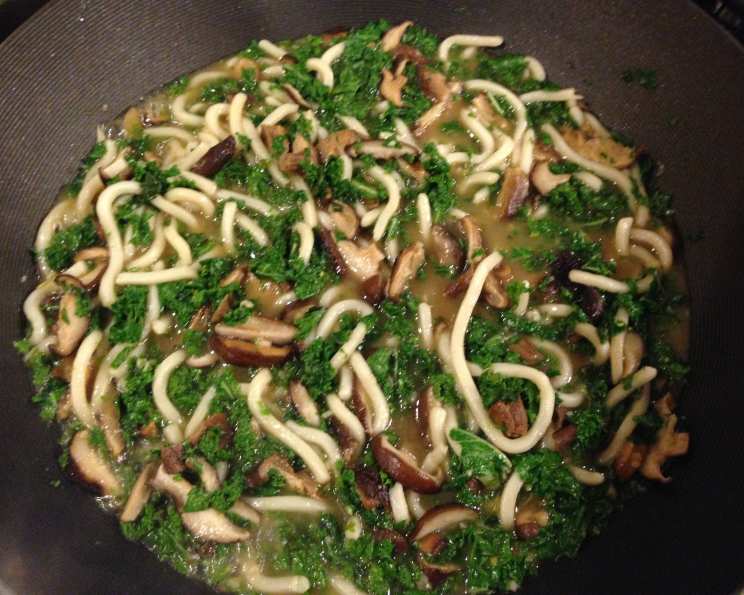
Udon, Shiitake and Kale in Miso Broth
I remember the first time I tasted miso soup; it was a cold, rainy day in Kyoto. The steaming bowl, filled with tender seaweed and silky tofu, warmed me from the inside out. But what truly captured my heart was the umami-rich broth, a savory symphony that I knew I would spend years trying to recreate. This Udon, Shiitake, and Kale in Miso Broth is my humble attempt to capture that comforting essence, elevated with the satisfying chew of udon noodles and the earthy goodness of mushrooms and kale. It’s a bowl of pure nourishment, perfect for a chilly evening or a quick and healthy lunch.
Recipe Overview
- Prep Time: 10 minutes
- Cook Time: 25 minutes
- Total Time: 35 minutes
- Servings: 4
- Dietary Type: Vegan
Ingredients
- ½ lb udon noodles
- 2 tablespoons vegetable oil
- 4 ounces shiitake mushrooms, sliced
- 3 garlic cloves, minced
- 2 cups water
- 3 tablespoons miso (ideally white or yellow miso)
- 4 cups kale, chopped
- 2 teaspoons soy sauce (plus more to taste)
Equipment Needed
- Large skillet or wok
- Large pot (for cooking udon)
- Cutting board
- Knife
- Measuring spoons and cups
Instructions
- First, cook the udon noodles according to the package directions. Different brands of udon may require slightly different cooking times, so be sure to check the instructions. Typically, this involves boiling the noodles in a large pot of water until they are tender but still slightly firm to the bite (al dente). Once cooked, drain the noodles and set them aside.
- While the udon is cooking, preheat a large skillet or wok over medium-high heat. Add the vegetable oil to the skillet and let it heat up for a few seconds.
- Add the sliced shiitake mushrooms to the hot oil and sauté them until they are tender and slightly browned. This should take about 5-7 minutes. Be careful not to overcrowd the pan, as this will steam the mushrooms instead of browning them. If necessary, cook the mushrooms in batches.
- Once the mushrooms are tender, add the minced garlic to the skillet and sauté for 1 minute more, until fragrant. Be careful not to burn the garlic, as this will give the dish a bitter taste.
- Pour the water into the skillet and stir in the miso. Ensure the miso is fully dissolved into the water, breaking up any clumps. Bring the mixture to a gentle boil, then reduce the heat to a simmer.
- Add the chopped kale to the simmering broth. Toss the mixture gently until the kale wilts down, which should take about 3-5 minutes. If the kale is particularly tough, you may need to simmer it for a bit longer.
- Stir in the cooked udon noodles into the broth with the kale and mushrooms, ensuring that the noodles are well coated with the flavorful broth.
- Finally, stir in the soy sauce. Taste the broth and add more soy sauce to taste, if desired.
Expert Tips & Tricks
- Miso Selection: Using white or yellow miso will result in a milder, slightly sweeter flavor. For a more intense, umami-rich broth, try using red miso.
- Mushroom Boost: For an extra layer of mushroom flavor, consider adding a tablespoon of dried shiitake mushroom powder to the broth.
- Kale Massage: Massaging the kale with a bit of oil and salt before adding it to the broth can help tenderize it and reduce its bitterness.
- Broth Enhancement: For a richer, more complex broth, consider using vegetable broth instead of water. You can also add a small piece of kombu (dried kelp) to the broth while it simmers, removing it before serving.
Serving & Storage Suggestions
Serve the Udon, Shiitake, and Kale in Miso Broth hot, in bowls. Garnish with a sprinkle of toasted sesame seeds, chopped green onions, or a drizzle of sesame oil for added flavor and visual appeal.
Leftovers can be stored in an airtight container in the refrigerator for up to 3 days. To reheat, gently warm the broth on the stovetop or in the microwave until heated through. The noodles may absorb some of the broth as it sits, so you may need to add a little extra water or vegetable broth when reheating. Freezing is not recommended, as the udon noodles may become mushy upon thawing.
Nutritional Information
| Nutrient | Amount per Serving | % Daily Value |
|---|---|---|
| Calories | 335 kcal | 17% |
| Total Fat | 8.6 g | 11% |
| Saturated Fat | 1.1 g | 5% |
| Cholesterol | 0 mg | 0% |
| Sodium | 1713 mg | 71% |
| Total Carbohydrate | 55.1 g | 20% |
| Dietary Fiber | 5.2 g | 17% |
| Sugars | 1.5 g | 3% |
| Protein | 11.2 g | 22% |
Note: Nutritional information is an estimate and may vary depending on the specific ingredients used.
Variations & Substitutions
- Gluten-Free: Substitute the udon noodles with gluten-free rice noodles or soba noodles.
- Protein Boost: Add tofu, tempeh, or edamame for extra protein.
- Vegetable Medley: Experiment with different vegetables, such as bok choy, spinach, carrots, or bell peppers.
- Spicy Kick: Add a pinch of red pepper flakes or a dash of sriracha to the broth for a spicy kick.
- Coconut Miso Broth: Replace half the water with coconut milk for a richer, creamier broth.
- Seasonal Adaptation: In the spring, try adding asparagus or snap peas. In the fall, butternut squash or sweet potatoes would be delicious additions.
FAQs (Frequently Asked Questions)
Q: Can I use dried shiitake mushrooms instead of fresh?
A: Yes, you can. Soak the dried mushrooms in hot water for about 30 minutes to rehydrate them, then slice and add them to the recipe as directed. Be sure to reserve the soaking liquid, as it can be added to the broth for extra flavor.
Q: Can I use a different type of miso?
A: Absolutely! White miso is the mildest and sweetest, while red miso is the most intense. Yellow miso is a good middle ground. Experiment to find your favorite flavor profile.
Q: Can I make this recipe ahead of time?
A: You can prepare the broth and cook the mushrooms and kale ahead of time. Store them separately in the refrigerator and combine them with the cooked udon noodles just before serving.
Q: How do I prevent the noodles from sticking together?
A: Rinsing the cooked noodles with cold water will help remove excess starch and prevent them from sticking together. You can also toss them with a little bit of oil.
Q: Is this recipe suitable for people with soy allergies?
A: Since miso and soy sauce are both soy-based ingredients, this recipe is not suitable for people with soy allergies. You can try substituting the miso with a soy-free miso alternative and the soy sauce with coconut aminos.
Final Thoughts
I hope you enjoy this comforting and flavorful Udon, Shiitake, and Kale in Miso Broth as much as I do. It’s a simple yet satisfying dish that is perfect for any occasion. Feel free to experiment with different vegetables and toppings to create your own unique version. Don’t be afraid to adjust the seasonings to suit your personal preferences. And most importantly, don’t forget to share your culinary creations with friends and family. Bon appétit!