
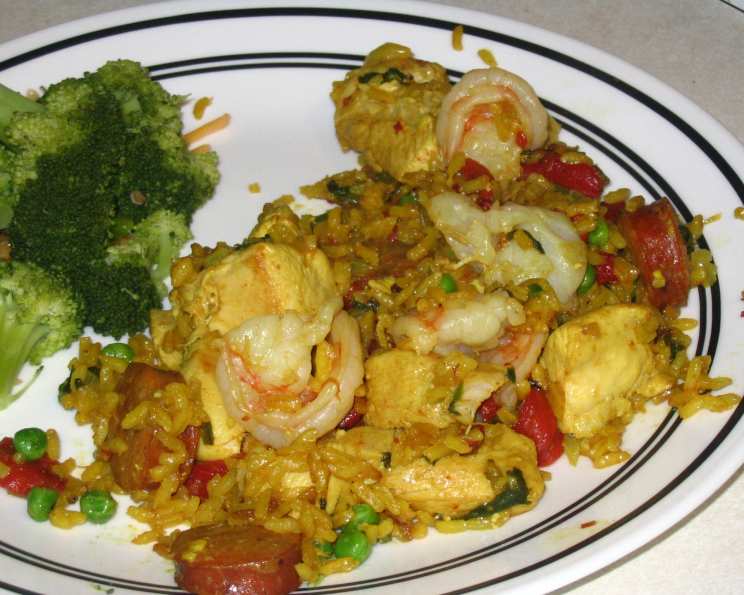
Ultimate Spanish Paella
The first time I tasted paella, I was a wide-eyed culinary student in Barcelona. The aroma alone was intoxicating – a symphony of saffron, seafood, and sun-drenched vegetables that promised a feast for the senses. Watching the chef expertly maneuver the massive paella pan, coaxing the rice to that perfect socarrat (the coveted crispy bottom), was mesmerizing. That day, I realized paella wasn’t just a dish; it was an experience, a celebration of flavor, and a testament to the art of communal cooking.
Recipe Overview
- Prep Time: 20 minutes
- Cook Time: 1 hour 10 minutes
- Total Time: 1 hour 30 minutes
- Servings: 6
- Dietary Type: Gluten-Free
Ingredients
- 2 tablespoons olive oil, divided
- 2 1/2 – 3 lbs chicken, cut into 8 pieces
- 8 ounces chorizo sausages, cut into 1 inch pieces
- 2 cloves garlic, chopped
- 1 medium yellow onion, chopped (about 1 cup)
- 1 cup uncooked white rice
- 1 teaspoon turmeric or 1 teaspoon saffron
- 2 cups beef broth
- 1 large roasted red pepper, cut into thin strips
- 1/4 cup chopped green onion
- 1/4 cup chopped fresh cilantro
- 1 jalapeno pepper, seeded and chopped
- 1/4 teaspoon crushed red pepper flakes
- 1/2 lb medium shrimp, shelled and deveined
- 1/2 cup green peas
Equipment Needed
- Paella pan or large skillet
- Cutting board
- Sharp knife
- Paper towels
- Foil
- Measuring cups and spoons
Instructions
- In a paella pan or a large skillet, heat 1 tablespoon of olive oil over medium heat.
- Add the chicken and chorizo sausage.
- Cook, stirring occasionally, until the chicken is browned and the sausage is cooked through, about 20 minutes. Browning the chicken and sausage is crucial for developing a deep, rich flavor in the paella.
- Transfer the chicken and sausage to a plate lined with paper towels. This helps to absorb excess grease. Cover with foil to keep warm.
- Drain off any excess fat from the paella pan.
- Wipe the pan clean. This step ensures a clean base for building the next layers of flavor.
- In the same skillet, heat the remaining 1 tablespoon of olive oil.
- Add the chopped garlic and yellow onion.
- Cook, stirring occasionally, until the onion is tender and translucent, about 5 minutes. Be careful not to burn the garlic, as it can become bitter.
- Add the uncooked white rice and turmeric (or saffron) to the pan.
- Cook, stirring constantly, for 2 minutes longer. This helps to toast the rice and release its starches, contributing to the creamy texture of the paella. If using saffron, bloom it in a small amount of warm broth before adding to enhance its color and flavor.
- Pour in the beef broth.
- Reduce the heat to low, cover the pan, and simmer until the rice is tender and has absorbed most of the liquid, about 30 minutes. Resist the urge to stir the paella during this step. Stirring can disrupt the rice’s cooking process and prevent the formation of the socarrat.
- Return the cooked chicken and sausage to the pan, arranging them evenly over the rice.
- Add the roasted red pepper strips, chopped green onions, chopped fresh cilantro, seeded and chopped jalapeno pepper, and crushed red pepper flakes.
- Cook, uncovered, stirring frequently, for 15 minutes. Stirring at this stage helps to distribute the flavors of the vegetables and spices throughout the paella.
- Add the shrimp and green peas.
- Cook until the shrimp is opaque and cooked through, about 5 minutes longer. Be careful not to overcook the shrimp, as they can become rubbery.
Expert Tips & Tricks
- Achieving Socarrat: The socarrat, the crispy layer of rice at the bottom of the pan, is a hallmark of a great paella. To achieve it, increase the heat slightly during the last few minutes of cooking and listen carefully for a crackling sound. Once you hear it, watch closely to ensure the bottom doesn’t burn.
- Even Cooking: For even cooking, especially if using a large paella pan on a stovetop, rotate the pan periodically during cooking to ensure all areas receive equal heat.
- Broth Matters: Using a good quality beef broth significantly enhances the overall flavor. Homemade is always best, but a good store-bought broth will also work.
- Customize Your Paella: Feel free to substitute proteins or vegetables based on your preference and what’s in season. Mussels, clams, calamari, artichoke hearts, or asparagus are all delicious additions.
- Resting is Key: After cooking, let the paella rest for about 5-10 minutes before serving. This allows the flavors to meld together and the rice to finish absorbing any remaining liquid.
Serving & Storage Suggestions
Serve the paella hot directly from the pan, garnished with extra fresh cilantro and lemon wedges. A side of crusty bread is perfect for soaking up the flavorful juices.
Leftover paella can be stored in an airtight container in the refrigerator for up to 3 days. Reheat gently in a skillet over low heat with a splash of broth to prevent it from drying out. You can also microwave it in short intervals, stirring in between. Freezing is not recommended as it can alter the texture of the rice and seafood.
Nutritional Information
| Nutrient | Amount per Serving | % Daily Value |
|---|---|---|
| Calories | 787.2 kcal | N/A |
| Calories from Fat | 434 g | 55% |
| Total Fat | 48.3 g | 74% |
| Saturated Fat | 14.4 g | 72% |
| Cholesterol | 222.8 mg | 74% |
| Sodium | 1117 mg | 46% |
| Total Carbohydrate | 30.8 g | 10% |
| Dietary Fiber | 2.1 g | 8% |
| Sugars | 1.7 g | 6% |
| Protein | 53.5 g | 107% |
Variations & Substitutions
- Seafood Paella: Replace the chicken and chorizo with a variety of seafood such as mussels, clams, calamari, and lobster.
- Vegetarian Paella: Omit the meat and seafood and add more vegetables such as artichoke hearts, asparagus, bell peppers, and mushrooms.
- Spicy Paella: Increase the amount of crushed red pepper flakes or add a pinch of cayenne pepper for extra heat.
- Saffron vs. Turmeric: While saffron is the traditional spice for paella, it can be expensive. Turmeric offers a similar color and slightly earthy flavor, making it a more budget-friendly alternative.
- Rice Type: While white rice is standard, you can experiment with other types of short-grain rice, such as Bomba rice, which is known for its ability to absorb liquid without becoming mushy.
FAQs (Frequently Asked Questions)
Q: What is socarrat, and how do I achieve it?
A: Socarrat is the crispy, caramelized layer of rice that forms at the bottom of the paella pan. To achieve it, increase the heat slightly during the last few minutes of cooking and listen for a crackling sound.
Q: Can I make paella ahead of time?
A: While paella is best served fresh, you can prepare some components ahead of time. For example, you can chop the vegetables, cook the chicken and sausage, and even prepare the broth in advance.
Q: Can I use a different type of broth?
A: Yes, you can substitute chicken broth, vegetable broth, or even seafood broth for beef broth. The choice depends on your personal preference and the other ingredients you are using.
Q: How do I prevent the rice from becoming mushy?
A: Avoid stirring the paella too much during cooking, and use the correct ratio of liquid to rice. Overcooking can also lead to mushy rice.
Q: What if I don’t have a paella pan?
A: A large skillet or Dutch oven can be used as a substitute for a paella pan. The key is to use a pan that is wide and shallow to allow for even cooking and evaporation.
Final Thoughts
Now, gather your ingredients, put on some Spanish music, and transport yourself to the sun-drenched shores of Spain with this incredible paella recipe. Don’t be intimidated by the ingredient list; the process is surprisingly simple, and the result is a dish that’s sure to impress. Experiment with variations, share it with loved ones, and most importantly, enjoy the process of creating this culinary masterpiece! ¡Buen provecho!