
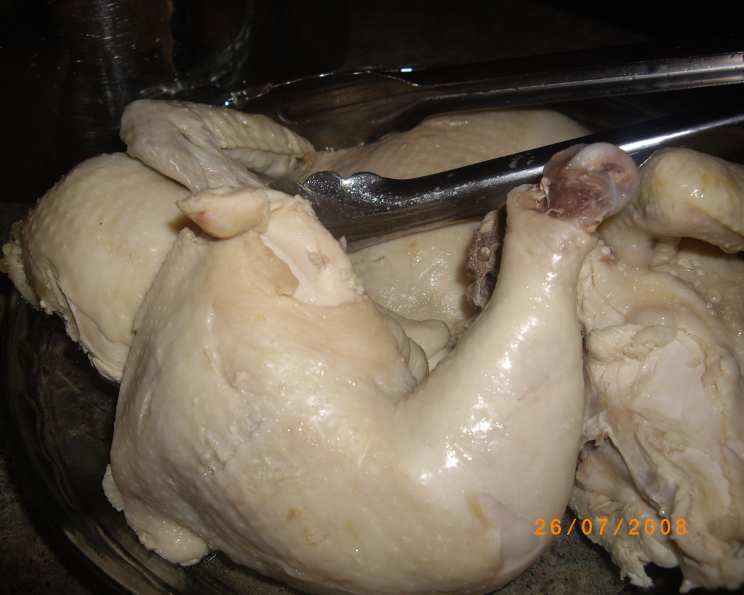
The Surprisingly Simple Secret to Perfectly Cooked Chicken: The “Un-Boiled” Method
I’ll never forget the first time I heard about “un-boiling” chicken. My grandmother, a woman who could coax flavor out of thin air, swore by it. I scoffed at the idea – surely it was just poaching by another name, or some old wives’ tale passed down through generations. But then I tasted it: chicken so tender, so succulent, it practically melted in my mouth. All my preconceived notions vanished with that first bite.
Recipe Overview
- Prep Time: 5 minutes
- Cook Time: 90 minutes (approx. 30 minutes boiling + 60 minutes resting)
- Total Time: 1 hour 35 minutes
- Servings: 4
- Yields: 1 chicken
- Dietary Type: Gluten-Free, Dairy-Free
Ingredients
- 1 chicken (whole or parts as desired, bone-in preferred)
- Water (enough to completely cover the chicken)
Equipment Needed
- Large pot (at least 8 quarts, preferably 15 quarts if cooking multiple chickens)
- Lid for the pot
Instructions
-
Fill a very large pot with water, ensuring there’s enough to completely submerge the chicken. The larger the volume of water, the better the results. Aim for at least an 8-quart pot for one chicken, or about 3 pounds of bone-in chicken pieces. Note: This method isn’t recommended for boneless chicken, as the heat struggles to penetrate a large mass of meat.
-
Do not add the chicken yet!
-
Bring the water to a rolling boil over high heat.
-
Once the water is boiling rapidly, gently place the chicken into the pot.
-
Pay close attention and wait for the boiling to stop. As soon as the water ceases to actively boil, remove the chicken from the pot.
-
Return the water to a full, rolling boil. Once boiling vigorously, carefully return the chicken to the pot.
-
Immediately cover the pot tightly with a lid.
-
Turn off the heat completely, but leave the pot sitting on the (now off) burner.
-
Let the chicken sit, undisturbed, for exactly one hour. Do not lift the lid or peek during this time!
-
After the hour has passed, remove the chicken from the water.
-
Allow the chicken to cool slightly until it is just cool enough to handle without burning yourself.
-
Once cooled enough, debone the chicken and it’s ready to use in your recipe.
Expert Tips & Tricks
- The water volume is key: A large amount of water ensures a consistent temperature and even cooking. I routinely use a 15-quart stockpot and cook two whole chickens simultaneously using this method.
- Don’t skip the double boil: The initial boil, followed by removing the chicken and re-boiling, is crucial for setting the protein and preventing the chicken from becoming rubbery.
- Save the water (aka broth)! Don’t discard the water used to cook the chicken; it’s now a flavorful broth. Strain it and use it as a base for soups, stews, or sauces.
- Temperature control: The most important part is bringing the water back to a full boil before letting it sit for an hour off the heat.
- Check for Doneness: While this method is very consistent, for extra assurance, you can use a meat thermometer to check the internal temperature of the chicken. It should reach 165°F (74°C).
Serving & Storage Suggestions
The “un-boiled” chicken is incredibly versatile and can be used in various dishes. It’s perfect for:
- Chicken salad: The tender, moist chicken is ideal for a classic chicken salad.
- Soups and stews: Add shredded chicken to your favorite soup or stew for extra protein and flavor.
- Tacos and enchiladas: Use the chicken as a filling for tacos, enchiladas, or burritos.
- Casseroles: Incorporate the chicken into casseroles for a comforting and satisfying meal.
Storage:
- Refrigerator: Store cooked chicken in an airtight container in the refrigerator for up to 3-4 days.
- Freezer: For longer storage, freeze the cooked chicken in freezer-safe bags or containers for up to 2-3 months. Thaw overnight in the refrigerator before using.
Reheating:
- Reheat cooked chicken in the microwave, oven, or skillet until heated through. Add a splash of broth or water to prevent drying out.
Nutritional Information
(Estimated values, will vary depending on the size and cut of chicken)
| Nutrient | Amount per Serving | % Daily Value |
|---|---|---|
| Calories | 244 kcal | 12% |
| Total Fat | 17g | 26% |
| Saturated Fat | 5g | 24% |
| Cholesterol | 85mg | 28% |
| Sodium | 79mg | 3% |
| Total Carbohydrate | 0g | 0% |
| Dietary Fiber | 0g | 0% |
| Sugars | 0g | 0% |
| Protein | 21g | 42% |
Variations & Substitutions
- Different Chicken Parts: While a whole chicken works well, you can also use individual chicken parts like breasts, thighs, or drumsticks. Adjust the cooking time slightly depending on the size and thickness of the pieces. Thicker pieces may require a slightly longer resting time.
- Herbs and Spices: Add herbs and spices to the water for extra flavor. Bay leaves, peppercorns, garlic cloves, or sprigs of thyme are excellent additions.
- Broth Instead of Water: For an even richer flavor, use chicken broth instead of water. This will infuse the chicken with even more savory notes.
- Salt: Add salt to the water to season the chicken from the inside out. About 1 teaspoon of salt per quart of water is a good starting point.
FAQs (Frequently Asked Questions)
Q: Why is it called “un-boiled” if you boil the chicken twice?
A: The term refers to the fact that the chicken isn’t actively boiled for an extended period. The initial boil is brief, and the majority of the cooking occurs off the heat, preventing the chicken from becoming tough or dry.
Q: Can I use boneless, skinless chicken breasts with this method?
A: While possible, it’s not recommended. Boneless, skinless chicken breasts tend to dry out more easily with this method. Bone-in pieces are preferable because the bone and skin help retain moisture.
Q: What if I accidentally let the chicken sit for longer than an hour?
A: A slightly longer resting time won’t ruin the chicken. However, if you let it sit for significantly longer, it might become slightly overcooked and drier.
Q: Can I use this method in a slow cooker?
A: This method is designed for stovetop cooking. Using a slow cooker would change the cooking dynamics and likely result in a different outcome.
Q: How can I ensure the chicken is fully cooked?
A: The best way to ensure the chicken is fully cooked is to use a meat thermometer. Insert the thermometer into the thickest part of the thigh, avoiding the bone. The internal temperature should reach 165°F (74°C).
Final Thoughts
Give this “un-boiled” chicken method a try. It is an incredibly simple, almost foolproof way to cook chicken that yields consistently moist, tender, and flavorful results. It’s perfect for meal prepping, busy weeknights, or any time you need cooked chicken for a recipe. I guarantee you will be impressed with how easy it is and how delicious the chicken turns out. Don’t forget to save that flavorful broth, and feel free to share your experiences or any creative twists you come up with. Happy cooking!