
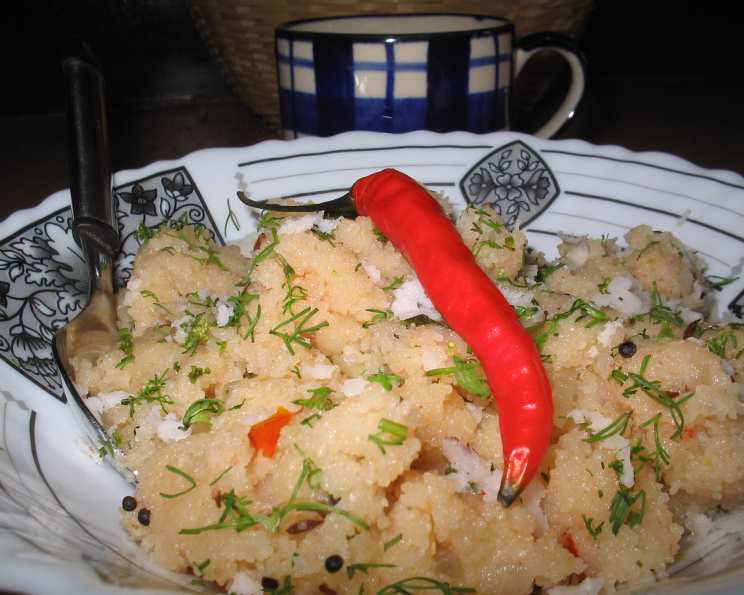
Upittu: A Taste of Home
The aroma of roasting semolina still takes me straight back to my grandmother’s kitchen. As children, my cousins and I would perch on little stools, mesmerized as she transformed simple ingredients into the most comforting breakfast imaginable. The sputtering mustard seeds, the fragrant curry leaves – it was a symphony of scents and sounds that promised warmth and satisfaction. Upittu wasn’t just food; it was love cooked in a pan.
Recipe Overview
- Prep Time: 15 minutes
- Cook Time: 10 minutes
- Total Time: 25 minutes
- Servings: 4
- Yield: 4 servings
- Dietary Type: Vegetarian
Ingredients
- 1 cup semolina (sooji or rava)
- 2 cups water
- 1 ½ teaspoons salt (or to taste)
- 1 teaspoon vegetable oil (olive oil ok)
- ¼ teaspoon black mustard seeds
- ¼ teaspoon cumin seed
- 3-4 large curry leaves
- 2 green chilies (split)
- ¼ inch ginger (finely minced)
- 1 medium yellow onion (chopped)
- ½ medium tomatoes (diced)
- 2 teaspoons cilantro (chopped)
Optional Additions:
- 2 tablespoons cashews (roasted pieces)
- 2 tablespoons coconut (grated fresh), plus extra for garnish
Equipment Needed
- Wok or Kadai (deep frying pan)
- Lid for the Wok/Kadai
Instructions
-
Heat a wok or kadai. You can spray it with butter-flavored cooking spray. Alternatively, for a richer flavor, use 1 teaspoon of ghee instead of cooking spray.
-
Add the semolina to the heated wok/kadai.
-
Roast the semolina, stirring occasionally, until fragrant. This should take about 7-8 minutes. Be careful not to burn it; the aim is a light golden color and a nutty aroma.
-
Remove the roasted semolina from the pan and set it aside.
-
Wipe off the wok or kadai to remove any leftover semolina grains.
-
Add 1 teaspoon of vegetable oil to the pan.
-
Heat the oil over medium heat.
-
Add the tempering ingredients: ¼ teaspoon of black mustard seeds and ¼ teaspoon of cumin seed. You can also add split urad dal (split black lentils) at this stage if desired.
-
Wait for the mustard seeds to sputter, which indicates they’re properly tempered.
-
Stir in the chopped onions, minced ginger, curry leaves, and split green chilies. Remember that you can deseed the chilies if you prefer a milder flavor.
-
While the onions are cooking, bring the 2 cups of water to a boil in a separate pot. Add 1 ½ teaspoons of salt to the boiling water and stir to dissolve.
-
Return your attention to the wok/kadai. Stir the onion mixture regularly.
-
When the onions become transparent (about 3-4 minutes), add the diced tomatoes.
-
Let the tomatoes cook for a couple of minutes, until they soften slightly.
-
Add the roasted semolina that you set aside earlier to the wok/kadai with the cooked vegetables. Mix well to combine.
-
Pour the boiling salted water over the semolina mixture.
-
Give the mixture a quick stir to ensure everything is evenly incorporated.
-
Cover the wok/kadai with a lid.
-
Let it cook on low flame for 3 minutes.
-
After 3 minutes, take off the lid.
-
Add the chopped cilantro, cashews (if using), and 1 tablespoon of grated coconut (if using).
-
Mix well to distribute the added ingredients.
-
Take the upittu off the heat.
-
Serve hot, garnished with the remaining tablespoon of grated coconut and a sprig of fresh cilantro.
Expert Tips & Tricks
- Roasting the semolina properly is crucial. Under-roasted semolina will result in a sticky upittu, while over-roasted semolina will be dry and hard. Aim for a light golden color and a nutty fragrance.
- Use boiling water. Adding cold water will result in a lumpy upittu.
- Don’t overcook it. The 3-minute cooking time after adding the boiling water is usually sufficient. Overcooking will make the upittu dry.
- Adjust the salt to your taste. It’s easier to add salt to the boiling water than to try and incorporate it at the end.
- If you are using a very heavy pan, you may need to add a splash more water if the upittu seems dry before the semolina is cooked through.
Serving & Storage Suggestions
Upittu is best served hot and fresh. It pairs wonderfully with a dollop of yogurt (dairy or plant-based) or a spicy chutney. Leftover upittu can be stored in an airtight container in the refrigerator for up to 2 days. To reheat, sprinkle a little water over it and microwave for a minute or two, or steam it gently on the stovetop. While upittu can be frozen, the texture may change slightly upon thawing, becoming a bit softer. If you do freeze it, portion it out before freezing for easier reheating.
Nutritional Information
| Nutrient | Amount per Serving | % Daily Value |
|---|---|---|
| Calories | 185 kcal | N/A |
| Fat | 1.8 g | 2% |
| Saturated Fat | 0.2 g | 1% |
| Cholesterol | 0 mg | 0% |
| Sodium | 878 mg | 36% |
| Carbohydrate | 36 g | 12% |
| Dietary Fiber | 2.6 g | 10% |
| Sugars | 2.8 g | N/A |
| Protein | 6.2 g | 12% |
Note: Nutritional information is an estimate and may vary based on specific ingredients and portion sizes.
Variations & Substitutions
- Gluten-Free: While traditional upittu uses semolina, which contains gluten, you can try using quinoa as a substitute. Soak, rinse, and toast the quinoa before using it in the recipe.
- Vegetables: Feel free to add other vegetables to the upittu, such as grated carrots, fresh green peas, finely chopped bell peppers, or potatoes. Add them along with the tomatoes.
- Spices: Adjust the amount of green chilies to control the spiciness. You can also add a pinch of turmeric powder for color and flavor. A dash of asafoetida (hing) during tempering can also enhance the flavor profile.
- Nuts & Seeds: Besides cashews, you can add other nuts and seeds like peanuts, almonds, or sunflower seeds. Roast them lightly before adding them to the upittu.
FAQs (Frequently Asked Questions)
Q: Can I make this ahead of time?
A: While upittu is best served fresh, you can roast the semolina and chop the vegetables ahead of time to save time in the morning.
Q: What if my upittu turns out too dry?
A: Add a little more boiling water, a tablespoon at a time, until you reach the desired consistency. Cover and let it steam for a minute or two.
Q: Can I use different types of oil?
A: Yes, you can use any neutral-flavored oil you prefer, such as sunflower oil, canola oil, or peanut oil. Ghee adds a rich flavor but is not vegan.
Q: How do I prevent the upittu from becoming sticky?
A: Make sure to roast the semolina properly and use the correct ratio of water to semolina. Also, avoid overcooking the upittu.
Q: Can I add lentils to the upittu?
A: Yes, you can add soaked and cooked lentils like moong dal or toor dal for added protein and flavor. Add them along with the tomatoes.
Final Thoughts
Upittu is more than just a simple breakfast dish; it’s a culinary hug. It’s a reminder that sometimes the most satisfying meals are the ones made with simple ingredients and a whole lot of love. So, go ahead and try this recipe. Experiment with different vegetables and spices to make it your own. And most importantly, share it with the people you love. I hope this dish brings the same warmth and joy to your table that it has brought to mine for so many years.