
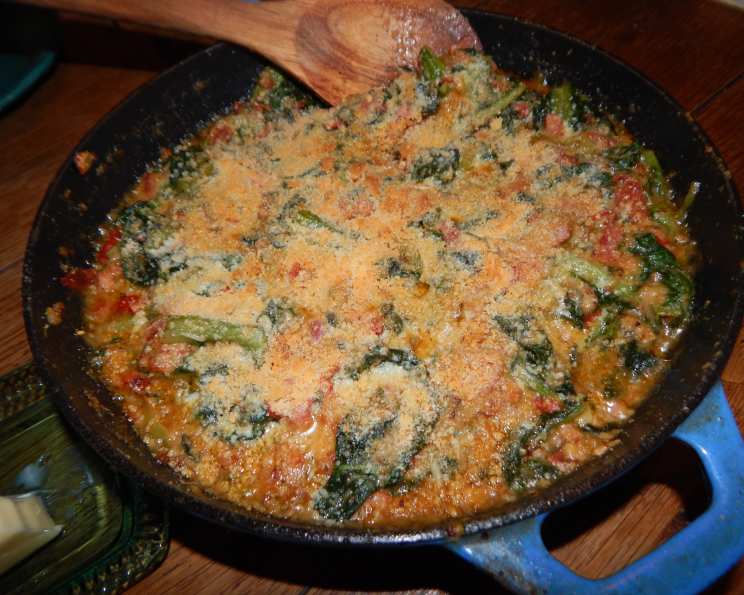
Utica Greens: A Taste of Upstate New York
My grandmother, bless her heart, wasn’t the most adventurous cook. Sunday dinners were reliably, and sometimes predictably, pot roast and mashed potatoes. But once a year, during the holidays, she’d pull out a dish so vibrant, so intensely flavorful, that it completely shattered the routine: Utica Greens. The slightly bitter escarole, tamed by garlic, prosciutto, and a hint of spice, was a revelation. It wasn’t just a side dish; it was a conversation starter, a burst of Italian-American heritage on our otherwise staunchly Midwestern table. This recipe, inspired by the classic from Chanatry’s supermarket, is my attempt to recreate that magic.
Recipe Overview
- Prep Time: 15 minutes
- Cook Time: 25 minutes
- Total Time: 40 minutes
- Servings: 4
- Dietary Type: Variable (See Variations section for vegetarian options)
Ingredients
- 1 large escarole (or 2 small heads)
- 4 slices prosciutto, thin slices, chopped
- 1-2 garlic cloves, chopped
- 2 tablespoons olive oil
- 2 long Italian hot peppers, seeded & julienned
- ½ cup breadcrumbs
- ¼ cup Pecorino Romano cheese, grated
- 1 cup chicken broth
- Salt and pepper, to taste (at the very end)
Equipment Needed
- Large pot
- Large saute pan
- Colander
- Casserole dish (optional, for broiling)
Instructions
- Thoroughly clean and rinse the escarole twice. This step is crucial to remove any grit or sand that may be hiding in the leaves.
- Chop the escarole into large pieces. Don’t worry about making them perfectly uniform; they will wilt down considerably during cooking.
- Bring a large pot of water to a boil.
- Boil the escarole for 5 or 6 minutes, or until it is tender and wilted. This pre-cooking step helps to remove some of the bitterness from the escarole.
- Drain the escarole well in a colander, pressing out any excess water. This is important for preventing a soggy final dish.
- Place the olive oil in a large saute pan and heat over medium heat.
- Add the chopped garlic and prosciutto to the pan and render for 2 or 3 minutes, stirring frequently. Be careful not to burn the garlic, as this will impart a bitter flavor to the dish. You want the prosciutto to become slightly crispy and release its flavorful fat into the oil.
- Add the seeded and julienned Italian hot peppers and cook for another minute or so, until they soften slightly.
- Add the drained escarole to the pan, along with the chicken broth.
- Cook, stirring occasionally, until the escarole is heated through and the chicken broth has reduced slightly, about 5 minutes.
- Gradually add the breadcrumbs and grated Pecorino Romano cheese to the pan, tossing gently until everything is well blended. The breadcrumbs will help to absorb any remaining liquid and create a slightly thicker sauce. The cheese adds a salty, umami flavor.
- Taste for final salt and pepper seasoning. Remember that the prosciutto and Pecorino Romano cheese are already quite salty, so you may not need to add much additional salt.
- At this point, you have two options: Serve immediately from the saute pan, or transfer the mixture to a casserole dish.
- If using a casserole dish, sprinkle a little extra breadcrumbs on top.
- Place the casserole dish under a broiler for 3-4 minutes, or until the breadcrumbs are golden brown and the top is slightly crispy. Watch it carefully to prevent burning.
- Serve hot.
Expert Tips & Tricks
- Blanching for Bitterness: If you’re particularly sensitive to bitterness, blanch the escarole for an extra minute or two. Just be sure not to overcook it, or it will become mushy.
- Spice Control: The amount of heat from the Italian hot peppers can vary greatly. Start with a small amount and taste as you go. You can always add more, but you can’t take it away!
- Breadcrumb Boost: For extra flavor and texture, toast the breadcrumbs in a dry pan with a little olive oil and garlic powder before adding them to the dish.
- Make-Ahead Magic: Utica Greens can be made a day or two in advance. Simply prepare the dish up to the point of broiling (or the serving point if not broiling), and then store it in the refrigerator. Reheat in a saute pan or oven before serving.
- Broth Alternatives: If you don’t have chicken broth on hand, vegetable broth or even water can be used as a substitute. Just be sure to adjust the seasoning accordingly.
Serving & Storage Suggestions
Utica Greens are best served hot, as a side dish alongside roasted meats, grilled chicken, or hearty pasta dishes. They also make a fantastic filling for panini or grilled cheese sandwiches.
Leftovers can be stored in an airtight container in the refrigerator for up to 3 days. Reheat gently in a saute pan over medium heat, adding a splash of broth or water if necessary to prevent drying out. They can also be reheated in the microwave, but the texture may not be as good. Utica Greens are not ideally suited for freezing, as the escarole can become mushy upon thawing.
Nutritional Information
Note: Nutritional information is an estimate and may vary based on specific ingredients and portion sizes.
| Nutrient | Amount per Serving | % Daily Value |
|---|---|---|
| Calories | 250 kcal | 13% |
| Total Fat | 15g | 23% |
| Saturated Fat | 5g | 25% |
| Cholesterol | 20mg | 7% |
| Sodium | 500mg | 22% |
| Total Carbohydrate | 15g | 5% |
| Dietary Fiber | 5g | 20% |
| Sugars | 3g | N/A |
| Protein | 10g | 20% |
Variations & Substitutions
- Vegetarian Utica Greens: Omit the prosciutto for a vegetarian version. You can add a pinch of red pepper flakes for a touch of heat. To add some umami flavor back, consider using a few drops of Worcestershire sauce (check label to ensure it is vegetarian/vegan).
- Vegan Utica Greens: Omit the prosciutto and Pecorino Romano cheese. Use nutritional yeast for a cheesy flavor.
- Gluten-Free Utica Greens: Use gluten-free breadcrumbs.
- Spicier Utica Greens: Add more Italian hot peppers or a pinch of red pepper flakes.
- Milder Utica Greens: Use sweet Italian sausage instead of hot peppers.
- Seasonal Variations: In the fall, consider adding roasted butternut squash or pumpkin to the greens for a sweeter, earthier flavor. In the spring, asparagus or spring peas would be delicious additions.
FAQs (Frequently Asked Questions)
Q: Can I use a different type of green?
A: While escarole is traditional, you can substitute other bitter greens like endive or radicchio. However, the flavor profile will be slightly different.
Q: How do I seed the Italian hot peppers?
A: Cut the pepper lengthwise, then scrape out the seeds and membranes with a spoon. Wear gloves if you have sensitive skin.
Q: Can I use dried breadcrumbs instead of fresh?
A: Yes, you can use dried breadcrumbs, but they may absorb more liquid. Start with less and add more as needed.
Q: What if I don’t have Pecorino Romano cheese?
A: Parmesan cheese can be used as a substitute, although Pecorino Romano has a sharper, saltier flavor.
Q: How do I prevent the escarole from being too bitter?
A: Blanching the escarole in boiling water helps to remove some of the bitterness. Be sure to drain it well after blanching.
Final Thoughts
Utica Greens are more than just a dish; they’re a taste of home, a reminder of family gatherings, and a celebration of Italian-American culinary traditions. I encourage you to try this recipe and experience the unique flavors for yourself. Don’t be afraid to experiment with variations and substitutions to make it your own. And please, share your feedback – I’d love to hear how it turns out! Pair these greens with a robust Italian red wine for a truly satisfying meal. Buon appetito!