
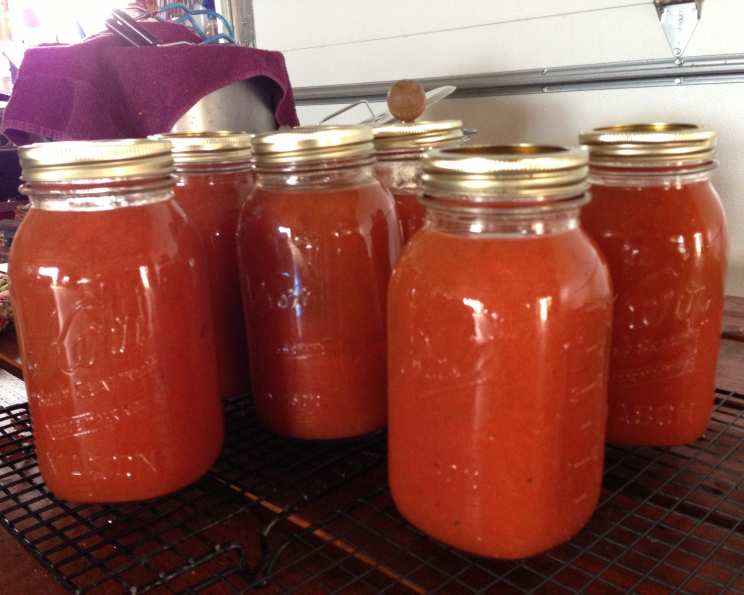
From Garden to Glass: Canning Homemade V-8 Juice
The scent still takes me back to my grandmother’s kitchen every time. Late summer meant an explosion of tomatoes from her garden, and her annual ritual of canning V-8 juice was in full swing. The steamy air, the bubbling pot, and the rich, earthy aroma filled the house with a sense of warmth and anticipation. Watching her meticulously prepare each jar was a masterclass in preserving the garden’s bounty, a skill I now cherish and am excited to share with you.
Recipe Overview
- Prep Time: 30 minutes
- Cook Time: 1 hour
- Total Time: 1 hour 30 minutes
- Yields: 7 quarts
- Dietary Type: Vegan, Gluten-Free, Dairy-Free, Low-Sodium (depending on ingredient choices)
Ingredients
- 15 lbs ripe tomatoes, chopped (approximately 8 quarts chopped)
- 1 large bell pepper, chopped fine
- 2 large onions, chopped fine
- 1 1⁄2 cups diced celery
- 2 bay leaves
- 12 fresh basil leaves or 2 teaspoons dried basil
- 2 teaspoons prepared horseradish
- 1⁄2 teaspoon fresh ground black pepper
- 3 teaspoons sugar
- 2 teaspoons Worcestershire sauce (check label for gluten-free options if needed)
- 1⁄2 cup lemon juice
Equipment Needed
- Large stainless steel pot
- Fine sieve or food mill
- Clean kitchen towels
- Canning jars (quart-sized)
- Canning lids and rings
- Jar lifter
- Canning pot with rack
Instructions
-
Prepare the Vegetables: Thoroughly wash all vegetables. Chop the tomatoes into manageable pieces. Finely chop the bell pepper and onions. Dice the celery. Accurate measurement of the tomatoes is essential; you want around 8 quarts of chopped tomatoes.
-
Combine and Simmer: In a large stainless steel pot, combine the chopped tomatoes, bell pepper, onions, celery, bay leaves, basil, horseradish, black pepper, sugar, and Worcestershire sauce. Be sure to use a stainless steel pot, as acidic tomatoes can react with other metals.
-
Bring to a Boil, Then Simmer: Bring the mixture to a rolling boil over medium-high heat, stirring frequently to prevent scorching. Once boiling, reduce the heat to low and simmer for 30 minutes, or until all the vegetables are very soft. The vegetables should be easily pierced with a fork.
-
Strain the Mixture: Remove the pot from the heat and carefully press the cooked vegetables through a fine sieve or food mill to extract the juice. This step removes the skins and seeds, resulting in a smooth, flavorful juice. A food mill provides a slightly thicker consistency than a sieve. Discard the solids left in the sieve or food mill.
-
Add Lemon Juice and Boil Again: Return the strained juice to the stainless steel pot. Stir in the lemon juice. Bring the juice to a boil over medium heat.
-
Prepare Jars and Lids: While the juice is heating, prepare your canning jars, lids, and rings. Wash the jars in hot, soapy water, rinse well, and keep them hot until ready to fill. You can keep them hot by placing them in a simmering water bath or in a warm oven (200°F). Heat the canning lids in hot (not boiling) water to soften the sealing compound.
-
Fill the Jars: Carefully ladle the boiling hot juice into the hot, clean jars, leaving 1/2 inch headspace at the top. Use a non-metallic tool to remove any air bubbles trapped in the juice. Wipe the jar rims clean with a damp cloth.
-
Seal the Jars: Place the heated lids on the jars and screw the rings on fingertip-tight. Do not overtighten the rings, as this can prevent the jars from sealing properly.
-
Process in a Water Bath Canner: Place the filled jars in a canning pot fitted with a rack. Add hot water to the pot until the water level is at least 1 inch above the tops of the jars. Bring the water to a rolling boil.
-
Process for 35 Minutes: Once the water is boiling, process the jars for 35 minutes. This processing time is based on altitudes up to 1000 feet. Processing times must be adjusted for higher altitudes. Consult a reliable canning resource (like the National Center for Home Food Preservation) for accurate processing times for your specific altitude.
-
Cool and Check Seals: After processing, turn off the heat and carefully remove the jars from the canner using a jar lifter. Place the jars on a towel-lined surface, leaving at least 1 inch of space between them. Let the jars cool completely, undisturbed, for 12-24 hours. As the jars cool, you should hear a popping sound as the lids seal.
-
Verify Seals and Store: After the jars have cooled completely, check the seals. Press down on the center of each lid. If the lid doesn’t flex up and down, it is properly sealed. If a lid flexes, it is not sealed and should be refrigerated and used within a few days, or reprocessed with a new lid. Remove the rings from the sealed jars (this prevents moisture from accumulating and causing rust) and store the jars in a cool, dark place.
Expert Tips & Tricks
- Tomato Variety Matters: Use a mix of tomato varieties for the best flavor. Roma or San Marzano tomatoes are great for their meaty texture, while other heirloom varieties can add unique sweetness and acidity.
- Adjusting Sweetness and Acidity: Taste the juice before adding the lemon juice. If your tomatoes are particularly sweet, you may want to increase the amount of lemon juice slightly to balance the flavors. Conversely, if your tomatoes are very acidic, you may want to add a bit more sugar.
- Herbs and Spices: Feel free to experiment with different herbs and spices. A pinch of red pepper flakes can add a subtle kick, while oregano or thyme can provide a more savory flavor profile.
- Troubleshooting Cloudiness: Sometimes, canned tomato juice can become cloudy. This is usually caused by minerals in the water or from starch released from the vegetables. It doesn’t affect the safety or flavor of the juice.
- Freezing for Later: If you prefer not to can the juice, you can freeze it in freezer-safe containers. Be sure to leave some headspace to allow for expansion during freezing.
Serving & Storage Suggestions
Enjoy your homemade V-8 juice chilled, straight from the jar! It’s a refreshing and nutritious beverage any time of day. You can also use it as a base for soups, stews, sauces, and cocktails like Bloody Marys. Properly canned V-8 juice can be stored in a cool, dark place for up to 18 months. Once opened, refrigerate and use within 7-10 days.
Nutritional Information
Note: Nutritional information is an estimate and may vary based on specific ingredients and preparation methods.
| Nutrient | Amount per Serving (1 cup) | % Daily Value* |
|---|---|---|
| Calories | 50 | – |
| Total Fat | 0.5g | 1% |
| Saturated Fat | 0g | 0% |
| Cholesterol | 0mg | 0% |
| Sodium | 50mg | 2% |
| Total Carbohydrate | 10g | 4% |
| Dietary Fiber | 2g | 8% |
| Sugars | 6g | – |
| Protein | 2g | 4% |
| Vitamin A | – | 20% |
| Vitamin C | – | 30% |
| Iron | – | 4% |
*Percent Daily Values are based on a 2,000 calorie diet.
Variations & Substitutions
- Spicy V-8: Add a jalapeño pepper (seeded for less heat) to the simmering pot for a spicy kick.
- Low-Sodium Version: Omit the salt entirely or use a low-sodium Worcestershire sauce. Be aware that this will impact the flavor, but allows for better control of sodium levels.
- Garden Vegetable Medley: Feel free to add other vegetables to the mix, such as carrots, beets, or spinach. Adjust the amounts of other vegetables accordingly to maintain a balanced flavor.
- Herb Infusions: Infuse the juice with different herbs by adding sprigs of rosemary, thyme, or oregano to the simmering pot. Remove the herbs before straining.
FAQs (Frequently Asked Questions)
Q: Can I use frozen tomatoes for this recipe?
A: Yes, you can use frozen tomatoes. Make sure to thaw them completely and drain off any excess liquid before chopping and adding them to the pot.
Q: Do I have to use a food mill, or can I use a blender?
A: While a food mill provides the best texture, you can use a blender. Blend the cooked vegetables in batches until smooth, then strain the mixture through a fine-mesh sieve to remove any seeds or skins.
Q: How do I adjust the processing time for higher altitudes?
A: Processing times need to be increased at higher altitudes. Consult a reliable canning resource, like the National Center for Home Food Preservation, for specific altitude adjustments.
Q: What if my jars don’t seal properly?
A: If a jar doesn’t seal properly, you can reprocess it with a new lid within 24 hours, or store the juice in the refrigerator and use it within a week.
Q: Can I reduce the amount of sugar in the recipe?
A: Yes, you can reduce the amount of sugar, or even omit it entirely. However, the sugar helps to balance the acidity of the tomatoes, so you may need to adjust the amount of lemon juice accordingly.
Final Thoughts
There’s nothing quite like the taste of homemade V-8 juice, bursting with the fresh flavors of your garden. This recipe is a wonderful way to preserve the summer’s bounty and enjoy a healthy and delicious beverage all year round. Don’t be afraid to experiment with different herbs and spices to create your own unique blend. So, gather your tomatoes, enlist some friends or family, and start canning! Share your creations and feedback – I’d love to hear about your own V-8 juice adventures! It pairs wonderfully with a grilled cheese sandwich or a spicy breakfast burrito.