
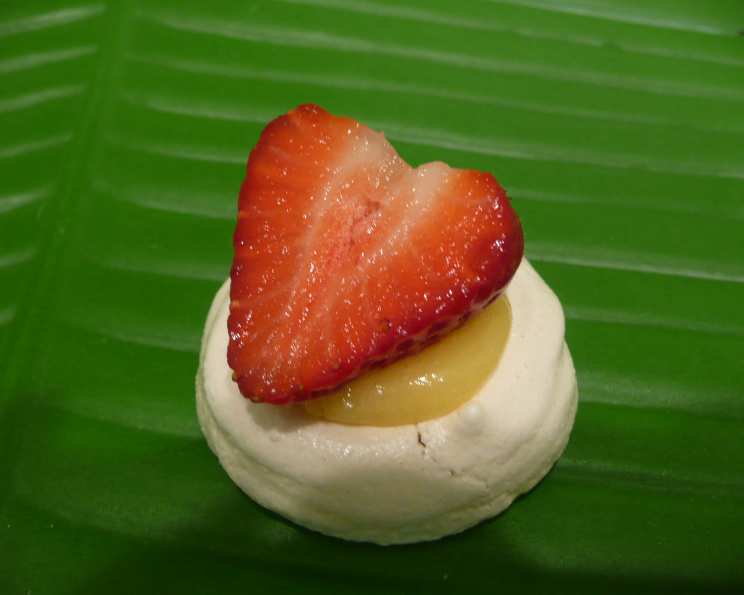
Vacherins With Lemon Curd and Strawberries: A Symphony of Sweet and Tart
The first time I encountered a vacherin, it wasn’t quite as elegant as the ones we’re about to make. It was a towering, almost cartoonish creation at a local patisserie, layered with what seemed like miles of whipped cream and every fruit imaginable. While visually impressive, it lacked the delicate balance I craved. That experience sparked a desire to create a more refined version – something that highlighted the crisp meringue and the bright, clean flavors of lemon and fresh berries. This recipe, adapted from pastry chef Deanie Hickox, perfectly captures that essence. These individual vacherins are bite-sized bursts of sunshine, ideal for a delightful afternoon treat.
Recipe Overview
- Prep Time: 45 minutes
- Cook Time: 3 hours
- Total Time: 3 hours 45 minutes
- Servings: 12
- Yields: 24 Vacherins
- Dietary Type: Gluten-Free
Ingredients
Meringues:
- 2 large egg whites, at room temperature
- 1/2 cup confectioners’ sugar
- 2 tablespoons sugar
- 1 pinch cream of tartar
- 1 pinch salt
- 1 teaspoon vanilla
Lemon Curd:
- 4 large eggs
- 1 cup sugar
- 4 lemons, zest and strained juice
- 4 tablespoons butter, cut into small pieces
- 1 pinch salt
Serving:
- 1 pint strawberries, hulled and halved
- Fresh mint leaves (optional)
Equipment Needed
- Electric mixer
- Cookie sheet
- Parchment paper
- Pastry bag (or zip-top bag)
- Small (1/4 inch), plain piping tip
- Large mixing bowl or double boiler
- Whisk
- Strainer
Instructions
- Preheat your oven to a very low 200 degrees Fahrenheit. The key to perfect meringues is gentle, slow baking.
- Line a cookie sheet with parchment paper. This prevents sticking and makes removal easy. To keep the parchment secure, put a tiny dab of meringue under each corner; this acts like edible glue.
- Prepare the meringue mixture: In the bowl of an electric mixer, combine 2 large egg whites (at room temperature – this helps them whip to a greater volume), 1/2 cup confectioners’ sugar, 2 tablespoons sugar, 1 pinch cream of tartar, and 1 pinch of salt.
- Whip the meringue: Using the whisk attachment, begin whipping the mixture. The process may seem slow at first, but be patient. Continue whipping until the egg whites hold stiff peaks and are glossy. This can take anywhere from 10 to 15 minutes, depending on your mixer. The mixture should be firm enough to hold its shape when the whisk is lifted.
- Incorporate vanilla: Add 1 teaspoon of vanilla and beat just until incorporated. Be careful not to overmix at this stage.
- Prepare the piping bag: Fit a pastry bag with a small (1/4 inch), plain tip. If you don’t have a pastry bag, a zip-top bag works just fine – simply snip off a small corner.
- Pipe the meringue bases: Pipe a small amount of meringue under each corner of parchment to keep it secure during baking.
- Pipe the meringue nests: Pipe a quarter-sized base of meringue onto the prepared parchment paper. Then, pipe a ring of meringue around the base, spiraling upward to create a “nest” about three rows high. Continue piping rows with the remaining meringue, spacing them evenly on the baking sheet.
- Bake the meringues: Place the cookie sheet in the preheated oven and bake for several hours until the meringues are dry and crisp on the outside but still slightly chewy on the inside. This usually takes at least 3 hours. The exact baking time will depend on your oven, so keep a close eye on them. If they start to brown too quickly, lower the oven temperature slightly.
- Cool the meringues: Once the meringues are done, turn off the oven and let them cool completely inside with the door slightly ajar. This helps them dry out completely and prevents cracking.
- Prepare the lemon curd: While the meringues are baking, prepare the lemon curd. In a large mixing bowl or a double boiler, combine 4 large eggs, 1 cup sugar, the zest and strained juice of 4 lemons.
- Cook the lemon curd: Place the bowl over a pot of simmering water on low heat (or directly in the double boiler). Whisk the mixture constantly and vigorously until it thickens and is no longer foaming. This is crucial to prevent the eggs from scrambling. The curd is ready when it coats the back of a spoon and leaves a clear line when you run your finger through it.
- Incorporate butter and salt: Remove the bowl from the heat. Add 4 tablespoons of butter, cut into small pieces, and whisk until melted and fully incorporated. Season with 1 pinch of salt.
- Strain and cool the lemon curd: Strain the lemon curd through a fine-mesh sieve to remove any lumps and ensure a silky smooth texture. Cool to room temperature and then refrigerate until ready to use. Chilling the curd will also help it thicken further.
- Assemble the vacherins: When the meringues are completely cool and the lemon curd is chilled, it’s time to assemble the vacherins.
- Fill the meringues: Fill each meringue nest with a small dollop of lemon curd. Be careful not to add too much, as it can cause the curd to drip over the sides once the strawberry is added.
- Garnish and serve: Top each filled meringue with one halved strawberry. Garnish with a fresh mint leaf or tip, if desired, for a pop of color and aroma. Serve immediately and enjoy!
Expert Tips & Tricks
- Room Temperature Egg Whites: Using room temperature egg whites is crucial for achieving maximum volume and stability in your meringue. If you forget to take them out of the refrigerator ahead of time, you can place the eggs in a bowl of warm water for a few minutes to speed up the process.
- Stabilizing the Meringue: Cream of tartar is a key ingredient for stabilizing the meringue and preventing it from collapsing. It helps to create a finer, more stable foam.
- Piping Perfection: Practice your piping technique on a separate piece of parchment paper before piping onto the baking sheet. This will help you achieve consistent and professional-looking meringue nests.
- Lemon Curd Consistency: The lemon curd should be thick enough to coat the back of a spoon, but not so thick that it’s difficult to pipe. If it seems too thin, continue cooking it for a few more minutes, whisking constantly.
- Humidity Control: Meringues are very sensitive to humidity. On humid days, it may take longer for them to dry out completely in the oven. You can try placing a small bowl of rice in the oven to absorb excess moisture.
Serving & Storage Suggestions
These vacherins are best served immediately after assembly to maintain the crispness of the meringue. If you need to prepare them in advance, store the meringues and lemon curd separately in airtight containers at room temperature and in the refrigerator, respectively. Assemble the vacherins just before serving.
- Meringues: Properly stored, meringues can last for up to a week at room temperature in an airtight container.
- Lemon Curd: Lemon curd can be stored in the refrigerator for up to a week in an airtight container.
- Assembled Vacherins: Assembled vacherins are best eaten immediately, but can be stored in the refrigerator for a few hours. However, the meringues will soften over time.
Nutritional Information
Note: Nutritional information is an estimate and may vary based on specific ingredients and serving sizes.
| Nutrient | Amount per Serving | % Daily Value |
|---|---|---|
| Calories | 120 kcal | 6% |
| Total Fat | 5g | 6% |
| Saturated Fat | 3g | 15% |
| Cholesterol | 45mg | 15% |
| Sodium | 30mg | 1% |
| Total Carbohydrate | 18g | 7% |
| Dietary Fiber | 1g | 4% |
| Sugars | 15g | |
| Protein | 2g | 4% |
Variations & Substitutions
- Berry Variations: Feel free to experiment with different types of berries, such as raspberries, blueberries, or blackberries.
- Citrus Curd Variations: Try using different citrus fruits for the curd, such as grapefruit, lime, or orange.
- Meringue Flavor Variations: Add a touch of citrus zest or a few drops of extract to the meringue mixture for a different flavor profile.
- Vegan Meringues: While traditionally made with egg whites, vegan meringues can be created using aquafaba (the liquid from canned chickpeas). Be aware that the texture and stability may differ slightly.
FAQs (Frequently Asked Questions)
Q: Why are my meringues cracking?
A: Meringues can crack if the oven temperature is too high or if they cool too quickly. Make sure to bake them at a low temperature and allow them to cool completely in the oven with the door slightly ajar.
Q: Can I make the lemon curd ahead of time?
A: Yes, lemon curd can be made up to a week in advance and stored in the refrigerator in an airtight container.
Q: My lemon curd is too tart. What can I do?
A: If your lemon curd is too tart, you can add a little more sugar to balance the flavors. Start with a tablespoon at a time and taste until you reach the desired sweetness.
Q: How do I prevent my meringues from becoming sticky?
A: Meringues can become sticky if they are exposed to humidity. Store them in an airtight container with a silica gel packet to absorb any excess moisture.
Q: Can I freeze the meringues or lemon curd?
A: While the meringues can be frozen, their texture may change upon thawing, becoming slightly softer. Lemon curd can also be frozen, but it may separate slightly. Whisk it vigorously after thawing to restore its smooth consistency.
Final Thoughts
I hope this recipe inspires you to create your own delightful vacherins. The combination of crisp meringue, tangy lemon curd, and sweet strawberries is a truly irresistible treat. Don’t be afraid to experiment with different flavors and variations to create your own signature version. Share your creations with friends and family, and most importantly, enjoy the process of baking and creating something beautiful and delicious. Bon appétit!