
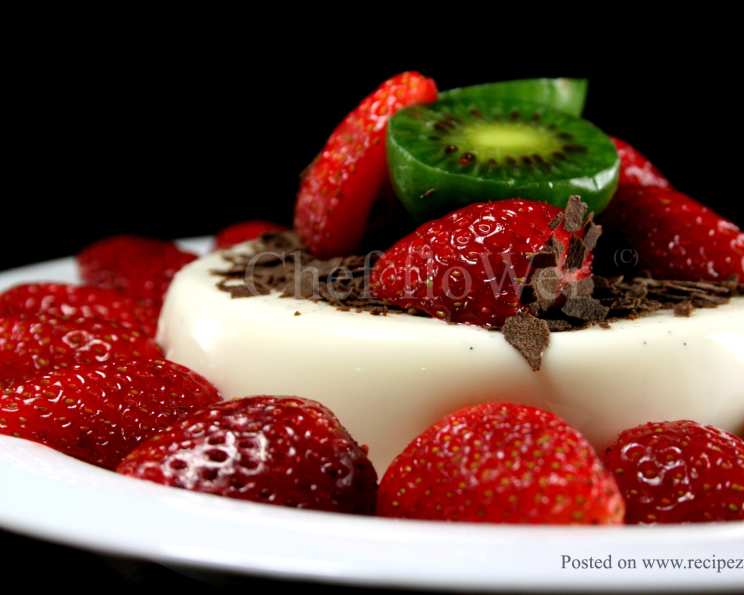
Vanilla Panna Cotta: A Silky Symphony of Flavor
The first time I tasted panna cotta, I was in a tiny trattoria nestled in the hills of Tuscany. The air was thick with the scent of rosemary and woodsmoke, and the simple elegance of the dessert, served with a scattering of fresh berries and a drizzle of aged balsamic, was utterly transformative. It was a creamy, ethereal cloud that danced on my tongue, a testament to the beauty of simple, perfectly executed ingredients. From that moment on, I was determined to master this Italian classic.
Recipe Overview:
- Prep Time: 15 minutes
- Cook Time: 12 minutes (includes cooling the gelatin)
- Total Time: 2 hours 27 minutes (includes chilling time)
- Servings: 6-8
- Yields: 6-8 dessert cups
- Dietary Type: Gluten-Free
Ingredients:
- 3 tablespoons water
- 1 tablespoon powdered unflavored gelatin
- 4 cups heavy cream
- ½ vanilla bean, split lengthwise
- ½ cup sugar
- 1 cup mixed berries, for serving
- Chocolate syrup, for topping (optional)
Equipment Needed:
- Small bowl
- Medium saucepan
- Whisk
- 6-8 dessert cups or ramekins
Instructions:
-
Begin by preparing the gelatin. In a small bowl, combine 3 tablespoons of water and 1 tablespoon of powdered unflavored gelatin. Allow the mixture to sit undisturbed for 10 minutes. This process, known as blooming, allows the gelatin granules to absorb the water, ensuring a smooth and lump-free final product. Do not stir the mixture during this time.
-
Next, prepare the creamy base. In a medium saucepan, combine 4 cups of heavy cream, ½ cup of sugar, and the ½ vanilla bean (split lengthwise). The vanilla bean is the heart of this dessert, infusing the cream with its delicate aroma and flavor. Scraping the seeds from the bean into the cream will intensify the vanilla flavor even further.
-
Heat the mixture over medium heat, stirring occasionally to dissolve the sugar. Bring the mixture to a simmer, but be careful not to boil it. Boiling can alter the texture of the cream and potentially scald the milk solids. Watch carefully and stir frequently to prevent scorching.
-
Once the cream mixture reaches a simmer, immediately turn off the heat. Add the bloomed gelatin to the hot cream. The heat will help dissolve the gelatin.
-
Allow the mixture to sit for 3 minutes. If the gelatin does not fully dissolve within this time, return the saucepan to low heat and warm gently until the gelatin is completely dissolved, stirring constantly. Be extremely careful not to overheat the mixture, as this can affect the setting properties of the gelatin.
-
Pour the panna cotta mixture into 6-8 dessert cups or ramekins. Ensure that the cups are clean and dry to prevent any unwanted flavors or textures from interfering with the delicate panna cotta.
-
Chill the filled cups, uncovered, in the refrigerator for at least 2 hours, or preferably overnight. Chilling uncovered allows the panna cotta to set properly and prevents condensation from forming on the surface.
-
To serve, dip the bottom of each cup in hot water for about 10 seconds. This will loosen the panna cotta and allow it to release easily from the cup.
-
Invert the cups onto individual dessert plates. The panna cotta should slide out smoothly, revealing its creamy, wobbly texture.
-
Surround each panna cotta with 1 cup of mixed berries for a burst of fresh, fruity flavor. Drizzle with chocolate syrup for an extra touch of decadence, if desired.
Expert Tips & Tricks:
- Vanilla Bean Infusion: For a more intense vanilla flavor, consider infusing the cream with the vanilla bean overnight in the refrigerator before heating.
- Perfect Set: The key to a perfect panna cotta is the ratio of gelatin to cream. Too much gelatin will result in a rubbery texture, while too little will prevent it from setting properly. Follow the recipe carefully for optimal results.
- Unmolding Made Easy: If you are having trouble unmolding the panna cotta, try running a thin knife around the edge of the cup before dipping it in hot water.
- Preventing a Skin: While the recipe specifies chilling uncovered, if you are concerned about a skin forming on top of the panna cotta, you can gently lay a piece of plastic wrap directly on the surface of the cream before chilling. Remove it before serving.
- Alternative Sweeteners: While granulated sugar is used in this recipe, you can experiment with other sweeteners like honey or maple syrup. However, keep in mind that these sweeteners may slightly alter the flavor and texture of the panna cotta.
Serving & Storage Suggestions:
Serve vanilla panna cotta chilled. The combination of the creamy panna cotta with fresh berries and a drizzle of chocolate syrup is a classic pairing, but feel free to get creative with your toppings. Consider adding toasted nuts, a fruit compote, or a sprinkle of cocoa powder.
Leftover panna cotta can be stored in the refrigerator, covered, for up to 3 days. The texture may change slightly over time, but it will still be delicious. It is not recommended to freeze panna cotta, as the freezing and thawing process can significantly alter its texture.
Nutritional Information:
| Nutrient | Amount per Serving | % Daily Value |
|---|---|---|
| Calories | 656.6 kcal | N/A |
| Calories from Fat | 529 g | 81% |
| Total Fat | 58.8 g | 90% |
| Saturated Fat | 36.6 g | 182% |
| Cholesterol | 217.4 mg | 72% |
| Sodium | 64 mg | 2% |
| Total Carbohydrate | 31.2 g | 10% |
| Dietary Fiber | 0.8 g | 3% |
| Sugars | 16.8 g | 67% |
| Protein | 4.8 g | 9% |
Note: Nutritional information is an estimate and may vary based on specific ingredients and portion sizes.
Variations & Substitutions:
- Dairy-Free Panna Cotta: For a dairy-free version, substitute the heavy cream with coconut cream or a blend of cashew cream and coconut milk. The flavor will be slightly different, but the texture will be similar.
- Vegan Panna Cotta: To make it fully vegan, replace both the heavy cream and gelatin. Use coconut cream for the creaminess, and agar-agar powder as a vegan alternative to gelatin. You’ll need to experiment with the agar-agar ratio to get the right set.
- Citrus Infusion: Add a touch of citrus by zesting a lemon, orange, or lime into the cream mixture while it is heating.
- Coffee Panna Cotta: Infuse the cream with coffee beans or add a shot of espresso to the mixture for a coffee-flavored panna cotta.
- Seasonal Fruit Toppings: Adapt the fruit topping to the season. Use peaches and raspberries in the summer, apples and cranberries in the fall, and blood oranges and pomegranate seeds in the winter.
FAQs (Frequently Asked Questions):
Q: Can I use flavored gelatin instead of unflavored?
A: While you could, it’s not recommended. Flavored gelatin often contains added sugars and artificial ingredients that can mask the delicate flavor of the vanilla and affect the overall texture.
Q: How can I tell if the panna cotta is set properly?
A: Gently jiggle the ramekins. The panna cotta should be firm around the edges and slightly wobbly in the center. It will continue to set as it chills further.
Q: What if my panna cotta is too firm or rubbery?
A: This usually indicates too much gelatin was used. Next time, reduce the amount of gelatin slightly.
Q: Can I make panna cotta ahead of time?
A: Absolutely! Panna cotta is a great make-ahead dessert. It can be prepared up to 3 days in advance and stored in the refrigerator.
Q: Why is my panna cotta grainy?
A: This can happen if the sugar is not fully dissolved during the heating process. Make sure to stir the mixture frequently until the sugar is completely dissolved. Overheating the cream can also cause graininess.
Final Thoughts:
Vanilla Panna Cotta is more than just a dessert; it’s an experience. It’s a celebration of simplicity, elegance, and the pure joy of good food. I encourage you to try this recipe and experience the magic for yourself. Don’t be afraid to experiment with different toppings and flavors to create your own signature version. And most importantly, share your creation with friends and family and savor every delicious bite!