
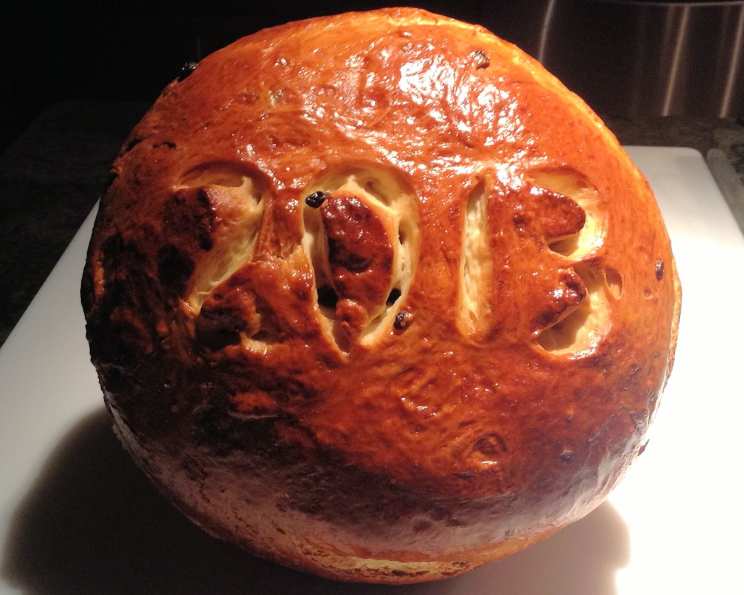
Vasilopita: A Sweet Start to the New Year
The aroma of baking bread, laced with citrus and a hint of sweetness, always transports me back to my yiayia’s (grandmother’s) kitchen. As the clock ticked down to midnight on New Year’s Eve, the centerpiece of her table wasn’t a glittering ball or champagne flutes, but the Vasilopita – a golden, fragrant loaf baked with a hidden coin nestled inside. Finding that coin wasn’t just luck; it was a promise of blessings and good fortune for the entire year. To this day, the scent of this bread is the scent of hope and family.
Recipe Overview
- Prep Time: 3 hours 30 minutes (includes rising times)
- Cook Time: 45-50 minutes
- Total Time: 4 hours 15-20 minutes
- Yields: 2 loaves
- Dietary Type: Vegetarian
Ingredients
- 2 packages active dry yeast
- 1/2 cup water (105-115 degrees F)
- 2 cups warm milk
- 1 teaspoon salt
- 10-11 cups all-purpose flour
- 1 cup sugar
- 4 large eggs, plus 3 egg yolks
- 1/2 cup unsalted butter, melted (or 1/2 cup margarine, melted)
- 1 teaspoon fresh-grated lemon rind
- 1 large egg, beaten with 2 tablespoons water (for egg wash)
- Sesame seeds, for garnish (optional)
Equipment Needed
- Large mixing bowl
- Measuring cups and spoons
- Two bread pans
- Wire racks
Instructions
- In a large bowl, dissolve the yeast in the warm water. It’s crucial that the water is within the specified temperature range. Too cold and the yeast won’t activate; too hot and you risk killing it. Let it sit for about 5 minutes until it becomes frothy.
- Add the warm milk and salt to the yeast mixture. Stir to combine.
- Stir in 3 cups of flour. The batter will be lumpy, but that’s perfectly fine at this stage.
- Cover the bowl with a clean cloth or plastic wrap and let rise in a warm place for about 90 minutes, or until the batter has doubled in volume. This first rise is essential for developing the flavor and texture of the bread.
- Once the batter has doubled, mix in the sugar, eggs, egg yolks, melted butter, and lemon peel. The lemon peel adds a wonderful aroma and flavor that is characteristic of Vasilopita.
- Stir in enough of the remaining flour to make a soft dough (approximately 7-8 cups). The dough should be slightly sticky, but manageable. Avoid adding too much flour, as this will result in a dry loaf.
- Turn the dough onto a lightly floured surface and knead for 5-10 minutes, until it becomes smooth and elastic. Kneading develops the gluten, which gives the bread its structure.
- Shape the dough into a ball and place it in a large, greased bowl, turning to coat the entire surface with grease.
- Cover the bowl and let rise again until doubled, about 60-70 minutes. This second rise is what gives the bread its light and airy texture.
- Punch down the dough to release the air and knead for 1-2 minutes. This helps to redistribute the yeast and even out the texture of the dough.
- Let the dough rest for 10 minutes.
- Grease two bread pans.
- Cut the dough into two equal pieces.
- Cut one piece of dough into three equal pieces and roll each into a 15-inch cylinder.
- Braid the three cylinders together, pinching the ends to seal.
- Tuck the ends under and place the braided loaf in a prepared bread pan.
- Repeat steps 14-16 with the remaining half of the dough.
- Cover the loaves and let rise until doubled in volume, about 45 minutes.
- While the loaves are rising for the final time, preheat your oven to 350 degrees F (175 degrees C).
- Brush the tops of the loaves with the beaten egg (egg wash). If desired, sprinkle with sesame seeds.
- Bake for 45-50 minutes, or until the bread sounds hollow when tapped on the bottom. This is a good indication that the bread is fully cooked.
- If the bread seems to be getting too brown after 20 minutes or so, cover it loosely with foil to prevent burning.
- Remove the loaves from the oven and cool on wire racks for 5 minutes.
- Remove the loaves from the pans and cool completely before slicing and serving.
Expert Tips & Tricks
- For an even richer flavor, you can use clarified butter (ghee) instead of regular melted butter.
- Don’t overbake the bread! This will result in a dry loaf. Check for doneness by tapping the bottom of the loaf; it should sound hollow.
- If your kitchen is cold, you can help the dough rise by placing the bowl in a slightly warmed oven (turned off) or near a warm stovetop.
- For a beautiful golden crust, brush the loaves with egg wash twice – once before the final rise and again just before baking.
- Remember to add a thoroughly sanitized coin wrapped in foil to one of the loaves after the second rise, but before baking.
Serving & Storage Suggestions
Vasilopita is traditionally served on New Year’s Day. The loaf is cut into slices, and the head of the household usually makes the first three cuts: one for Christ, one for the Virgin Mary, and one for Saint Basil (the namesake of the bread). The rest of the slices are distributed among family members and guests, with the lucky recipient of the coin said to have good fortune in the coming year.
Store leftover Vasilopita in an airtight container at room temperature for up to 3 days, or in the refrigerator for up to a week. You can also freeze it for up to 2 months. To reheat, wrap slices in foil and warm in a low oven (300°F) until heated through.
Nutritional Information
| Nutrient | Amount per Serving (estimated) | % Daily Value |
|---|---|---|
| Calories | 1751 kcal | – |
| Calories from Fat | – | – |
| Total Fat | 39.8 g | 61% |
| Saturated Fat | 21 g | 105% |
| Cholesterol | 435 mg | 145% |
| Sodium | 748 mg | 31% |
| Total Carbohydrate | 297 g | 99% |
| Dietary Fiber | 9.5 g | 38% |
| Sugars | 51 g | – |
| Protein | 48 g | 96% |
Note: Nutritional information is an estimate and may vary based on specific ingredients and portion sizes.
Variations & Substitutions
- For a richer flavor, use orange zest in addition to or instead of lemon zest.
- Add a tablespoon of mahlab (a spice made from the seeds of a cherry tree) for a more traditional Greek flavor.
- Substitute half of the all-purpose flour with whole wheat flour for a heartier loaf.
- For a vegan version, use plant-based milk and margarine, and substitute the eggs with a flax egg (1 tablespoon ground flaxseed mixed with 3 tablespoons water per egg). You can also brush the top with a plant-based milk before baking.
- Consider adding chopped walnuts or almonds to the dough for added texture and flavor.
FAQs (Frequently Asked Questions)
Q: Can I make the dough ahead of time?
A: Yes! You can prepare the dough through the first rise, then punch it down, cover it tightly, and refrigerate it overnight. Let it come to room temperature for about an hour before proceeding with the recipe.
Q: What if my yeast doesn’t foam?
A: It means your yeast is likely old or the water was too hot or cold. Discard the mixture and start again with fresh yeast and water at the correct temperature.
Q: Can I use a stand mixer to make this dough?
A: Absolutely! Use the dough hook attachment and follow the recipe instructions, kneading until the dough is smooth and elastic.
Q: Where should I hide the coin?
A: Traditionally, a coin is wrapped in foil and inserted into the bottom of the loaf after the second rise and before baking. Be sure to inform everyone that there is a coin in the bread!
Q: How can I make sure my bread doesn’t burn?
A: Keep an eye on the bread while it’s baking. If it starts to get too brown, cover it loosely with foil.
Final Thoughts
Vasilopita is more than just bread; it’s a symbol of hope, tradition, and the joy of sharing with loved ones. I encourage you to try this recipe and create your own New Year’s memories. The process of making it, from the fragrant dough to the anticipation of finding the hidden coin, is a beautiful way to welcome the new year. And please, share your creations and experiences with me! Kali Chronia! Happy New Year!