
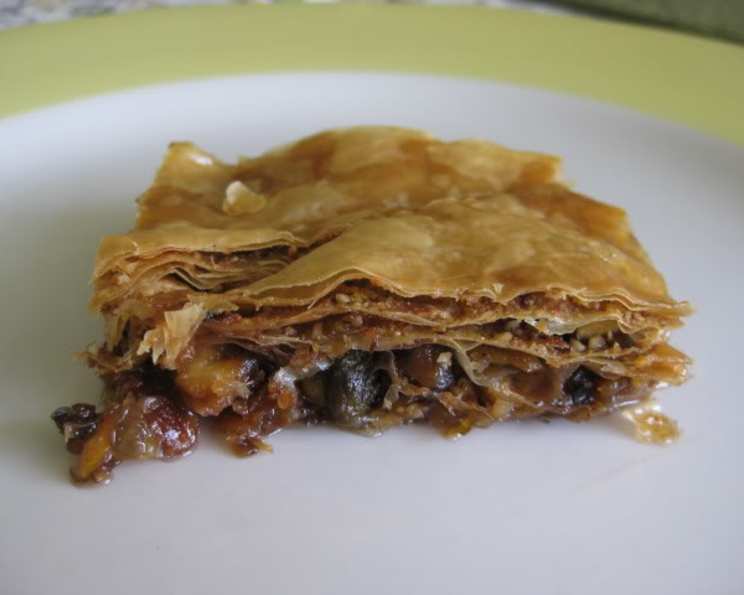
Vegan Baklava: A Symphony of Sweetness and Crunch
My grandmother, Yia Yia Eleni, was the queen of Greek pastries. I can still picture her kitchen, filled with the aroma of cinnamon and warm butter. Baklava was her masterpiece, a testament to her patience and skill. While her recipe wasn’t vegan, I’ve spent years recreating that same magic, that same feeling of pure, unadulterated joy, in a plant-based version that honors her legacy and delights the senses. This Vegan Baklava captures all the flaky, nutty, syrupy goodness of the original, without any animal products. Prepare to be transported!
Recipe Overview
- Prep Time: 20 minutes
- Cook Time: 45-50 minutes
- Total Time: 3 hours 20 minutes (including cooling time)
- Servings: 12
- Yield: 1 (9×13 inch) pan
- Dietary Type: Vegan
Ingredients
-
For the Syrup:
- 1 cup water
- 1 cup sugar
- 1 teaspoon vanilla extract
- ½ cup agave nectar
-
For the Nut Filling:
- 3 cups nuts (Pistachios, walnuts, almonds, or pecans, or a combination)
- 1 teaspoon cinnamon
-
For the Pastry:
- 1 (16 ounce) package phyllo dough, thawed (you will only use about half)
- ¾ cup vegan margarine, melted (Earth Balance recommended)
Equipment Needed
- 9×13 inch baking dish
- Small saucepan
- Food processor
- Pastry brush
- Sharp knife
Instructions
-
Preheat your oven to 350 degrees F (175 degrees C). Lightly grease the bottom and sides of a 9×13-inch baking dish with vegan margarine. This will prevent sticking and ensure even baking.
-
Prepare the syrup: In a small saucepan, combine the water and sugar. Heat over medium heat, stirring constantly, until the sugar is completely dissolved. Add the vanilla extract and agave nectar. Bring the mixture to a gentle simmer and let it cook for 15 minutes. Remove the saucepan from the heat and set aside to cool completely. It’s crucial that the syrup is completely cool before pouring it over the baked baklava to prevent the pastry from becoming soggy.
-
Make the nut filling: In a food processor, pulse the nuts until they are coarsely ground – aim for a meal-like consistency rather than a fine powder. Transfer the ground nuts to a bowl. Add the cinnamon and mix thoroughly to combine. Set aside. The cinnamon adds warmth and complexity to the nut filling.
-
Assemble the baklava: Carefully unroll the phyllo dough from the package. Trim the stack of dough into 9×13-inch sheets so they fit perfectly into your prepared baking dish. (If using Athens Fillo Dough, minimal trimming might be needed.) To prevent the phyllo dough from drying out, keep the sheets you are not actively working with covered with a sheet of waxed paper and a damp cloth. The waxed paper goes directly on top of the dough, and the damp cloth on top of the waxed paper. If you have a helper, they can lift the paper/cloth as needed, making the process easier.
-
Layer the pastry: Place two sheets of phyllo dough in the prepared baking dish. Using a pastry brush, generously coat the top sheet completely with melted vegan margarine. Spread a thin, even layer of the nut mixture over the margarine. Add two more sheets of phyllo dough on top of the nut mixture. Repeat the process: brush with margarine, spread with nut mixture, and add two more phyllo sheets, until you have a total of 8 layered sheets.
-
Create the top crust: For the top layer, place 2-4 phyllo sheets. This time, brush margarine between each individual sheet. This ensures a crisp, flaky top crust.
-
Cut the baklava: Using a very sharp knife, carefully cut the baklava into diamond or square shapes, cutting all the way to the bottom of the pan. This step is essential because cutting the baklava after baking will crush the delicate pastry.
-
Bake the baklava: Bake in the preheated oven for 45-50 minutes, or until the baklava is golden brown and crispy. Keep a close eye on it, as baking times may vary depending on your oven.
-
Sweeten the baklava: Once baked, remove the baklava from the oven and immediately pour or spoon the completely cooled syrup evenly over the hot baklava. The contrast in temperature allows the syrup to soak into the pastry, creating that signature sticky-sweetness.
-
Cool and serve: Allow the baklava to cool uncovered for at least 3 hours, or preferably overnight, before serving. This allows the syrup to fully penetrate the pastry and the flavors to meld together.
Expert Tips & Tricks
- Phyllo Dough Handling: Phyllo dough dries out quickly, so keep it covered with a damp cloth while you’re working. Don’t be afraid if it tears a little; you can patch it up with smaller pieces.
- Margarine Matters: Don’t skimp on the quality of the vegan margarine. Earth Balance is highly recommended. Avoid light or reduced-fat varieties, as they contain more water and can lead to soggy baklava.
- Nut Variations: Feel free to experiment with different nut combinations. Pistachios and walnuts are a classic pairing, but almonds, pecans, or even hazelnuts can add a unique twist.
- Crispy Edges: For extra crispy edges, brush the sides of the baking dish with melted margarine before assembling the baklava.
- Sharp Knife: A sharp knife is essential for cutting the baklava cleanly. If you’re having trouble, try using a serrated knife or lightly oiling the blade.
Serving & Storage Suggestions
Serve the Vegan Baklava at room temperature. The beautiful layers and glistening syrup make it a stunning dessert on its own. It pairs perfectly with a cup of strong coffee or herbal tea.
To store leftover baklava, cover it loosely with plastic wrap or store it in an airtight container at room temperature for up to 3 days. You can also refrigerate it for up to a week, but the pastry may lose some of its crispness. To freeze baklava, wrap it tightly in plastic wrap and then in aluminum foil. It can be frozen for up to 2 months. Thaw it overnight in the refrigerator before serving. Reheating is not recommended, as it can make the pastry soggy.
Nutritional Information
| Nutrient | Amount per Serving | % Daily Value |
|---|---|---|
| Calories | 483.9 kcal | N/A |
| Calories from Fat | 281 g | 58% |
| Total Fat | 31.2 g | 48% |
| Saturated Fat | 4.9 g | 24% |
| Cholesterol | 0 mg | 0% |
| Sodium | 545.1 mg | 22% |
| Total Carbohydrate | 45.5 g | 15% |
| Dietary Fiber | 3.9 g | 15% |
| Sugars | 18.4 g | 73% |
| Protein | 8.7 g | 17% |
Note: Nutritional information is an estimate and may vary depending on specific ingredients and portion sizes.
Variations & Substitutions
- Gluten-Free Baklava: While traditional phyllo dough is not gluten-free, you can find gluten-free phyllo dough alternatives in some specialty stores. Be aware that it may be more delicate and require extra care when handling.
- Different Sweeteners: You can experiment with different sweeteners in the syrup, such as maple syrup or coconut sugar, for a unique flavor profile.
- Citrus Infusion: Add a zest of lemon or orange to the syrup for a bright, citrusy twist.
- Spice Variations: Experiment with other spices like cardamom, cloves, or nutmeg in the nut filling or syrup.
FAQs (Frequently Asked Questions)
Q: Can I make this baklava ahead of time?
A: Yes, baklava is a great make-ahead dessert. It actually benefits from sitting overnight, as the syrup has more time to soak into the pastry.
Q: What’s the best way to prevent the phyllo dough from drying out?
A: Keep the phyllo dough covered with a damp cloth while you’re working. This will help keep it pliable and prevent it from tearing.
Q: Can I use a different type of nut?
A: Absolutely! Feel free to experiment with different nuts, such as pecans, almonds, or hazelnuts. Just make sure to grind them coarsely in the food processor.
Q: My baklava is getting too brown on top. What should I do?
A: If the top of the baklava is browning too quickly, you can tent it with aluminum foil during the last 15-20 minutes of baking.
Q: The syrup seems too thick. Is that normal?
A: The syrup should be fairly thick but still pourable. If it’s too thick, you can add a tablespoon or two of water to thin it out.
Final Thoughts
This Vegan Baklava is more than just a dessert; it’s an experience. It’s a celebration of flavors and textures, a testament to the beauty of plant-based baking, and a tribute to the traditions that inspire us. I encourage you to try this recipe, to experiment with your own variations, and to share the joy of this delicious treat with your loved ones. And please, let me know what you think! I’m always eager to hear your feedback and see your culinary creations.