
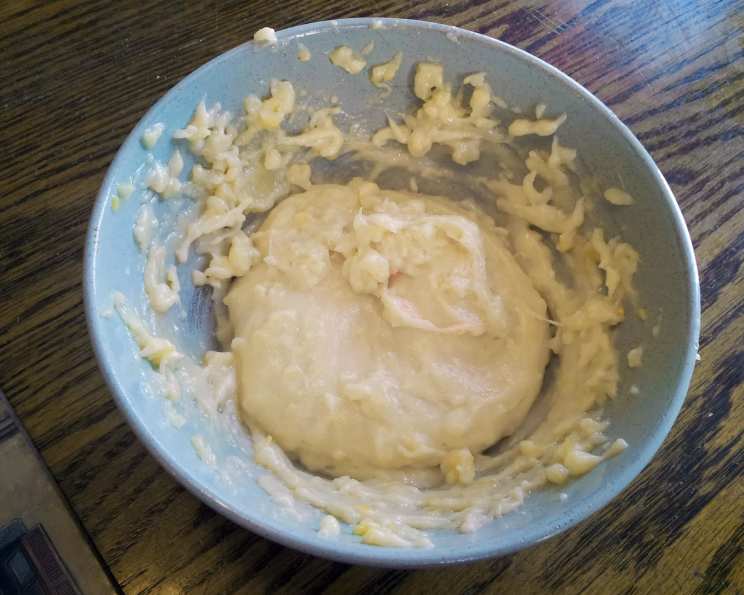
The Surprisingly Simple Secret to Vegan “Egg Yolks”
I’ll never forget the first time I tried baking without eggs. It was a disaster! My grandmother’s famous lemon bars, a recipe passed down through generations, came out flat and rubbery. I was crestfallen. Determined to make a vegan version that lived up to her memory, I dove into the world of egg substitutes. After countless experiments (and more than a few kitchen mishaps), I stumbled upon this simple yet ingenious method for creating a vegan “egg yolk” substitute. It’s a game-changer for custards, sauces, and any recipe needing that rich, emulsifying power. Trust me, it’s like unlocking a whole new level of vegan baking!
Recipe Overview
- Prep Time: 5 minutes
- Cook Time: 2 minutes
- Total Time: 7 minutes
- Yields: ¼ cup
- Serves: 2
- Dietary Type: Vegan
Ingredients
- 2 tablespoons chickpea flour
- 2 tablespoons all-purpose flour
- ½ cup water
- 2 teaspoons canola oil, plus more as needed
- Yellow food coloring, if desired
Equipment Needed
- Microwave-safe bowl
- Whisk
- Hand mixer (or stand mixer)
Instructions
- In a microwave-safe bowl, thoroughly whisk together the chickpea flour, all-purpose flour, and water until the mixture is smooth and free of any lumps. This is crucial for a smooth final product, so don’t skip the whisking!
- Heat the mixture in the microwave for 2 minutes, stopping halfway through (after 1 minute) to beat it vigorously with a hand mixer (or stand mixer). This prevents burning and ensures even cooking. The mixture will thicken significantly.
- Add the 2 teaspoons of canola oil and beat it in well using the hand mixer. Now, here’s the key: assess the consistency. You want it to mimic the texture of beaten egg yolks, or even that of canned frosting. If it’s too thick, add more oil, a little at a time (about ¼ teaspoon at a time), and continue beating until you achieve that smooth, thick, and easily stirrable consistency.
- If desired, add a few drops of yellow food coloring to enhance the visual similarity to egg yolks.
- Use the vegan “egg yolk” substitute immediately in your recipe, or store it tightly covered in the refrigerator for up to 1 month.
Expert Tips & Tricks
- The Mixer is Non-Negotiable: While you might be tempted to skip the electric mixer and stir by hand, don’t! The high-speed mixing is essential for creating the right texture and emulsion. A hand mixer works perfectly well, but a stand mixer will also do the trick if you have one.
- Consistency is Key: Don’t be afraid to adjust the amount of oil to get the desired consistency. It’s better to add a little at a time than to add too much all at once.
- Chickpea Flour Variations: The brand of chickpea flour can affect the final result. Some brands are coarser than others. If your chickpea flour seems particularly coarse, you may need to add a bit more water initially.
- Preventing Lumps: To avoid lumps when mixing the flours and water, try sifting the flours together first. This helps to ensure even distribution.
- Adjust for Sweetness: Consider adding a tiny pinch of salt or a touch of sugar to balance the flavor, depending on the recipe you’re using the egg yolk substitute in.
Serving & Storage Suggestions
This vegan “egg yolk” substitute is designed to be used as an ingredient in other recipes, rather than eaten on its own. It works wonderfully in vegan custards, sauces, lemon curd, and even enriched doughs like challah or brioche (where it contributes to richness and moisture).
For storage, always keep the mixture tightly covered in an airtight container in the refrigerator. It will last for up to 1 month. There is no need to reheat before use, although allowing it to come to room temperature slightly may make it easier to incorporate into certain recipes. Freezing is not recommended, as it can alter the texture.
Nutritional Information
Please note that these values are approximate and will vary depending on the specific brands and amounts of ingredients used.
| Nutrient | Amount per Serving | % Daily Value |
|---|---|---|
| Calories | 90 kcal | 5% |
| Total Fat | 5g | 6% |
| Saturated Fat | 0.5g | 2% |
| Cholesterol | 0mg | 0% |
| Sodium | 6mg | 0% |
| Total Carbohydrate | 9g | 3% |
| Dietary Fiber | 1g | 4% |
| Sugars | 1g | 2% |
| Protein | 2g | 4% |
Variations & Substitutions
- Gluten-Free: To make this recipe gluten-free, substitute the all-purpose flour with a gluten-free all-purpose flour blend. Ensure the blend contains xanthan gum or another binder to help with the texture.
- Nut-Free: This recipe is naturally nut-free.
- Oil Alternatives: While canola oil is recommended for its neutral flavor, you can experiment with other neutral-flavored oils such as sunflower oil, safflower oil, or light olive oil. Avoid oils with strong flavors, as they will impact the final taste.
- Flour Ratios: Feel free to experiment with slightly different ratios of chickpea and all-purpose flour. Using more chickpea flour will intensify the “eggy” flavor, while using more all-purpose flour will create a milder taste.
- Spice it Up: For savory applications, consider adding a pinch of turmeric for color and a subtle savory flavor. For sweet applications, a touch of vanilla extract can enhance the overall flavor profile.
FAQs (Frequently Asked Questions)
Q: Why do I need to use a mixer? Can’t I just stir it?
A: The mixer is essential for creating a smooth, emulsified texture. Stirring alone won’t achieve the same result and may leave you with a lumpy mixture.
Q: My mixture is too thick even after adding the oil. What should I do?
A: Add a teaspoon of water at a time, beating well after each addition, until you reach the desired consistency. Remember, you’re aiming for the texture of beaten egg yolks or canned frosting.
Q: Can I use this substitute in any recipe that calls for egg yolks?
A: It works well in many recipes, especially custards, sauces, and pastry creams. However, it might not be suitable for recipes that rely heavily on the structural properties of egg yolks, such as meringues.
Q: Does this substitute taste like eggs?
A: It has a slightly “eggy” flavor due to the chickpea flour, but it’s not overpowering. The overall flavor will depend on the other ingredients in your recipe.
Q: How much of this substitute should I use to replace one egg yolk?
A: This recipe yields about ¼ cup of substitute, which is equivalent to about 2 egg yolks. Adjust the recipe accordingly based on your needs.
Final Thoughts
This simple vegan “egg yolk” substitute has opened up a whole new world of possibilities in my vegan baking. It’s a testament to the fact that you don’t need eggs to achieve rich, creamy, and delicious results. I encourage you to give this recipe a try and see how it transforms your favorite dishes. Experiment with different variations, and don’t be afraid to get creative! I’d love to hear about your experiences and any modifications you make. Happy baking!