
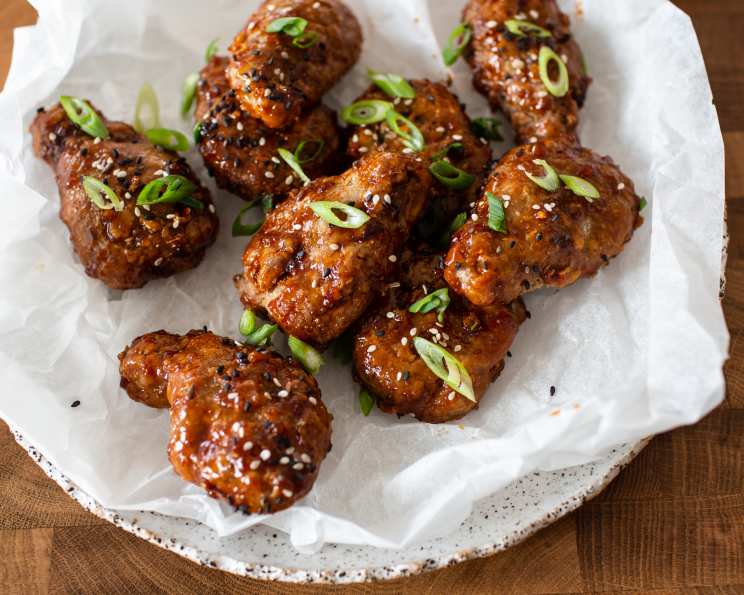
Vegan Korean Fried ‘Chicken’: A Culinary Adventure
My first taste of Korean fried chicken was a revelation. The shatteringly crisp exterior giving way to juicy, flavorful meat, all coated in a sweet and spicy sauce… it was pure magic. As a vegan chef, I knew I had to recreate that experience, but without the chicken. After countless experiments, this recipe for Vegan Korean Fried ‘Chicken’ was born. These little nuggets of seitan, perfectly fried and slathered in a gochujang-based sauce, capture the essence of that iconic dish, bringing a taste of Korea to your kitchen, entirely plant-based.
Recipe Overview
- Prep Time: 30 minutes
- Cook Time: 1 hour
- Total Time: 1 hour 30 minutes
- Servings: 4-6
- Yield: 30-40 pieces
- Dietary Type: Vegan
Ingredients
For the Seitan:
- 1 ½ cups vital wheat gluten
- 1 teaspoon garlic granules
- 1 teaspoon dried oregano
- ½ teaspoon ground black pepper
- 1 teaspoon salt
- 1 cup vegetable broth
- 1 tablespoon olive oil
For the Coating:
- ⅔ cup non-dairy milk (almond, soy, or oat work well)
- ½ cup cornstarch
- 1 teaspoon Chinese five spice powder
- ½ teaspoon garlic granules
For the Sauce:
- 2 tablespoons gochujang (Korean fermented chili paste)
- 2 tablespoons rice vinegar
- 6 tablespoons light brown sugar
- 1 tablespoon finely grated ginger
- 4 garlic cloves, finely chopped
- 1 tablespoon toasted sesame oil
- 2 tablespoons soy sauce
To Serve:
- 1 tablespoon sesame seeds
- 1 scallion, finely sliced
Equipment Needed
- Large mixing bowl
- Steamer basket (bamboo or metal)
- Large pot
- Baking paper
- 2 wide, shallow bowls
- Baking sheet
- Deep skillet or Dutch oven
- Paper towels
- Small pot
- Large bowl
- Two large spoons
Instructions
-
Prepare the Seitan Dough: In a large bowl, thoroughly mix together the vital wheat gluten, garlic granules, dried oregano, black pepper, and salt.
-
Add Wet Ingredients: Pour in the vegetable broth and olive oil. Stir until a spongey dough forms.
-
Knead the Dough: Tip the dough out onto a clean work surface and knead for a few minutes until it becomes smooth and elastic. This step is crucial for developing the right texture.
-
Shape the Seitan: Pinch off approximately ½-inch chunks of dough. Aim for a similar size for each piece to ensure even cooking.
-
Prepare Steamer: Line a steamer basket (a bamboo steamer works wonderfully) with baking paper, making sure to poke holes in the paper to allow steam to circulate. This prevents the seitan from sticking.
-
Steam the Seitan: Arrange the seitan pieces in the steamer basket, stacking layers if necessary. Place the steamer over a large pot of boiling water on the stove over low heat.
-
Steaming Time: Let the seitan steam for 40 minutes, ensuring the pot doesn’t run dry by periodically topping it up with more water. Steaming is essential for achieving the right chewy texture.
-
Cool the Seitan: Remove the steamed seitan from the steamer and let it cool completely. This step is important for easier handling and better coating adhesion.
-
Prepare Coating Stations: Take two wide, shallow bowls. In one bowl, pour the non-dairy milk. In the other, combine the cornstarch, Chinese five spice powder, and garlic granules.
-
Coat the Seitan: Dip each piece of cooled seitan into the non-dairy milk, ensuring it’s fully moistened. Then, dredge it in the cornstarch mixture, making sure it’s evenly coated. Place the coated seitan pieces onto a baking sheet.
-
First Fry – Low Temperature: Heat approximately ½-inch depth of vegetable oil in a deep skillet or Dutch oven to 300°F (150°C). A candy thermometer is very helpful for maintaining the correct temperature.
-
Fry Until Pale: Carefully lower a few pieces of the coated seitan into the heated oil, being careful not to overcrowd the pan. Fry until the pieces are pale and a crust starts to form on the outside. This first fry par-cooks the seitan.
-
Remove and Drain (First Fry): Remove the par-cooked seitan pieces from the oil and place them on a baking sheet lined with paper towels to drain excess oil. Repeat with all the seitan.
-
Second Fry – High Temperature: Increase the heat of the oil to 350°F (175°C). This higher temperature will crisp the outside nicely.
-
Fry Until Golden: Carefully lower a few pieces of the par-cooked seitan into the hotter oil. Fry until they turn golden brown and crispy.
-
Remove and Drain (Second Fry): Remove the fried seitan pieces from the oil and place them on a baking sheet lined with fresh paper towels to drain excess oil. Repeat with all the seitan.
-
Combine Sauce Ingredients: While the seitan rests, prepare the sauce. In a small pot, combine the gochujang, rice vinegar, light brown sugar, finely grated ginger, finely chopped garlic cloves, toasted sesame oil, and soy sauce.
-
Heat the Sauce: Heat the sauce mixture on the stove over medium heat until it begins to bubble and thicken slightly. Stir constantly to prevent burning.
-
Toss with Sauce: Tip all the twice-fried seitan pieces into a large bowl. Pour the hot sauce over the fried seitan.
-
Coat Evenly: Using two large spoons, gently toss the seitan pieces with the sauce, ensuring each piece is thoroughly coated.
-
Serve: Tip the saucy seitan onto a serving dish. Sprinkle with sesame seeds and finely sliced scallions. Serve immediately while hot and crispy.
Expert Tips & Tricks
- Don’t overcrowd the pan: Frying in batches ensures the oil temperature doesn’t drop too much, resulting in crispier results.
- Temperature is key: Using a thermometer to maintain the correct oil temperature is critical for achieving the perfect crispy exterior without burning the seitan.
- Adjust the sauce: Taste the sauce and adjust the sweetness, spice level, or saltiness to your liking. Add a pinch of red pepper flakes for extra heat.
- Make ahead: The seitan can be steamed ahead of time and stored in the refrigerator for up to 2 days.
- Crisp it up: If you find the seitan has softened slightly before serving, you can quickly toss it back into the hot oil for a few seconds to re-crisp it.
Serving & Storage Suggestions
Serve this Vegan Korean Fried ‘Chicken’ hot, as an appetizer, a main course with rice and vegetables, or as part of a Korean-inspired feast.
Leftovers can be stored in an airtight container in the refrigerator for up to 3 days. However, the crispy texture will soften over time. To reheat, you can bake them in a preheated oven at 350°F (175°C) for about 10-15 minutes, or until heated through. Reheating in an air fryer is also a good option to restore some crispiness. The sauce will prevent freezing the nuggets.
Nutritional Information
| Nutrient | Amount per Serving | % Daily Value |
|---|---|---|
| Calories | 450 kcal | 23% |
| Total Fat | 20g | 31% |
| Saturated Fat | 3g | 15% |
| Cholesterol | 0mg | 0% |
| Sodium | 800mg | 35% |
| Total Carbohydrate | 50g | 18% |
| Dietary Fiber | 2g | 7% |
| Sugars | 25g | – |
| Protein | 20g | 40% |
Note: Nutritional information is an estimate and may vary based on specific ingredients and portion sizes.
Variations & Substitutions
- Gluten-Free: While this recipe relies on vital wheat gluten, a naturally gluten-free alternative would be difficult to implement.
- Spicier Sauce: For extra heat, add a pinch of red pepper flakes to the sauce or use a spicier variety of gochujang.
- Sweeter Sauce: If you prefer a sweeter sauce, increase the amount of brown sugar.
- Different Vegetables: Serve alongside pickled radish, kimchi, or steamed broccoli for a complete meal.
FAQs (Frequently Asked Questions)
Q: What is vital wheat gluten?
A: Vital wheat gluten is a protein derived from wheat flour. It is the key ingredient that gives seitan its meat-like texture and chewiness.
Q: Can I use a different type of flour instead of cornstarch?
A: While cornstarch provides the best crispy coating, you can substitute it with tapioca starch or potato starch. All-purpose flour will also work, but the texture might not be as light and crispy.
Q: Is gochujang always vegan?
A: While many brands of gochujang are vegan, it’s always best to check the label to ensure it doesn’t contain any non-vegan ingredients, such as fish sauce.
Q: Can I bake the seitan instead of frying?
A: Baking will not achieve the same crispy texture as frying. However, if you prefer a healthier option, you can try baking the coated seitan at 400°F (200°C) for about 20-25 minutes, flipping halfway through.
Q: How do I store the leftover sauce?
A: Leftover sauce can be stored in an airtight container in the refrigerator for up to a week. Reheat gently before using.
Final Thoughts
This Vegan Korean Fried ‘Chicken’ is a delicious and satisfying way to enjoy a classic dish, reimagined for a plant-based lifestyle. Don’t be intimidated by the multiple steps – each one is simple and contributes to the final incredible flavor and texture. Gather your ingredients, put on some music, and embark on this culinary adventure! I hope you enjoy this recipe as much as I do. Please share your feedback and photos – I can’t wait to see your creations!