
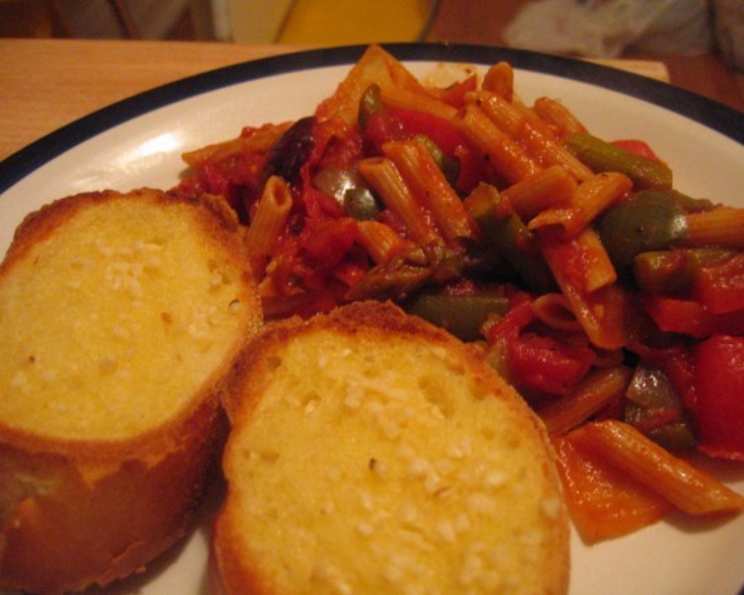
Vegan Penne Puttanesca: A Flavorful Mediterranean Escape
The scent of garlic sizzling in olive oil instantly transports me back to a tiny trattoria in Rome, tucked away on a cobblestone street. The air was thick with the aroma of tomatoes, basil, and the briny tang of olives. It was there, years ago, that I first experienced the magic of Puttanesca – a sauce so bold and flavorful, born from simple, rustic ingredients. Tonight, we’re reimagining this classic with a vegan twist, proving that indulgence doesn’t require compromise.
Recipe Overview
- Prep Time: 20 minutes
- Cook Time: 35 minutes
- Total Time: 55 minutes
- Servings: 6
- Dietary Type: Vegan
Ingredients
- 1 onion, coarsely chopped
- 2 green peppers, coarsely chopped
- 2 red peppers, coarsely chopped
- 12 kalamata olives, pitted and coarsely chopped
- 20 asparagus spears, chopped
- 1 (28 ounce) can diced tomatoes
- 1 (14 ounce) can tomato sauce
- 2 tablespoons olive oil
- 2 garlic cloves, minced
- 1 tablespoon dried basil
- 2 teaspoons red pepper flakes (to taste)
- 1 lb penne pasta
- Capers
Equipment Needed
- Large, deep pan
- Large pot
- Colander
Instructions
-
Begin by heating the olive oil in a large, deep pan over medium heat. This deep pan will eventually hold both the sauce and the pasta, so make sure it’s sufficiently sized.
-
Add the minced garlic and coarsely chopped onion to the heated oil. Sauté until they begin to soften and become fragrant, about 5-7 minutes. Stir frequently to prevent the garlic from burning. The goal is to gently coax out their flavors, creating a savory foundation for the sauce.
-
Next, introduce the remaining chopped vegetables: green peppers, red peppers, kalamata olives, and asparagus spears. Toss them together with the garlic and onions. Sauté for approximately 5 minutes, stirring often. This allows the vegetables to begin to release their natural sweetness and slightly soften.
-
Pour in the diced tomatoes and tomato sauce. The combination of diced tomatoes and tomato sauce creates the base of the Puttanesca.
-
Add the seasonings: dried basil and red pepper flakes. Stir until everything is evenly combined. The amount of red pepper flakes can be adjusted to your preference, adding more or less depending on how spicy you like it. Remember you can always add more, but you can’t take it away!
-
Bring the sauce to a boil, then immediately turn down the heat to low and let it simmer, uncovered, for 20 minutes or until the vegetables are tender and the liquids have cooked down, thickening the sauce. Simmering is crucial for developing the rich, complex flavors of the Puttanesca sauce. Don’t rush this step.
-
While the sauce is simmering, prepare the penne pasta. Bring a large pot of water to a rolling boil. Add a generous pinch of salt (this seasons the pasta from the inside out!). Cook the penne according to package directions until al dente – firm to the bite.
-
Drain the cooked penne pasta in a colander and toss it with a drizzle of olive oil to prevent sticking.
-
Once the sauce has finished simmering and reached the desired consistency, pour it into the pot with the drained penne. Toss gently to coat the pasta evenly with the flavorful sauce.
-
Spoon the Vegan Penne Puttanesca onto large plates. Garnish each serving with a few capers before serving. The capers add a salty, briny pop that complements the other flavors in the dish.
Expert Tips & Tricks
-
Spice It Up: Don’t be afraid to experiment with the amount of red pepper flakes. For a milder flavor, use just a pinch. For a fiery kick, increase the amount to your liking.
-
Olive Oil Quality Matters: Using good quality extra virgin olive oil really elevates the flavor of this dish. It adds richness and depth that cheaper oils simply can’t match.
-
Make Ahead: The sauce can be made ahead of time and stored in the refrigerator for up to 3 days. This allows the flavors to meld even further. Simply reheat the sauce before tossing it with the cooked pasta.
-
Adjusting the Consistency: If the sauce is too thick, add a splash of vegetable broth or pasta water to thin it out. If it’s too thin, continue simmering it for a few more minutes until it reaches the desired consistency.
-
Flavor Boost: For an extra layer of flavor, consider adding a tablespoon of tomato paste to the sauce while it’s simmering. This will intensify the tomato flavor and add depth.
Serving & Storage Suggestions
Serve the Vegan Penne Puttanesca immediately after tossing the pasta with the sauce for the best flavor and texture. Garnish with fresh basil leaves and a sprinkle of vegan parmesan cheese (optional) for added visual appeal.
Leftovers can be stored in an airtight container in the refrigerator for up to 3 days. Reheat gently in a saucepan over medium heat, adding a splash of water or vegetable broth if needed to prevent sticking. The pasta can also be reheated in the microwave, but be careful not to overcook it.
Freezing is not recommended, as the pasta and vegetables may become mushy upon thawing. However, if you must freeze it, store in an airtight container for up to 1 month. Thaw overnight in the refrigerator before reheating.
Nutritional Information
| Nutrient | Amount per Serving | % Daily Value |
|---|---|---|
| Calories | 403.8 kcal | N/A |
| Calories from Fat | 70 g | 17% |
| Total Fat | 7.8 g | 12% |
| Saturated Fat | 1.1 g | 5% |
| Cholesterol | 0 mg | 0% |
| Sodium | 434.1 mg | 18% |
| Total Carbohydrate | 78.4 g | 26% |
| Dietary Fiber | 14.4 g | 57% |
| Sugars | 10.4 g | 41% |
| Protein | 10.1 g | 20% |
Variations & Substitutions
- Gluten-Free: Use gluten-free penne pasta to make this dish gluten-free.
- Other Vegetables: Feel free to add other vegetables to the sauce, such as mushrooms, zucchini, or eggplant.
- Spice Level: Adjust the amount of red pepper flakes to control the spiciness of the dish. You can also use other types of chili peppers for different flavor profiles.
- Protein Boost: Add a can of drained and rinsed chickpeas or white beans to the sauce for added protein and fiber.
- Fresh Herbs: Incorporate fresh herbs like parsley or oregano for a brighter, more vibrant flavor. Add them towards the end of the cooking process to preserve their aroma.
FAQs (Frequently Asked Questions):
Q: Can I use different types of olives?
A: Absolutely! While kalamata olives are traditional, you can substitute with other types such as Gaeta or Castelvetrano olives based on your preference.
Q: Can I make this without the asparagus?
A: Yes, you can omit the asparagus if you don’t have it on hand or don’t enjoy it. Consider adding another vegetable like bell peppers or zucchini in its place.
Q: Is it necessary to use canned diced tomatoes and tomato sauce?
A: Yes, the recipe calls for both canned diced tomatoes and tomato sauce to achieve the desired texture and flavor profile. Fresh tomatoes can be used, but may require longer cooking time to reduce and develop the sauce.
Q: How do I prevent the pasta from sticking together?
A: Ensure you use enough water when cooking the pasta, and stir it occasionally during the cooking process. After draining, toss the pasta with a little olive oil to prevent sticking.
Q: Can I add a vegan cheese alternative to this dish?
A: Absolutely! A sprinkle of vegan parmesan or nutritional yeast can add a cheesy, savory element to the final dish.
Final Thoughts
This Vegan Penne Puttanesca is a celebration of simple ingredients transformed into a vibrant and satisfying meal. The bold flavors of garlic, olives, capers, and tomatoes create a symphony of taste that will transport you to the sun-kissed shores of the Mediterranean. I encourage you to try this recipe and experience the magic for yourself. Don’t hesitate to adapt it to your liking and share your creations with friends and family. Buon appetito! And why not pair it with a crisp Italian white wine for a truly authentic experience?