
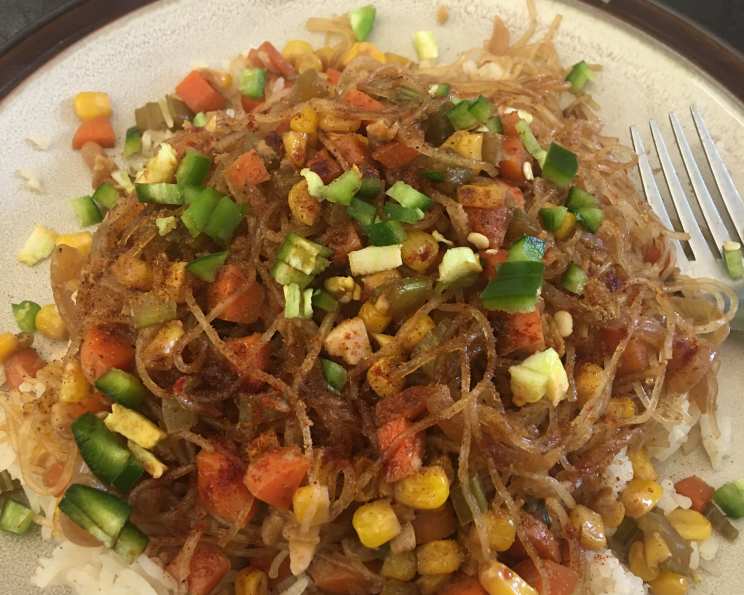
Vegan Sapasui: A Taste of Samoa
There’s a certain magic in discovering a dish that transcends borders and cultures. I remember the first time I encountered Sapasui – not in a bustling Chinese restaurant in the diaspora, but at a potluck in college hosted by my friend, Losa, who was from Samoa. The aroma alone was captivating, a savory dance of soy, ginger, and something uniquely comforting. It wasn’t just the food; it was the story Losa shared of her grandmother making this dish, a testament to how a simple chop suey transformed into a beloved Samoan staple, a symbol of home and community. One bite, and I was hooked, eager to learn the secrets of this surprisingly vibrant and flavorful dish.
Recipe Overview
- Prep Time: 20 minutes
- Cook Time: 35 minutes
- Total Time: 55 minutes
- Servings: 4-6
- Yield: Varies
- Dietary Type: Vegan
Ingredients
For the Tofu Mince:
- 14 ounces extra firm tofu
- 1 teaspoon vegan beef stock powder (can use Beef Style Seasoning or Chicken Style)
- ¼ cup hot water
- 2 tablespoons soy sauce
For the Sapasui:
- 5 ounces mung bean vermicelli (sometimes also called cellophane or glass noodles)
- 2 tablespoons vegetable oil
- 1 large onion, sliced
- 4 garlic cloves, minced
- ¾ inch piece ginger, grated
- 1 celery rib, sliced
- 2 carrots, sliced
- ½ Chinese cabbage, sliced
- 1 bunch Broccolini, cut into ¾-inch lengths (or broccoli)
- ½ cup vegan beef stock
- ¼ cup soy sauce
- 2 tablespoons ketjap manis
Equipment Needed
- Large bowl
- Large wok or skillet
- Grater
- Knife
- Cutting board
Instructions
-
Begin by preparing the tofu mince. Crumble the tofu into a large bowl. It’s important to use extra firm tofu for this recipe, as it will hold its shape better during cooking.
-
In a separate small bowl or cup, dissolve the vegan beef stock powder in ¼ cup of hot water. Add the soy sauce to this mixture and stir well until combined.
-
Pour the soy sauce and stock mixture over the crumbled tofu. Stir gently to ensure the tofu is evenly coated. Set this aside to marinate and absorb the flavors, ideally for at least 15 minutes. The longer it marinates, the more flavorful your tofu mince will be.
-
While the tofu is marinating, prepare the mung bean vermicelli. Remove the noodles from the packet and place them in a bowl of cold water to soak. Let them soak for about 10-15 minutes, while you prepare the remaining ingredients. This will soften the noodles and make them easier to cook.
-
Now, it’s time to cook the Sapasui. Heat the vegetable oil in a large wok or a large skillet over medium-high heat. Make sure the wok is hot before adding the next ingredients.
-
Add the sliced onion, minced garlic, and grated ginger to the hot wok. Sauté these aromatics until the onion becomes translucent and fragrant, about 3-5 minutes. Be careful not to burn the garlic or ginger, as this will give the dish a bitter taste.
-
Add the marinated crumbled tofu to the wok, along with any remaining liquid from the marinade. Cook the tofu until any excess liquid has dissolved and the tofu starts to brown slightly, approximately 5-7 minutes. Stir frequently to prevent sticking.
-
Introduce the vegetables. Add the sliced celery, sliced carrots, sliced Chinese cabbage, and Broccolini (or broccoli) to the wok. Stir to combine with the tofu and aromatics.
-
Pour in the vegan beef stock, soy sauce, and ketjap manis. Stir well to ensure all the ingredients are coated with the sauce.
-
Bring the mixture to a simmer. Reduce the heat to medium-low and cover the wok. Simmer until the vegetables are just tender-crisp, about 8-10 minutes. You want the vegetables to retain some bite.
-
While the vegetables are simmering, drain the mung bean vermicelli that has been soaking in cold water.
-
Add the drained noodles to the wok with the tofu and vegetables. Stir well to thoroughly combine the noodles with the sauce and other ingredients.
-
Cook for an additional 2-3 minutes, or until the noodles are cooked through and have absorbed some of the sauce. The sauce should have reduced by about half, creating a slightly thickened consistency. Be careful not to overcook the noodles, as they can become mushy.
-
Serve the Vegan Sapasui immediately. The noodles can continue to absorb liquid if left to sit for too long, so it’s best enjoyed fresh.
Expert Tips & Tricks
- Tofu Pressing: For an even firmer texture, press the tofu for at least 30 minutes before crumbling. This removes excess water and allows it to absorb more flavor from the marinade.
- Vegetable Variation: Feel free to adjust the vegetables based on your preference or what you have on hand. Bell peppers, mushrooms, or snap peas would all be delicious additions.
- Sauce Consistency: If the sauce is too thin, you can thicken it with a cornstarch slurry (1 tablespoon cornstarch mixed with 2 tablespoons cold water). Add the slurry to the wok during the last few minutes of cooking, stirring constantly until the sauce thickens.
- Spice Level: Add a pinch of red pepper flakes or a dash of chili oil for a spicy kick.
Serving & Storage Suggestions
Serve the Vegan Sapasui hot, garnished with fresh cilantro or green onions, if desired. It makes a satisfying and complete meal on its own.
To store leftovers, allow the Sapasui to cool completely before transferring it to an airtight container. Store in the refrigerator for up to 3 days. Reheat gently in a wok or skillet over medium heat, adding a splash of water or broth if necessary to prevent sticking. The noodles may become slightly softer upon reheating. Freezing is not recommended as the noodles become too soft.
Nutritional Information
Note: Nutritional information is an estimate and may vary based on specific ingredients and portion sizes.
| Nutrient | Amount per Serving | % Daily Value |
|---|---|---|
| Calories | 420 kcal | 21% |
| Total Fat | 18g | 28% |
| Saturated Fat | 3g | 15% |
| Cholesterol | 0mg | 0% |
| Sodium | 1800mg | 75% |
| Total Carbohydrate | 50g | 17% |
| Dietary Fiber | 6g | 24% |
| Sugars | 8g | N/A |
| Protein | 20g | 40% |
Variations & Substitutions
- Gluten-Free: Use gluten-free soy sauce and tamari instead of ketjap manis to make this dish gluten-free.
- Noodle Swap: If you can’t find mung bean vermicelli, you can substitute with rice noodles or even soba noodles. Adjust the cooking time accordingly.
- Protein Boost: Add other plant-based proteins like edamame or tempeh for extra sustenance.
- Sweetness Adjustment: Adjust the amount of ketjap manis to your liking, depending on how sweet you prefer your Sapasui.
FAQs (Frequently Asked Questions)
Q: Can I make this ahead of time?
A: While best served fresh, you can prepare the tofu mince and chop the vegetables in advance to save time. Store them separately in the refrigerator until ready to cook.
Q: How do I prevent the noodles from becoming mushy?
A: Avoid oversoaking and overcooking the mung bean vermicelli. They only need a brief soak and a few minutes of cooking in the wok.
Q: Can I use different vegetables?
A: Absolutely! Feel free to customize the vegetables to your taste. Bell peppers, mushrooms, and water chestnuts would all be great additions.
Q: What is ketjap manis?
A: Ketjap manis is an Indonesian sweet soy sauce. It adds a unique sweetness and depth of flavor to the dish. If you can’t find it, you can substitute with a mixture of regular soy sauce and a touch of brown sugar or molasses.
Q: How do I adjust the spice level?
A: Add a pinch of red pepper flakes, a dash of chili oil, or a finely chopped chili pepper to the wok during the sautéing stage for a spicy kick.
Final Thoughts
Vegan Sapasui is more than just a recipe; it’s a celebration of cultural fusion and culinary creativity. It’s a dish that invites you to experiment, to adapt, and to make it your own. So, gather your ingredients, embrace the process, and prepare to be transported to the warm shores of Samoa with every delicious bite. And, please, share your experience with me! I’d love to hear how you made it and any variations you added. Perhaps pair it with a refreshing tropical fruit salad or a light coconut-based dessert for a truly complete meal. Bon appétit, or as they say in Samoa, Manuia!