
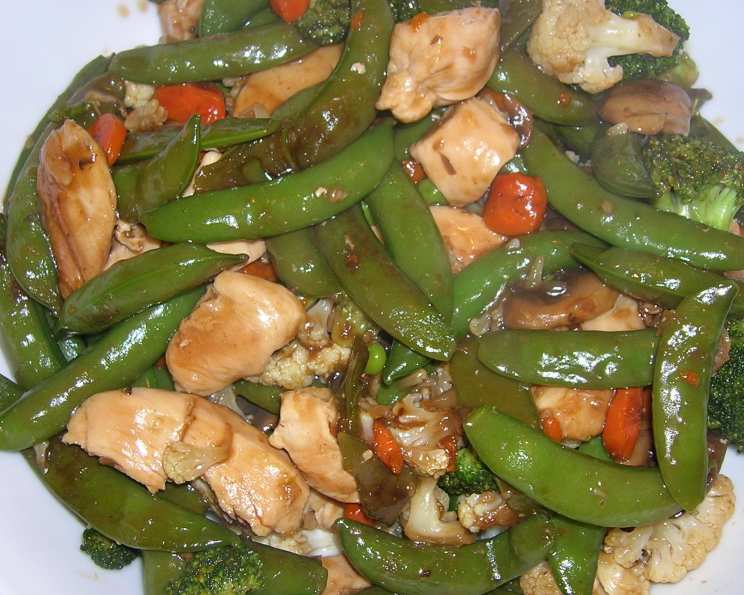
Vegetable Chicken Stir-Fry: A Symphony of Flavors and Colors
I remember vividly the first time I truly appreciated the magic of a stir-fry. It wasn’t in a fancy restaurant, but in my tiny college apartment. A friend, homesick for her family’s cooking, showed me how to transform humble ingredients – a few leftover chicken pieces, some slightly wilted vegetables, and a bottle of soy sauce – into a vibrant, satisfying meal. The sizzle of the wok, the aromatic steam, and the explosion of textures and flavors created an experience far greater than the sum of its parts. It was a revelation, and a skill I’ve honed and cherished ever since.
Recipe Overview
- Prep Time: 15 minutes
- Cook Time: 10 minutes
- Total Time: 25 minutes
- Servings: 4
- Dietary Type: Balanced
Ingredients
- 1 tablespoon cornstarch
- 1 cup reduced-sodium chicken broth
- 1/4 cup reduced sodium soy sauce
- 1 lb boneless skinless chicken breast half, cut into strips
- 3 garlic cloves, minced
- 1 dash ground ginger
- 2 tablespoons olive oil, divided
- 2 cups fresh broccoli florets
- 1 cup cauliflower floret
- 1 cup carrot, sliced
- 1 cup fresh snow peas or 1 cup frozen snow peas
- 1 teaspoon sesame seeds, toasted
Equipment Needed
- Large Skillet or Wok
- Measuring Cups and Spoons
- Mixing Bowl
- Knife
- Cutting Board
Instructions
-
Begin by preparing the sauce. In a mixing bowl, combine the cornstarch, chicken broth, and soy sauce. Whisk until completely smooth and set aside. This mixture will thicken beautifully as it cooks, giving your stir-fry its glossy finish.
-
Now, it’s time to cook the chicken. Heat 1 tablespoon of olive oil in a large skillet or wok over medium-high heat. Once the oil is shimmering, add the chicken strips, minced garlic, and ground ginger.
-
Stir-fry the chicken mixture for approximately 4-5 minutes, or until the chicken is no longer pink on the inside and is cooked through. Be careful not to overcrowd the pan; work in batches if necessary to ensure even cooking. Remove the chicken from the heat and set aside to keep warm.
-
Next, it’s the vegetables’ turn. Add the remaining 1 tablespoon of olive oil to the skillet or wok. Add the broccoli florets, cauliflower florets, and sliced carrots.
-
Stir-fry these heartier vegetables for about 4 minutes, or until they are crisp-tender. You want them to retain some bite while still being cooked through.
-
Add the snow peas (fresh or frozen) to the skillet. Stir-fry for an additional 2 minutes, until they are bright green and slightly softened. Frozen snow peas might release a little water; that’s perfectly fine.
-
Give the broth mixture another quick whisk to ensure the cornstarch hasn’t settled. Pour the mixture into the pan with the vegetables.
-
Bring the mixture to a boil over medium-high heat. As it boils, cook and stir constantly for about 1 minute, or until the sauce has thickened to your desired consistency. It should coat the vegetables beautifully.
-
Add the cooked chicken back into the pan with the vegetables and sauce. Stir to combine, ensuring the chicken is coated in the flavorful sauce and heated through.
-
Before serving, sprinkle the toasted sesame seeds over the stir-fry for added flavor and visual appeal.
Expert Tips & Tricks
- Marinating the Chicken: For an extra layer of flavor and tenderness, marinate the chicken strips in a mixture of soy sauce, ginger, and garlic for at least 30 minutes (or up to overnight) before cooking.
- High Heat is Key: Stir-fries benefit from high heat. This allows the vegetables to cook quickly while retaining their crispness. Make sure your skillet or wok is hot before adding the ingredients.
- Don’t Overcrowd the Pan: Overcrowding the pan will lower the temperature and cause the vegetables to steam instead of stir-fry. Cook in batches if necessary to maintain optimal heat.
- Toast Your Sesame Seeds: Toasting sesame seeds brings out their nutty flavor. You can do this in a dry skillet over medium heat for a few minutes, or in the oven at 350°F for 5-7 minutes. Watch them carefully, as they can burn easily.
- Adjust the Sauce: Taste the sauce after it has thickened and adjust the seasoning as needed. Add a dash of honey for sweetness, a pinch of red pepper flakes for heat, or a squeeze of lemon juice for acidity.
Serving & Storage Suggestions
Serve the vegetable chicken stir-fry hot, directly from the skillet or wok. It’s delicious served on its own or over a bed of steamed rice or noodles. For a complete meal, consider adding a side of spring rolls or a simple green salad.
Leftovers can be stored in an airtight container in the refrigerator for up to 3-4 days. To reheat, simply microwave for a few minutes, stirring occasionally, or reheat in a skillet over medium heat until warmed through. A splash of water or broth can help to loosen the sauce if it has thickened too much during refrigeration. Freezing is not recommended, as the vegetables can become mushy upon thawing.
Nutritional Information
| Nutrient | Amount per Serving | % Daily Value |
|---|---|---|
| Calories | 258.8 kcal | N/A |
| Calories from Fat | 96 g | 37% |
| Total Fat | 10.8 g | 16% |
| Saturated Fat | 1.8 g | 8% |
| Cholesterol | 72.6 mg | 24% |
| Sodium | 722 mg | 30% |
| Total Carbohydrate | 12.3 g | 4% |
| Dietary Fiber | 2.1 g | 8% |
| Sugars | 3 g | 12% |
| Protein | 28.7 g | 57% |
Variations & Substitutions
- Vegetarian Stir-Fry: Substitute the chicken with tofu, tempeh, or a plant-based chicken substitute.
- Gluten-Free: Use tamari or coconut aminos instead of soy sauce.
- Spicy Stir-Fry: Add a pinch of red pepper flakes, a drizzle of sriracha, or a tablespoon of chili garlic sauce to the sauce.
- Different Vegetables: Feel free to substitute the vegetables with your favorites or whatever you have on hand. Bell peppers, mushrooms, snap peas, bok choy, and bean sprouts are all great options.
- Peanut Sauce: Replace the soy sauce-based sauce with a homemade or store-bought peanut sauce for a richer, nuttier flavor.
- Cashew Chicken: Add 1/2 cup of roasted cashews during the last minute of cooking for added crunch and flavor.
FAQs (Frequently Asked Questions)
Q: Can I use frozen vegetables instead of fresh?
A: Yes, frozen vegetables can be used. Just be sure to thaw them slightly and drain any excess water before adding them to the stir-fry.
Q: How can I prevent the chicken from drying out?
A: Avoid overcooking the chicken. Stir-fry it just until it’s no longer pink, and then remove it from the heat until it’s time to add it back into the stir-fry.
Q: Can I make this ahead of time?
A: You can prep the ingredients ahead of time by chopping the vegetables and marinating the chicken. However, it’s best to cook the stir-fry fresh for optimal flavor and texture.
Q: What’s the best type of pan to use for a stir-fry?
A: A wok is ideal, but a large skillet with high sides works well too.
Q: How can I thicken the sauce if it’s not thick enough?
A: Mix a teaspoon of cornstarch with a tablespoon of cold water and add it to the sauce while it’s simmering. Stir until the sauce thickens.
Final Thoughts
I encourage you to try this vegetable chicken stir-fry and make it your own. Don’t be afraid to experiment with different vegetables, sauces, and seasonings to create a dish that suits your taste. Whether you’re a seasoned chef or a beginner cook, this recipe is a great way to enjoy a healthy, flavorful, and satisfying meal. Share your creations and feedback – I’d love to hear how you personalized this recipe! This dish pairs wonderfully with a crisp white wine or a refreshing iced tea. Bon appétit!