
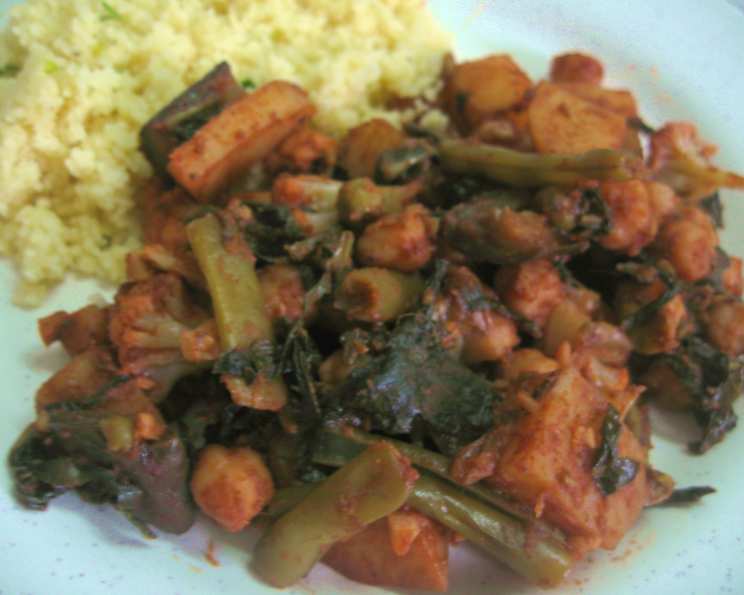
Kenyan Vegetable Curry: A Taste of Home
The aroma alone transports me back. I remember the bustling open-air markets of Nairobi, the vibrant colors of fresh produce piled high, and the comforting scent of spices simmering in countless pots. My grandmother, a true culinary artist, would often whip up a version of this vegetable curry, her hands moving with a practiced grace that turned simple ingredients into a symphony of flavor. This dish, a celebration of vegetables simmered in a fragrant spice blend, is more than just a meal; it’s a taste of home, a connection to my roots, and a reminder of the warmth and generosity of Kenyan hospitality.
Recipe Overview
- Prep Time: 30 minutes
- Cook Time: 45 minutes
- Total Time: 1 hour 15 minutes
- Servings: 8-12
- Dietary Type: Vegan
Ingredients
- 2 large onions, finely chopped
- 2 tablespoons vegetable oil
- 1 teaspoon cumin seed
- 1 teaspoon mustard seeds (the black kind, if possible)
- 8 medium potatoes, quartered
- 1 1⁄2 teaspoons fresh ginger, crushed
- 1 large garlic clove, minced and crushed
- 1 tablespoon ground cumin
- 1 tablespoon whole coriander seed, crushed
- 2 chili peppers (or 1 teaspoon cayenne pepper, or crushed red pepper flakes to taste)
- 1⁄2 teaspoon turmeric
- 1 teaspoon salt
- 4 cinnamon sticks
- 6 cloves
- 4 ounces tomato paste
- 1⁄2 lb fresh green beans, trimmed
- 1⁄2 small cauliflower, broken into pieces
- 1 medium eggplant, cut into chunks
- 8 ounces green peas (fresh or frozen)
- 8 ounces leafy greens, chopped (kale, spinach, collards, swiss chard, etc.)
- 1 (15 ounce) can chickpeas, drained (garbanzo beans)
Equipment Needed
- Large, heavy skillet or pot (oven-proof preferred)
- Lid for the pot or aluminum foil
- Mixing spoon
- Measuring spoons and cups
Instructions
-
Preheat your oven to 350°F (175°C). If your pot is not oven-safe, have an oven-safe dish ready.
-
In a large, heavy skillet or pot, heat the vegetable oil over medium heat. Add the finely chopped onions, cumin seeds, and mustard seeds. Cook, stirring occasionally, until the onions are softened and golden brown. This usually takes about 5-7 minutes. The mustard seeds will pop, so be careful!
-
Add the quartered potatoes to the pot and stir well to coat each piece with the spiced onions. Ensure all potatoes are nicely coated.
-
Add the crushed fresh ginger, minced garlic, ground cumin, crushed whole coriander seed, chili peppers (or cayenne pepper/red pepper flakes), turmeric, and salt. Continue to stir the mixture for several minutes, allowing the spices to release their aromas and flavors. Don’t let the spices burn; lower the heat if necessary.
-
In a separate small bowl, thin the tomato paste with 2/3 cup of water. Stir until the tomato paste is fully dissolved. Pour this mixture into the pot with the vegetables and spices.
-
Add the remaining vegetables one at a time, cooking for a minute or so between each addition, stirring well after each addition: green beans, cauliflower, eggplant, green peas, and finally the leafy greens. Stir gently to combine all ingredients. Add the drained chickpeas last.
-
If your pot is not oven-proof, transfer the mixture to an oven-safe dish. Cover the pot or dish tightly with a lid or seal with aluminum foil.
-
Bake in the preheated oven for about 45 minutes. Check the curry after the first 20 minutes. The consistency of the curry should be thick, rather than watery. Add more water, a little at a time, if needed to prevent burning.
-
Stir the curry occasionally during baking to prevent the ingredients from sticking to the bottom of the pot.
-
Once the potatoes are tender and the other vegetables are cooked through, remove the curry from the oven. Let it rest for a few minutes before serving.
Expert Tips & Tricks
- For a richer flavor, toast the cumin and coriander seeds in a dry pan before crushing them.
- If you don’t have whole coriander seeds, you can substitute with ground coriander, but the flavor will be slightly different.
- Adjust the amount of chili peppers or cayenne pepper to your spice preference. Start with a small amount and add more to taste.
- Don’t be afraid to experiment with other vegetables. Carrots, sweet potatoes, or bell peppers would also work well in this curry.
- Make-ahead tip: You can prepare the curry up to step 7 and refrigerate it for up to 24 hours before baking. This allows the flavors to meld together even more.
Serving & Storage Suggestions
Serve the Kenyan Vegetable Curry hot over rice or with Indian bread such as naan or roti. A dollop of plain yogurt (or coconut yogurt for a vegan option) and a sprinkle of fresh cilantro can add a refreshing touch.
Leftovers can be stored in an airtight container in the refrigerator for up to 3 days. To reheat, gently warm the curry in a saucepan over medium heat, adding a splash of water if necessary to prevent sticking. You can also reheat it in the microwave.
For longer storage, the curry can be frozen for up to 2 months. Thaw it overnight in the refrigerator before reheating. Be aware that some vegetables, like potatoes, may change texture slightly after freezing.
Nutritional Information
| Nutrient | Amount per Serving | % Daily Value |
|---|---|---|
| Calories | 348.6 kcal | N/A |
| Calories from Fat | N/A | 13% |
| Total Fat | 5.1 g | 7% |
| Saturated Fat | 0.7 g | 3% |
| Cholesterol | 0 mg | 0% |
| Sodium | 589.2 mg | 24% |
| Total Carbohydrate | 68.2 g | 22% |
| Dietary Fiber | 13.7 g | 54% |
| Sugars | 10 g | 40% |
| Protein | 11.6 g | 23% |
Note: Nutritional information is an estimate and may vary depending on specific ingredients and portion sizes.
Variations & Substitutions
- Coconut Milk Curry: Substitute the water used to thin the tomato paste with coconut milk for a creamier, richer curry.
- Sweet Potato Curry: Add cubed sweet potatoes along with the regular potatoes for a sweeter flavor profile.
- Spicy Curry: Increase the amount of chili peppers or cayenne pepper for a spicier kick. You can also add a dash of hot sauce.
- Gluten-Free: Ensure that the tomato paste and any other ingredients you use are gluten-free. Serve with rice or gluten-free bread.
FAQs (Frequently Asked Questions)
Q: Can I make this curry in a slow cooker?
A: Yes, you can adapt this recipe for a slow cooker. Sauté the onions and spices in a skillet first, then transfer everything to the slow cooker and cook on low for 6-8 hours, or on high for 3-4 hours.
Q: How can I make this curry less spicy?
A: Reduce or eliminate the chili peppers or cayenne pepper. You can also remove the seeds from the chili peppers to reduce the heat.
Q: Can I use frozen vegetables instead of fresh?
A: Yes, you can use frozen vegetables. Add them towards the end of the cooking time, as they will cook faster than fresh vegetables.
Q: What if my curry is too watery?
A: If your curry is too watery, simmer it uncovered on the stovetop for a while to allow some of the liquid to evaporate. You can also add a slurry of cornstarch and water (1 tablespoon cornstarch mixed with 2 tablespoons water) to thicken it.
Q: Can I add protein to this curry?
A: Absolutely! Tofu, lentils, or other beans can be added for extra protein. Add tofu or lentils along with the other vegetables and beans for a more complete nutritional profile.
Final Thoughts
This Kenyan Vegetable Curry is a vibrant and flavorful dish that is sure to warm your heart and satisfy your taste buds. Its versatility allows for endless variations, making it a perfect way to incorporate your favorite vegetables and spices. I encourage you to try this recipe and experience the taste of Kenyan home cooking. Feel free to adjust the spices and vegetables to your liking, and don’t hesitate to share your creations and feedback. Pair this delicious curry with a refreshing glass of mango juice or a light Kenyan beer for a truly authentic experience. Enjoy!