
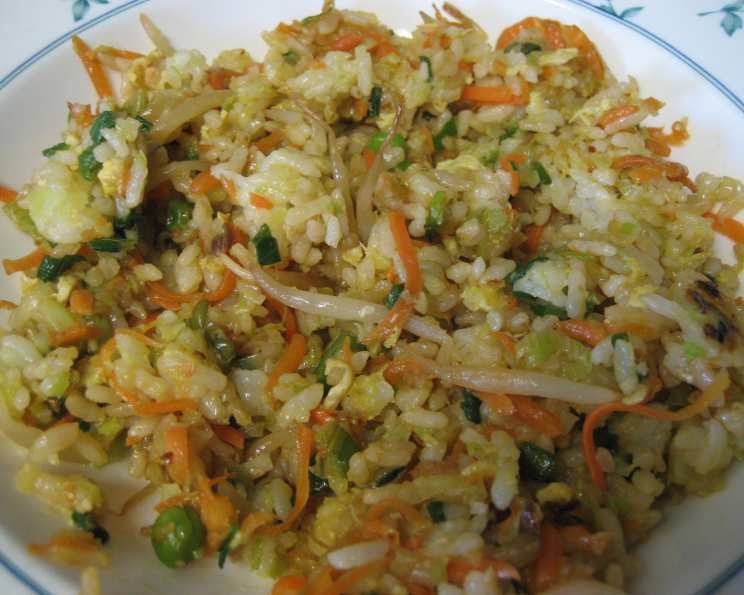
Vegetable Fried Brown Rice: A Flavorful & Healthy Delight
My earliest memories of fried rice aren’t from fancy restaurants, but from Mrs. Chen’s tiny hole-in-the-wall. The aroma of sizzling garlic, the rhythmic clatter of woks, and the sheer artistry with which she transformed simple ingredients into a symphony of flavors – it was pure magic. I’d stand on my tiptoes, mesmerized, watching her toss everything with such precision. While every dish she made was fantastic, her fried rice, with its perfectly balanced textures and vibrant vegetables, was always my favorite. This recipe is my attempt to capture a bit of that magic, inspired by her skill and the unforgettable taste of my childhood.
Recipe Overview
- Prep Time: 15 minutes
- Cook Time: 20 minutes
- Total Time: 35 minutes
- Servings: 4
- Dietary Type: Vegetarian
Ingredients
- 1 1⁄3 cups water
- 3⁄4 cup cooked brown rice (refrigerated overnight)
- 3 tablespoons peanut oil
- 4 green onions with tops, chopped
- 1⁄2 teaspoon salt
- 2 carrots, grated
- 3⁄4 cup bean sprouts
- 1⁄4 cup cabbage, shredded
- 1⁄4 cup peas, cooked (optional)
- 1⁄4 cup egg white
- 2 tablespoons light soy sauce
- 1 tablespoon sesame oil
- 1⁄4 cup fresh parsley, chopped
Equipment Needed
- Saucepan
- Large skillet
Instructions
- In a saucepan, bring the 1 1/3 cups of water and 3/4 cup brown rice to a boil. The key to perfectly cooked brown rice for fried rice is starting with rice that has been refrigerated overnight. This helps it dry out slightly and prevents it from becoming mushy when fried.
- Stir the rice frequently to prevent it from sticking to the bottom of the saucepan. Brown rice can be a bit sticky, so diligent stirring is essential.
- Reduce the heat to low, cover the saucepan, and simmer for 20 minutes, or until all the liquid is absorbed. Ensure the rice is cooked through, but not mushy. Taste and adjust cooking time as needed depending on your stove.
- In a large skillet, heat 3 tablespoons of peanut oil over medium heat. Peanut oil has a high smoke point and adds a subtle nutty flavor that complements the dish. If you don’t have peanut oil, vegetable oil can be substituted.
- Add the cooked brown rice to the skillet and sauté until it’s lightly golden brown. This step is crucial for developing the characteristic flavor and texture of fried rice. Don’t overcrowd the pan; work in batches if necessary.
- Add the 4 chopped green onions, 1/2 teaspoon salt, 2 grated carrots, and 3/4 cup bean sprouts to the skillet.
- Stir-fry the vegetables for 5 minutes, or until they are tender yet crisp. The goal is to cook the vegetables until they are slightly softened but still retain some crunch. Avoid overcooking them, as they will become soggy.
- Hollow out a circle in the center of the skillet, pushing the rice and vegetables to the sides.
- Pour the 1/4 cup egg white into the hollow and cook, lightly scrambling. The egg white adds protein and helps to bind the ingredients together. Be sure the skillet is hot enough so the egg whites cook quickly.
- Stir the cooked egg white into the rice mixture, ensuring it is evenly distributed.
- Sprinkle the mixture with 2 tablespoons of light soy sauce, 1 tablespoon of sesame oil, and 1/4 cup of fresh parsley. The soy sauce adds a savory umami flavor, while the sesame oil provides a fragrant aroma. The parsley adds a touch of freshness and color.
- Toss everything together to ensure all the ingredients are well combined and heated through.
- Serve immediately and enjoy.
Expert Tips & Tricks
- Day-old rice is best: Using day-old, refrigerated rice is essential for achieving the right texture. Freshly cooked rice will be too sticky and will clump together.
- Don’t overcrowd the pan: Overcrowding the skillet will lower the temperature and prevent the rice from browning properly. Work in batches if necessary.
- Get your skillet hot: A hot skillet is crucial for creating that signature “wok hei” flavor – a slightly smoky, charred taste.
- Prep your ingredients: Having all your ingredients prepped and ready to go before you start cooking will make the process much smoother. Chop the vegetables, measure out the sauces, and have everything within easy reach.
- Add protein: Feel free to add other protein sources, such as cooked chicken, shrimp, or tofu, to make it a more substantial meal.
- Spice it up: For a spicy kick, add a pinch of red pepper flakes or a drizzle of chili oil to the skillet.
Serving & Storage Suggestions
Serve the vegetable fried brown rice hot, as a main dish or a side dish. It pairs well with other Asian-inspired dishes, such as stir-fried vegetables, spring rolls, or dumplings.
Leftovers can be stored in an airtight container in the refrigerator for up to 3 days. To reheat, simply microwave until heated through, or stir-fry in a skillet with a little bit of oil.
Freezing is not recommended, as the texture of the rice and vegetables may change upon thawing.
Nutritional Information
| Nutrient | Amount per Serving | % Daily Value |
|---|---|---|
| Calories | 199.4 kcal | N/A |
| Calories from Fat | N/A | 63% |
| Total Fat | 14 g | 21% |
| Saturated Fat | 2.3 g | 11% |
| Cholesterol | 0 mg | 0% |
| Sodium | 848.9 mg | 35% |
| Total Carbohydrate | 14.9 g | 4% |
| Dietary Fiber | 2.6 g | 10% |
| Sugars | 3 g | N/A |
| Protein | 4.8 g | 9% |
Variations & Substitutions
- Gluten-Free: Use tamari instead of light soy sauce to make the dish gluten-free.
- Vegan: This recipe is already vegetarian and can easily be made vegan by omitting the egg white. You can substitute it with crumbled tofu for added protein.
- Vegetable Variations: Feel free to experiment with different vegetables, such as mushrooms, broccoli, bell peppers, or snow peas. Use what’s in season and what you enjoy.
- Different Oils: While peanut oil is recommended for its flavor, you can substitute it with vegetable oil, canola oil, or avocado oil.
- Spicy Version: Add a tablespoon of sriracha or chili garlic sauce for a spicy kick.
- Herb Variations: Instead of parsley, try using cilantro, basil, or mint for a different flavor profile.
FAQs (Frequently Asked Questions)
Q: Why is it important to use day-old rice for fried rice?
A: Day-old rice has less moisture than freshly cooked rice, which allows it to fry up properly without becoming mushy. The individual grains stay separate, creating the desired texture.
Q: Can I use white rice instead of brown rice?
A: Yes, you can use white rice, but brown rice adds a nutty flavor and more fiber. If using white rice, reduce the initial cooking time to about 15 minutes or until the water is absorbed.
Q: Can I add meat or tofu to this recipe?
A: Absolutely! Cooked chicken, shrimp, pork, or tofu can easily be added to make the dish more substantial. Add them during the stir-frying stage, along with the vegetables.
Q: How can I make sure my vegetables stay crisp-tender?
A: The key is not to overcook the vegetables. Stir-fry them over medium heat until they are slightly softened but still retain some crunch.
Q: What if I don’t have peanut oil?
A: You can substitute peanut oil with another high-smoke-point oil such as vegetable oil, canola oil, or avocado oil.
Final Thoughts
This Vegetable Fried Brown Rice recipe is more than just a dish; it’s a canvas for your culinary creativity. Whether you’re a seasoned chef or a beginner cook, this recipe is easy to follow and endlessly customizable. Don’t be afraid to experiment with different vegetables, sauces, and proteins to create your own signature version. I encourage you to try it out, share it with your loved ones, and let me know what you think! And if you’re feeling adventurous, pair it with a refreshing glass of iced green tea for the perfect meal. Happy cooking!