
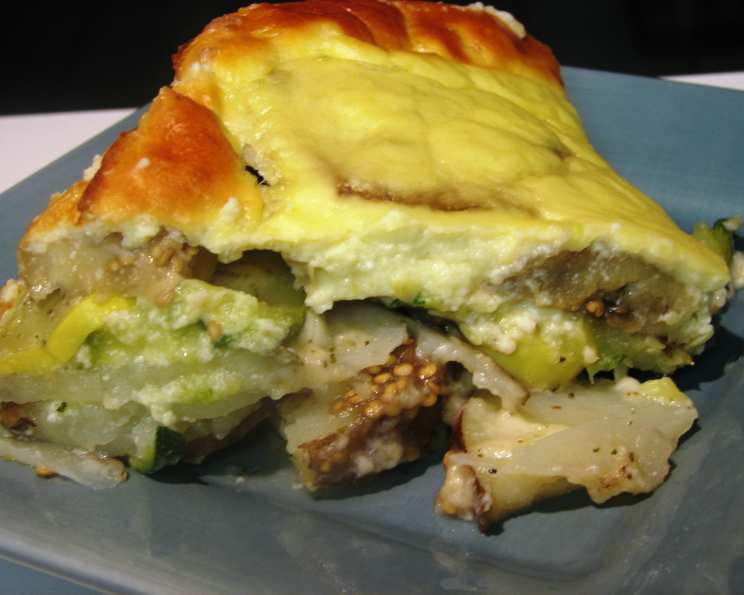
Vegetable Moussaka: A Symphony of Summer Flavors
The first time I tasted moussaka, I was a wide-eyed culinary student backpacking through Greece. Sunlight streamed through the taverna’s open windows, illuminating the layers of eggplant, potatoes, and rich béchamel. The aroma alone was intoxicating – a blend of roasted vegetables, fragrant herbs, and creamy goodness. Each bite was a revelation, a perfect harmony of textures and tastes that instantly transported me to sun-drenched Mediterranean hillsides. It was more than just a dish; it was an experience I knew I had to recreate.
Recipe Overview
- Prep Time: 30 minutes
- Cook Time: 60 minutes
- Total Time: 1 hour 30 minutes
- Servings: 12
- Yield: 1 large casserole
- Dietary Type: Vegetarian
Ingredients
- 2 large eggplants, sliced thin lengthwise
- Salt and black pepper, to taste
- Flour, for dusting
- 4 zucchini, sliced thin lengthwise
- 2 yellow squash, sliced thin lengthwise
- 4 Idaho potatoes, peeled and sliced thin lengthwise
- 2 tablespoons seasoned breadcrumbs
- 1/2 cup feta cheese, grated
- 1/2 cup Parmesan cheese, grated
- 1 (16 ounce) jar sliced roasted red peppers
- Italian seasoning, to taste
Bechamel
- 6 tablespoons butter
- 1 teaspoon salt
- 1 teaspoon black pepper
- 4 tablespoons flour
- 2 cups half-and-half cream
- 2 eggs
- 1 cup grated Parmesan cheese
Equipment Needed
- Large baking sheet
- Wide bowl
- Large pot
- Slotted spoon
- 9×13 inch baking pan
- Saucepan
- Whisk
Instructions
-
Preheat your oven to 350°F (175°C).
-
Season the sliced eggplant lightly with salt and pepper, then dust it with a bit of flour. This helps to draw out moisture and create a nice crust when baking.
-
Place the eggplant slices on a flat baking sheet in a single layer. Bake until browned, about 15 minutes per batch. You will likely need to do this in batches to avoid overcrowding the pan, ensuring even cooking. Set aside once browned.
-
Prepare an ice bath: fill a wide bowl with ice water and set it aside. This will stop the cooking process for the other vegetables and help them retain their vibrant color.
-
Bring a large pot of salted water to a boil.
-
Blanch the zucchini, squash, and potatoes in batches for 2-3 minutes each, until slightly tender. Overcooking will result in mushy layers in your moussaka, so aim for al dente.
-
Using a slotted spoon, immediately transfer the blanched vegetables to the prepared ice water to halt the cooking process.
-
Once cooled, place the blanched vegetables on a rack to dry thoroughly. This will prevent a soggy moussaka.
-
ASSEMBLY: Grease a 9×13 inch baking pan generously to prevent sticking. Sprinkle the bottom of the pan with seasoned breadcrumbs. This creates a flavorful and slightly crispy base for the moussaka.
-
Carefully layer the bottom of the pan with the eggplant, evenly covering all gaps. Think of it like tiling – you want a solid foundation.
-
Sprinkle lightly with the feta and Parmesan cheeses, then add a few slices of roasted red peppers.
-
Season with salt, black pepper, and Italian seasoning. Remember that each layer contributes to the overall flavor profile.
-
Add the potato slices in an opposite order to the eggplant, creating a crosshatch pattern. This adds visual appeal and ensures even distribution of the vegetables.
-
Layer the squash and zucchini in the same fashion as the potatoes, alternating directions.
-
Re-season in between layers, and finish with a final layer of eggplant. Press down gently on the layers to compress them slightly. Set aside while you prepare the béchamel.
-
BECHAMEL: In a small bowl, whisk together the eggs and a dash of hot sauce (optional, for a subtle kick). Set aside.
-
Melt the butter in a saucepan over medium heat.
-
Whisk in the flour, salt, and pepper, and cook for about 1 minute, stirring constantly, until the mixture binds together and forms a smooth roux. This step is crucial for a lump-free béchamel.
-
Gradually whisk in the half-and-half cream, a little at a time, stirring constantly to prevent lumps from forming.
-
Continue cooking, stirring constantly over medium heat, until the sauce thickens and becomes bubbly. This may take 5-7 minutes.
-
Temper the eggs by slowly drizzling a small amount of the hot béchamel into the egg mixture, whisking constantly to prevent the eggs from scrambling.
-
Add the tempered egg mixture to the saucepan with the remaining béchamel, mixing well to incorporate.
-
Stir in the Parmesan cheese until melted and smooth.
-
Spread the béchamel evenly over the top of the vegetables in the baking pan. Ensure that the entire surface is covered to create a beautiful golden crust.
-
Bake for 40-45 minutes, or until the béchamel is golden brown and bubbly on top.
-
Remove the moussaka from the oven and let it rest for 5-10 minutes before serving. This allows the layers to set and makes it easier to cut.
Expert Tips & Tricks
- Pre-salting Eggplant: Salting the eggplant before cooking helps to draw out excess moisture and reduce bitterness. Place the sliced eggplant in a colander, sprinkle with salt, and let it sit for 30 minutes before rinsing and patting dry.
- Roux Consistency: For a smooth béchamel, ensure that the roux (butter and flour mixture) is cooked properly before adding the milk. Cook it for at least a minute to eliminate the raw flour taste.
- Even Baking: To ensure even baking, rotate the moussaka halfway through the cooking time.
- Make-Ahead Option: The moussaka can be assembled ahead of time and stored in the refrigerator for up to 24 hours before baking. Add a few minutes to the baking time if baking from cold.
- Cheese Alternatives: If you’re looking for a vegetarian alternative to Parmesan, try Pecorino Romano cheese. For a vegan version, nutritional yeast can provide a cheesy flavor.
Serving & Storage Suggestions
Serve the vegetable moussaka warm, cut into squares or rectangles. It’s delicious on its own or as a side dish. Garnish with fresh parsley or a drizzle of olive oil for added visual appeal.
Leftovers can be stored in an airtight container in the refrigerator for up to 3-4 days. To reheat, bake in a preheated oven at 350°F (175°C) until heated through, or microwave in short intervals. Moussaka can also be frozen for longer storage (up to 2 months). Thaw overnight in the refrigerator before reheating.
Nutritional Information
| Nutrient | Amount per Serving | % Daily Value |
|---|---|---|
| Calories | 304 kcal | N/A |
| Calories from Fat | 151 kcal | 50% |
| Total Fat | 16.8 g | 25% |
| Saturated Fat | 10 g | 50% |
| Cholesterol | 82 mg | 27% |
| Sodium | 1074.6 mg | 44% |
| Total Carbohydrate | 28.7 g | 9% |
| Dietary Fiber | 6.4 g | 25% |
| Sugars | 5 g | N/A |
| Protein | 12.4 g | 24% |
Note: Nutritional information is an estimate and may vary based on specific ingredients and portion sizes.
Variations & Substitutions
- Vegan Moussaka: Substitute the butter with olive oil or vegan butter, the half-and-half cream with cashew cream or full-fat coconut milk, the eggs with a flax egg substitute (1 tablespoon ground flaxseed mixed with 3 tablespoons water, let sit for 5 minutes), and the cheese with nutritional yeast or vegan cheese alternatives.
- Gluten-Free Moussaka: Use gluten-free flour for the béchamel and ensure the breadcrumbs are gluten-free.
- Spicy Moussaka: Add a pinch of red pepper flakes to the vegetable layers or béchamel for a spicy kick.
- Meat Addition: Although this recipe is vegetarian, ground lamb or beef can be added to the vegetable layers for a more traditional moussaka. Brown the meat before layering.
FAQs (Frequently Asked Questions)
Q: Can I use different vegetables?
A: Absolutely! Feel free to substitute other vegetables like mushrooms, bell peppers, or carrots based on your preference and what’s in season.
Q: How do I prevent the moussaka from being soggy?
A: Ensuring that the vegetables are properly drained after blanching and not over-layering them will help keep the dish from becoming soggy.
Q: Can I make this ahead of time?
A: Yes, you can assemble the moussaka ahead of time and store it in the refrigerator for up to 24 hours before baking. This can be a great time-saver for busy weeknights.
Q: What is the best way to reheat leftover moussaka?
A: The best way to reheat moussaka is in a preheated oven at 350°F (175°C) until heated through. This helps retain the texture and flavor. You can also microwave it in short intervals if you’re short on time.
Q: Can I freeze moussaka?
A: Yes, moussaka freezes well. Wrap it tightly in plastic wrap and then foil, or store it in an airtight container. Thaw it overnight in the refrigerator before reheating.
Final Thoughts
This vegetable moussaka is more than just a recipe; it’s an invitation to explore the vibrant flavors of the Mediterranean. Don’t be intimidated by the layering – embrace the process and let your creativity shine! I encourage you to try this recipe, adapt it to your own tastes, and share it with friends and family. Pair it with a crisp Greek salad and a glass of chilled white wine for a truly unforgettable meal. Kali Orexi!