
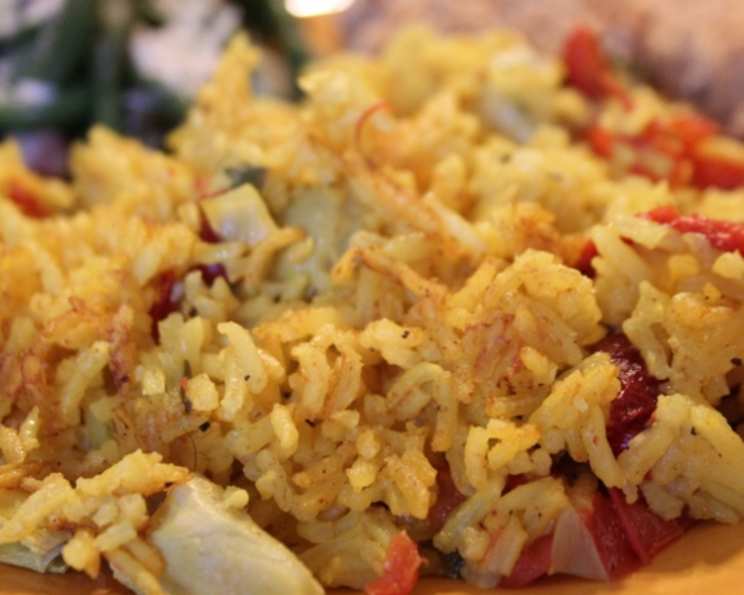
Vegetable Paella With Artichokes & Yellow Rice: A Taste of Sunshine
The scent of paella always takes me back to a tiny, sun-drenched taverna in Barcelona. I remember the clatter of cutlery, the lively chatter of locals, and the vibrant yellow rice piled high in a massive pan. The earthy aroma of artichokes, mingling with the subtle spice of saffron, filled the air. It was more than just a meal; it was a celebration of life, shared around a table with friends and family. This vegetable paella, brimming with artichokes and infused with turmeric’s golden hue, attempts to capture that same joyful essence.
Recipe Overview
- Prep Time: 20 minutes
- Cook Time: 30 minutes
- Total Time: 50 minutes
- Servings: 4
- Dietary Type: Vegetarian
Ingredients
- 1 (10 ounce) box frozen artichoke hearts, cooked tender in 2 cups water and 2 tbsp. lemon juice, drained and quartered
- 2 cups chicken broth (vegetable broth for vegan)
- 1 cup rice (medium-grain preferred)
- 2 medium tomatoes, peeled, seeded, and chopped
- 2 roasted red peppers, cut into strips
- 1/3 cup green onion, chopped
- 1 garlic clove, minced
- 2 teaspoons oil (olive oil recommended)
- 2 tablespoons lemon juice (use in cooking artichoke hearts)
- 1 teaspoon turmeric (or a little more to taste)
- 1/4 teaspoon cumin, ground
- Black pepper to taste
- 4 teaspoons parmesan cheese, grated (optional, omit for vegan)
- 2 tablespoons parsley, minced
Equipment Needed
- Dutch oven or casserole dish with lid
- Measuring cups and spoons
- Cutting board
- Knife
- Fork
Instructions
- First, prepare the artichoke hearts. In a saucepan, bring 2 cups of water and 2 tablespoons of lemon juice to a boil. Add the frozen artichoke hearts and cook until tender, about 10-12 minutes. Drain the artichokes well and quarter them. The lemon juice prevents discoloration and brightens the flavor.
- Next, prepare your vegetables. Peel, seed, and chop the tomatoes into small pieces. If you don’t want to peel your tomatoes, you can also crush them. Cut the roasted red peppers into strips. Chop the green onion and mince the garlic clove.
- In a dutch oven or casserole dish, heat 2 teaspoons of oil over medium heat. Once the oil is shimmering, add the minced garlic and cook for about 30 seconds, until fragrant, being careful not to burn it.
- Add the chopped tomatoes and roasted red peppers to the pot and cook for about 5 minutes, stirring occasionally, until the tomatoes have softened slightly and released some of their juices.
- Stir in the rice, turmeric, and cumin. The turmeric is what gives the paella its vibrant yellow color and adds a subtle earthy flavor. The cumin adds warmth. Season with black pepper to taste.
- Pour in the chicken broth (or vegetable broth). Bring the mixture to a boil, then reduce the heat to a simmer.
- Add the quartered artichoke hearts and green onion. Stir gently to combine all the ingredients.
- Cover the pot tightly with a lid and simmer for 30 minutes, or until the rice is tender and the liquid is completely absorbed. It’s important not to lift the lid during the cooking process to ensure even cooking and absorption of the liquid. If you find the rice is sticking to the bottom, you can add a little more broth, but be careful not to add too much.
- Once the rice is cooked, remove the pot from the heat and let it rest, covered, for 5 minutes. This allows the flavors to meld together and the rice to finish steaming.
- Fluff the rice gently with a fork before serving.
- Sprinkle with grated parmesan cheese (if using) and minced parsley before serving. The parsley adds a fresh, herbaceous note.
Expert Tips & Tricks
- For a richer flavor, toast the rice in the oil before adding the other ingredients. This helps to develop a nutty flavor.
- If you don’t have roasted red peppers on hand, you can use jarred roasted red peppers, but make sure to drain them well. Roasting your own peppers gives the best flavor, though. You can easily do this under the broiler, on the grill, or directly over a gas flame. Just remember to blacken all sides and then place in a bowl covered with plastic wrap to steam. The skins will slip right off.
- If you want to add more vegetables, consider adding peas, asparagus, or mushrooms. Add them during the last 10 minutes of cooking to prevent them from becoming overcooked.
- Don’t stir the paella too often during cooking. This can release starch from the rice and make it sticky.
- For a deeper, more complex flavor, use homemade chicken broth.
Serving & Storage Suggestions
Serve the vegetable paella hot, garnished with fresh parsley and a sprinkle of parmesan cheese (if using). A wedge of lemon on the side is also a nice touch. Leftovers can be stored in an airtight container in the refrigerator for up to 3 days. To reheat, add a splash of broth or water to prevent the rice from drying out. You can reheat it in the microwave or in a skillet over medium heat. Paella is best enjoyed fresh, but can be frozen for up to 2 months. Thaw completely before reheating.
Nutritional Information
| Nutrient | Amount per Serving | % Daily Value |
|---|---|---|
| Calories | 268.7 kcal | N/A |
| Calories from Fat | 38g | 14% |
| Total Fat | 4.3 g | 6% |
| Saturated Fat | 1 g | 4% |
| Cholesterol | 1.5 mg | 0% |
| Sodium | 438.7 mg | 18% |
| Total Carbohydrate | 49 g | 16% |
| Dietary Fiber | 4.6 g | 18% |
| Sugars | 2.4 g | N/A |
| Protein | 9.1 g | 18% |
Variations & Substitutions
- Vegan Paella: Substitute vegetable broth for the chicken broth and omit the parmesan cheese. You can also add a tablespoon of nutritional yeast for a cheesy flavor.
- Gluten-Free Paella: This recipe is naturally gluten-free as long as you use gluten-free broth.
- Spicy Paella: Add a pinch of red pepper flakes or a chopped chili pepper to the dish for a spicy kick.
- Seafood Paella: Although this is a vegetable paella, you can easily add seafood such as shrimp, mussels, or clams. Add them during the last 10 minutes of cooking to prevent them from becoming overcooked.
- Saffron Paella: For a truly authentic paella flavor, add a pinch of saffron threads to the broth. Saffron is expensive, but it adds a unique flavor and aroma.
- Seasonal Paella: Adapt the vegetables to the season. Use zucchini and bell peppers in the summer, butternut squash and kale in the fall, and Brussels sprouts and parsnips in the winter.
FAQs (Frequently Asked Questions)
Q: Can I use brown rice instead of white rice?
A: While you can use brown rice, it will require a longer cooking time and more liquid. You may need to adjust the simmering time and broth amount to ensure the rice is fully cooked.
Q: Can I make this paella ahead of time?
A: While paella is best served fresh, you can prepare the vegetables ahead of time and store them in the refrigerator until ready to cook. You can also cook the paella completely and reheat it later, but the texture may not be as good.
Q: How do I prevent the rice from sticking to the bottom of the pot?
A: Make sure to use a heavy-bottomed pot or dutch oven to distribute the heat evenly. Avoid stirring the paella too often, as this can release starch and make the rice sticky. If you notice the rice is sticking, add a small amount of broth.
Q: Can I use canned tomatoes instead of fresh tomatoes?
A: Yes, you can use canned diced tomatoes as a substitute for fresh tomatoes. Drain them well before adding them to the pot.
Q: What is the best way to reheat paella?
A: The best way to reheat paella is in a skillet over medium heat with a splash of broth or water to prevent the rice from drying out. You can also reheat it in the microwave, but be careful not to overcook it.
Final Thoughts
This Vegetable Paella with Artichokes & Yellow Rice is a celebration of fresh, vibrant flavors. It’s a dish that’s perfect for a weeknight dinner or a weekend gathering. So gather your ingredients, put on some music, and let the aroma of this paella transport you to the sunny shores of Spain. I encourage you to experiment with different vegetables and spices to create your own unique version. And, of course, don’t forget to share your culinary creations and feedback! Enjoy!