
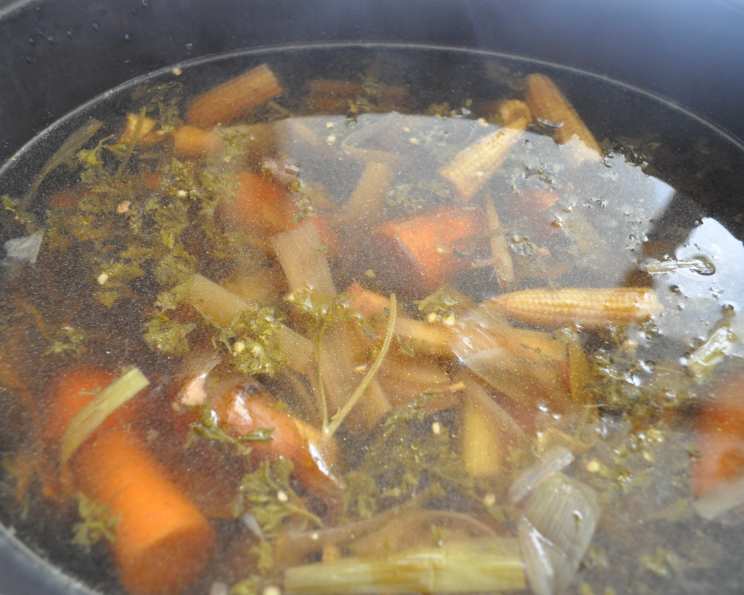
Liquid Gold: Crafting the Perfect Homemade Vegetable Stock
The first time I made vegetable stock, I was convinced it was a waste of perfectly good vegetables. Why simmer scraps when you could roast them? But the aroma that filled my kitchen that day, a delicate blend of sweet carrots, earthy celery, and the subtle bite of leeks, changed my mind forever. It wasn’t just about using up leftovers; it was about coaxing every last drop of flavor from humble ingredients to create something truly special. Now, a pot of simmering vegetable stock is a weekly ritual, a way to nourish my body and soul.
Recipe Overview
- Prep Time: 20 minutes
- Cook Time: 1 hour
- Total Time: 1 hour 20 minutes
- Yields: Approximately 1 1/2 gallons
- Dietary Type: Vegan, Gluten-Free, Dairy-Free
Ingredients
- 2 medium leeks, white and light green parts only, trimmed, washed thoroughly
- 4 onions
- 6 carrots
- 3 stalks celery
- 1 bunch parsley stems
- 1 tablespoon olive oil
- 2 teaspoons large-leaf marjoram
- 1/2 teaspoon dried thyme
- 3 Turkish bay leaves (or 1/2 California bay leaf)
- Approximately 1 1/2 gallons cold water
Equipment Needed
- Large stockpot (at least 6-quart capacity)
- Large bowl
- Colander or strainer
- Cheesecloth (optional, for a clearer stock)
Instructions
-
Begin by preparing your vegetables. Chop the leeks (making sure to wash them thoroughly to remove any dirt trapped between the layers; use only the white and light green parts). Chop the onions, carrots, and celery into roughly equal sizes. This ensures even cooking and flavor extraction. Don’t discard those parsley stems; they’re packed with flavor!
-
In a large stockpot, heat the olive oil over medium heat. Add the chopped leeks, onions, carrots, and celery. Stir-fry the vegetables, allowing them to brown lightly. This browning, known as the Maillard reaction, is key to developing a rich, complex flavor in your stock. Don’t rush this step; allow the vegetables to caramelize slightly, but be careful not to burn them.
-
Once the vegetables are lightly browned, add 1 1/2 gallons of cold water to the pot. Make sure the vegetables are submerged.
-
Add the parsley stems, marjoram, thyme, and bay leaves to the pot. These herbs will infuse the stock with their aromatic essence.
-
Bring the mixture to a boil over high heat. Once boiling, reduce the heat to low and simmer, partly covered, for 1 hour. Simmering gently extracts the maximum flavor from the vegetables without making the stock cloudy.
-
After simmering for an hour, strain the stock through a colander or strainer lined with cheesecloth (if desired) into a large bowl. This will remove the solids and leave you with a clear, flavorful broth. Discard the cooked vegetables. They have given all they have to offer!
-
Cool the strained stock completely before chilling or freezing. Allow the stock to cool to room temperature on the counter before transferring it to the refrigerator.
-
Once cooled, chill the stock in the refrigerator or freeze it in convenient portions for later use. Chilling allows any excess fat to solidify on the surface, making it easy to remove for a leaner stock. Freezing preserves the stock’s freshness and flavor for months.
Expert Tips & Tricks
- Don’t use cruciferous vegetables like broccoli, cauliflower, or cabbage. They can impart a bitter flavor to the stock.
- Avoid starchy vegetables like potatoes. They can make the stock cloudy.
- Save vegetable scraps like onion skins, carrot peels, and celery ends in a freezer bag for future stock-making. Just be sure to wash them well before adding them to the bag.
- For a deeper flavor, roast the vegetables before simmering them. Toss them with olive oil, salt, and pepper, and roast at 400°F (200°C) for 30-40 minutes, or until they are tender and lightly browned.
- If your stock is too weak, simmer it for longer, uncovered, to concentrate the flavors.
- If your stock is too salty, add a peeled potato to the pot while simmering. The potato will absorb some of the salt.
- To remove excess fat from the chilled stock, skim it off the surface with a spoon.
- To make a richer stock, add mushroom stems, tomato paste, or a splash of dry sherry to the pot while simmering.
- Don’t over-simmer! Simmering for too long can result in a bitter-tasting stock.
- Salt to taste only after straining. This way you can control the salt level more accurately, especially if you plan on reducing the stock later.
Serving & Storage Suggestions
Homemade vegetable stock is incredibly versatile. Use it as a base for soups, stews, sauces, and risottos. It’s also great for braising vegetables, deglazing pans, or simply sipping on a cold day.
Store the cooled stock in airtight containers in the refrigerator for up to 5 days, or in the freezer for up to 3 months. Freeze in ice cube trays for smaller portions, perfect for adding a boost of flavor to sauces and gravies. Be sure to label and date your containers for easy identification. When reheating frozen stock, thaw it in the refrigerator overnight or in a saucepan over low heat.
Nutritional Information
| Nutrient | Amount per Serving (1 cup) | % Daily Value* |
|---|---|---|
| Calories | Approximately 20 | 1% |
| Total Fat | Less than 1g | 1% |
| Saturated Fat | 0g | 0% |
| Cholesterol | 0mg | 0% |
| Sodium | Varies (depending on added salt) | Varies |
| Total Carbohydrate | 3g | 1% |
| Dietary Fiber | 1g | 4% |
| Sugars | 1g | 0% |
| Protein | Less than 1g | 1% |
*Percent Daily Values are based on a 2,000 calorie diet. Your daily values may be higher or lower depending on your calorie needs. Note: These values are estimates and can vary based on the specific ingredients used.
Variations & Substitutions
- Spicy Vegetable Stock: Add a few dried chilies or a pinch of red pepper flakes to the pot while simmering.
- Herbaceous Vegetable Stock: Experiment with different herbs, such as rosemary, sage, or oregano.
- Mushroom Vegetable Stock: Add a pound of sliced mushrooms (such as cremini or shiitake) to the pot while simmering for a deeper, earthier flavor.
- Asian-Inspired Vegetable Stock: Add ginger slices, garlic cloves, and a splash of soy sauce to the pot while simmering.
- Tomato Vegetable Stock: Add a can of crushed tomatoes to the pot while simmering for a richer, more vibrant stock.
FAQs (Frequently Asked Questions)
Q: Can I use frozen vegetables to make vegetable stock?
A: Yes, you can use frozen vegetables. They work well, especially if you are short on time or fresh produce. However, the flavor may not be as intense as using fresh vegetables.
Q: Do I need to peel the vegetables before making vegetable stock?
A: You don’t need to peel the vegetables, especially if they are organic. However, be sure to wash them thoroughly to remove any dirt or debris.
Q: How long does vegetable stock last in the refrigerator?
A: Vegetable stock will last for up to 5 days in the refrigerator when stored in an airtight container.
Q: Can I freeze vegetable stock?
A: Yes, vegetable stock freezes very well. Store it in freezer-safe containers for up to 3 months.
Q: Why is my vegetable stock cloudy?
A: Cloudy vegetable stock can be caused by simmering the stock too vigorously or using starchy vegetables. To prevent this, simmer the stock gently and avoid using potatoes or other starchy vegetables. You can also strain the stock through cheesecloth for a clearer broth.
Final Thoughts
Making your own vegetable stock is a simple and rewarding way to elevate your cooking. The depth of flavor you achieve from simmering humble vegetables is far superior to anything you can buy in a carton. So gather your vegetables, fill your pot, and let the magic of homemade stock transform your culinary creations. I encourage you to experiment with different vegetables and herbs to create your own signature blend. And don’t hesitate to share your creations and feedback – happy cooking!