
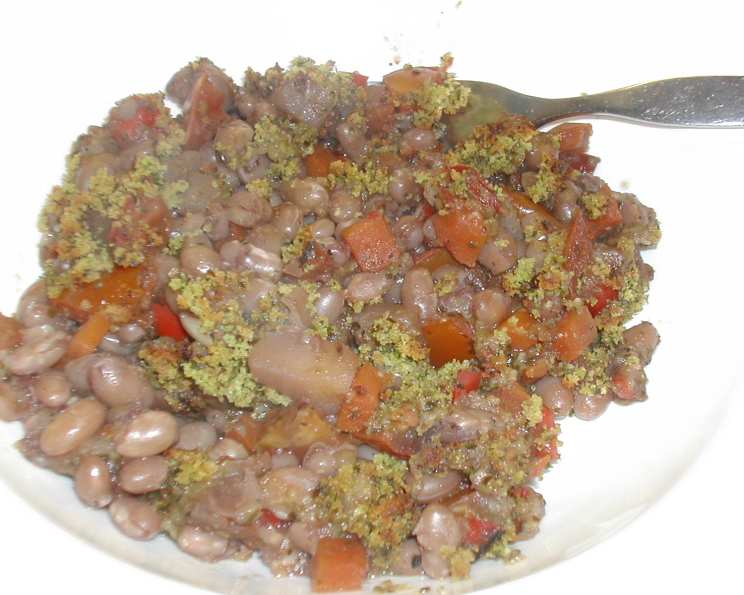
Vegetarian Cassoulet (Cassoulet De Legumes): A Rustic Celebration of Vegetables
My first encounter with cassoulet was not a vegetarian one. I remember being a young culinary student, intimidated by the sheer richness and history of the dish, traditionally laden with duck confit and sausage. However, the soul of cassoulet – its hearty beans, slow-cooked vegetables, and comforting crust – stayed with me. Years later, I found myself craving that same comforting experience, leading me to create this deeply satisfying vegetarian version, a testament to the versatility of this French classic.
Recipe Overview
- Prep Time: 20 minutes
- Cook Time: 4 hours 10 minutes
- Total Time: 4 hours 30 minutes
- Servings: 4
- Yield: One Casserole
- Dietary Type: Vegetarian
Ingredients
- 2 cups dried white beans (flageolet, cannellini, or great northern)
- 1 bay leaf
- 1 red bell pepper, diced
- 1 carrot, diced
- 12 garlic cloves, peeled
- 1 potato, peeled and diced
- 3 tablespoons olive oil
- 1 teaspoon herbes de provence, crushed
- ¼ teaspoon dried thyme leaves, crushed
- 1 ½ cups dry red wine
- 2 cups diced tomatoes
- 1 ½ cups vegetable stock
- Salt and pepper to taste
- 1 cup fresh breadcrumbs
- 3 tablespoons minced fresh parsley
Equipment Needed
- Large heavy saute pan
- Earthenware or Corningware casserole dish with a tight-fitting lid
Instructions
- Cook the beans: Cook the dried white beans according to package directions until tender but not overcooked. This can be done in a pressure cooker or crockpot to save time.
- Preheat the oven: Preheat your oven to 325 degrees F (160 degrees C).
- Prepare the garlic: Reserve 5 garlic cloves for later use.
- Sauté the vegetables: In a large heavy saute pan, over medium-high heat, sauté the diced red bell pepper, diced carrot, diced potato, and the remaining 7 garlic cloves in 2 tablespoons of olive oil until lightly browned, about 5 to 8 minutes.
- Layer the casserole: In an earthenware (or corningware) casserole dish, layer the cooked and drained white beans, sautéed vegetables, diced tomatoes, herbes de provence, thyme, red wine, and vegetable stock, sprinkling each layer with salt and pepper.
- First bake: Cover the casserole with a tight-fitting lid and bake for about one hour. Check the liquid level periodically; add more vegetable stock if needed to prevent the beans from burning.
- Prepare the breadcrumb topping: Mince the reserved 5 garlic cloves. In a small bowl, combine the minced garlic with the fresh breadcrumbs, minced fresh parsley, and 1 tablespoon of olive oil.
- Increase oven temperature: Increase oven heat to 400 degrees F (200 degrees C).
- First crust: Remove the casserole from the oven and remove the lid. Spread half of the breadcrumb mixture evenly over the top of the cassoulet.
- Bake the first crust: Return the uncovered casserole to the oven and bake for about 15 minutes, or until a golden crust has formed.
- Incorporate the first crust: Break the crust and stir it gently into the cassoulet.
- Second crust: Repeat the process by spreading the remaining half of the breadcrumb mixture evenly over the top of the cassoulet.
- Final bake: Return the uncovered dish to the oven and bake until the second and final crust has formed, approximately another 15 minutes.
- Serve: Remove from the oven and let cool slightly before serving.
Expert Tips & Tricks
- Bean Selection: The type of white bean you choose will slightly alter the texture of the cassoulet. Flageolet beans are known for their delicate flavor and creamy texture, while cannellini beans hold their shape well and offer a slightly firmer bite. Great Northern beans are a good all-around choice.
- Wine Choice: Don’t be afraid to experiment with different red wines. A fruity Beaujolais or a medium-bodied Côtes du Rhône would work beautifully. Use a wine you would enjoy drinking!
- Breadcrumbs: Homemade breadcrumbs provide the best texture. Simply pulse stale bread in a food processor until coarsely ground. If using store-bought breadcrumbs, opt for panko for extra crunch.
- Herbes de Provence: For a more intense flavor, lightly toast the herbes de provence in a dry skillet before adding them to the casserole.
- Garlic Intensity: If you’re not a huge garlic fan, you can reduce the number of cloves slightly. However, garlic is a key flavor component of cassoulet, so don’t skimp too much!
- Vegetable Variety: Feel free to add other vegetables to the cassoulet, such as mushrooms, zucchini, or eggplant. Just be sure to adjust the cooking time accordingly.
- Crust Consistency: Watch the crust closely during the final baking stage. If it starts to brown too quickly, you can loosely tent the casserole with foil to prevent burning.
Serving & Storage Suggestions
Serve the Vegetarian Cassoulet hot, straight from the oven, or let it cool slightly for a more settled flavor. A simple green salad and a crusty baguette are the perfect accompaniments.
Leftover cassoulet can be stored in an airtight container in the refrigerator for up to 3 days. Reheat gently in a saucepan over medium heat, adding a splash of vegetable stock if needed to prevent sticking. You can also reheat it in the oven at 350 degrees F (175 degrees C) until warmed through.
Freezing is not recommended as the texture of the beans may change.
Nutritional Information
| Nutrient | Amount per Serving | % Daily Value |
|---|---|---|
| Calories | 585 kcal | 29% |
| Total Fat | 15g | 23% |
| Saturated Fat | 2g | 10% |
| Cholesterol | 0mg | 0% |
| Sodium | 400mg | 17% |
| Total Carbohydrate | 90g | 30% |
| Dietary Fiber | 20g | 80% |
| Sugars | 10g | – |
| Protein | 25g | 50% |
Note: Nutritional information is an estimate and may vary based on specific ingredients used.
Variations & Substitutions
- Gluten-Free Cassoulet: Use gluten-free breadcrumbs and ensure your vegetable stock is gluten-free.
- Vegan Cassoulet: This recipe is already vegan!
- Spicy Cassoulet: Add a pinch of red pepper flakes to the sautéed vegetables for a touch of heat.
- Smoked Paprika: Incorporate a teaspoon of smoked paprika with the other spices for a smoky flavour dimension.
- Seasonal Vegetables: Adapt the recipe based on what’s in season. Root vegetables like parsnips and turnips are great additions in the fall and winter.
FAQs (Frequently Asked Questions)
Q: Can I use canned beans instead of dried beans?
A: Yes, you can use canned beans for convenience. Drain and rinse them thoroughly before adding them to the casserole. Use about 4 cups of cooked beans to replace the 2 cups of dried beans.
Q: Can I make this cassoulet ahead of time?
A: Absolutely! You can assemble the cassoulet up to the point of adding the breadcrumb topping, then cover and refrigerate it for up to 24 hours. Add the breadcrumb topping and bake as directed just before serving.
Q: What if I don’t have an earthenware casserole dish?
A: A Corningware or any oven-safe casserole dish with a tight-fitting lid will work just fine.
Q: Can I use a different type of vegetable stock?
A: Yes, you can use any vegetable stock you prefer. A homemade stock will provide the best flavor, but store-bought is perfectly acceptable.
Q: How can I make the crust extra crispy?
A: For an extra crispy crust, broil the cassoulet for the last few minutes of baking, keeping a close eye on it to prevent burning.
Final Thoughts
This Vegetarian Cassoulet is more than just a recipe; it’s an invitation to slow down, savor the process of cooking, and create a dish that nourishes both body and soul. Gather your favorite vegetables, open a bottle of good red wine, and embark on this culinary journey. I encourage you to experiment with different variations and share your creations. Bon appétit!