
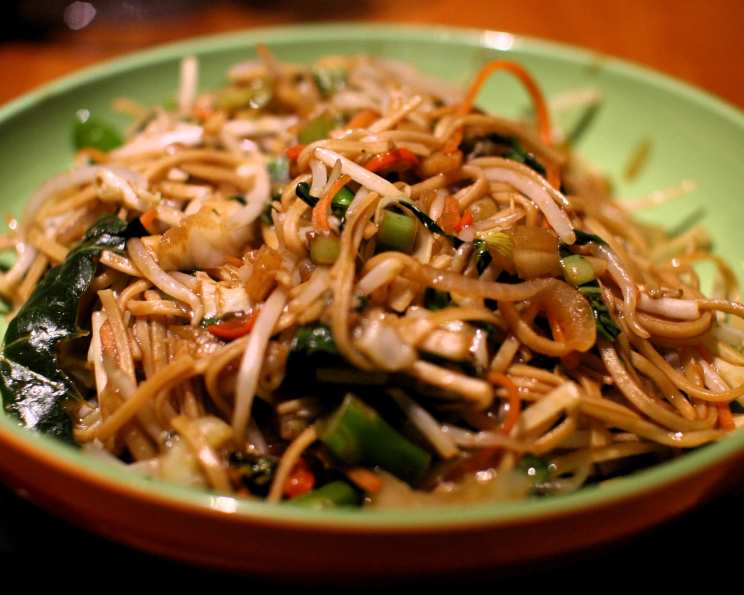
Vegetarian Chow Mein: A Wok-Seared Symphony of Flavors
I still remember the first time I tasted authentic Chow Mein. It was at a bustling night market in Hong Kong, the air thick with the aroma of sizzling garlic, soy sauce, and the rhythmic clang of woks. I watched, mesmerized, as the street vendor expertly tossed noodles with vibrant vegetables, creating a dish that was both comforting and bursting with flavor. That night, I vowed to recreate that magical experience in my own kitchen, and this Vegetarian Chow Mein recipe is the culmination of years of experimentation and a tribute to that unforgettable culinary moment.
Recipe Overview
- Prep Time: 15 minutes
- Cook Time: 17 minutes
- Total Time: 32 minutes
- Servings: 4
- Dietary Type: Vegetarian
Ingredients
- ½ lb fresh noodles
- 2 ounces celery
- 2 ounces canned bamboo shoots
- 2 tablespoons peanut oil, for stir-frying
- 3 garlic cloves, crushed
- 1 small onion, finely sliced
- 1 tablespoon light soy sauce
- 2 tablespoons dark soy sauce
- 2 teaspoons finely chopped fresh ginger
- 3 tablespoons vegetable stock
- 1 teaspoon sugar
- ¼ lb bean sprouts
Equipment Needed
- Large pot
- Wok or large frying pan
Instructions
-
If you are using fresh noodles, begin by blanching them in a large pot of boiling water for 3 to 5 minutes. This helps to pre-cook them and prevent them from sticking together in the wok. If you are using dried noodles, cook them in boiling water for 4 to 5 minutes, or according to package directions, until they are al dente.
-
Once the noodles are cooked, immediately drain them and then place them in cold water. This stops the cooking process and helps to keep them separate and prevent them from becoming mushy. Set aside until needed.
-
Prepare the vegetables. String the celery to remove any tough outer fibers, then slice it diagonally into thin pieces. This adds a visual appeal and ensures even cooking. Shred the canned bamboo shoots. If the bamboo shoots are in large pieces, shredding them allows for better distribution of flavor.
-
Heat a wok or a large frying pan over medium-high heat. Add the peanut oil. Peanut oil has a high smoke point and imparts a subtle nutty flavor that complements the other ingredients beautifully.
-
When the oil is moderately hot, add the crushed garlic and stir-fry for just 10 seconds. Be careful not to burn the garlic, as this will make it bitter. You want it to be fragrant and lightly golden.
-
Add the finely sliced onion, celery, and shredded bamboo shoots to the wok. Stir-fry for about 5 minutes, until the vegetables are slightly softened but still crisp-tender. Stirring frequently prevents sticking and ensures even cooking.
-
Thoroughly drain the noodles and add them to the wok. Continue to stir-fry for 1 minute, allowing the noodles to heat through and absorb some of the oil and flavors from the vegetables.
-
Add the remaining ingredients – the light soy sauce, dark soy sauce, finely chopped fresh ginger, vegetable stock, and sugar – to the wok. The light soy sauce provides a salty base, while the dark soy sauce adds depth of color and a hint of sweetness. The fresh ginger adds a warm, spicy note, and the vegetable stock helps to create a light sauce. The sugar balances the savory flavors.
-
Continue to stir-fry for another 2 minutes, ensuring that the noodles are evenly coated with the sauce and the vegetables are well-integrated.
-
Finally, add the bean sprouts. Give the mixture a good stir, just until the bean sprouts are slightly wilted but still retain their crunch. Overcooking the bean sprouts will make them mushy.
-
Turn the Vegetarian Chow Mein onto a serving platter and serve immediately.
Expert Tips & Tricks
- Noodle Choice: Fresh noodles are ideal for Chow Mein because of their texture and ability to absorb flavors, but dried egg noodles or even gluten-free noodles work well as substitutes. Adjust cooking time according to the package directions.
- Wok Hei: Achieving that smoky “wok hei” flavor, which is essential for authentic Chow Mein, requires a very hot wok and quick, constant stirring. If you don’t have a wok, a large cast-iron skillet can also work.
- Vegetable Variations: Feel free to add other vegetables like sliced carrots, bell peppers, or mushrooms for added texture and nutrition.
- Sauce Adjustment: Adjust the amount of soy sauce and sugar to suit your taste. For a spicier kick, add a pinch of red pepper flakes or a drizzle of chili oil.
- Make-Ahead Tip: You can prep the vegetables and sauce ahead of time. Store them separately in the refrigerator until ready to cook. This makes the cooking process much faster.
Serving & Storage Suggestions
Serve the Vegetarian Chow Mein hot, garnished with chopped green onions or sesame seeds for added flavor and visual appeal. This dish is best enjoyed immediately.
To store leftovers, allow the Chow Mein to cool completely before transferring it to an airtight container. It can be stored in the refrigerator for up to 3 days. To reheat, stir-fry in a wok or frying pan until heated through, or microwave in short intervals, stirring in between, to prevent it from drying out. Adding a splash of vegetable stock can help to rehydrate the noodles.
Nutritional Information
| Nutrient | Amount per Serving | % Daily Value |
|---|---|---|
| Calories | 335 kcal | N/A |
| Total Fat | 10 g | N/A |
| Protein | 12 g | N/A |
| Carbohydrate | 51 g | N/A |
| Cholesterol | 54 mg | N/A |
| Sodium | 901 mg | N/A |
| Fiber | 4 g | N/A |
Note: Nutritional information is an estimate and may vary based on specific ingredients and preparation methods.
Variations & Substitutions
- Spicy Chow Mein: Add a tablespoon of sriracha or chili garlic sauce to the sauce mixture for a spicy kick.
- Tofu Chow Mein: Add cubed and pan-fried tofu for extra protein and a satisfying texture.
- Mushroom Chow Mein: Sauté sliced mushrooms with the onions and celery for an earthy flavor.
- Gluten-Free Chow Mein: Use gluten-free noodles and tamari instead of soy sauce.
- Vegan Chow Mein: Ensure the vegetable stock is vegan-friendly and omit any non-vegan ingredients.
FAQs (Frequently Asked Questions)
Q: Can I use dried noodles instead of fresh noodles?
A: Yes, you can use dried noodles. Just cook them according to the package directions until they are al dente, then drain and rinse them with cold water before adding them to the wok.
Q: What is dark soy sauce and can I substitute it?
A: Dark soy sauce is thicker and sweeter than light soy sauce. It adds color and depth of flavor to the dish. If you don’t have it, you can substitute it with regular soy sauce and a teaspoon of molasses or brown sugar.
Q: Can I add other vegetables to this dish?
A: Absolutely! Feel free to add any of your favorite vegetables, such as carrots, bell peppers, broccoli, or snow peas.
Q: How do I prevent the noodles from sticking together in the wok?
A: Blanching or pre-cooking the noodles and rinsing them with cold water helps to prevent them from sticking. Also, make sure the wok is hot and well-oiled before adding the noodles.
Q: Can I make this dish ahead of time?
A: You can prep the vegetables and sauce ahead of time, but it’s best to cook the noodles and stir-fry the dish right before serving to prevent the noodles from becoming soggy.
Final Thoughts
This Vegetarian Chow Mein recipe is a celebration of vibrant flavors and textures, bringing the excitement of Asian street food right to your kitchen. Don’t be afraid to experiment with different vegetables and sauces to create your own unique version. I encourage you to try this recipe and share your feedback. Serve it with a side of spring rolls or a refreshing glass of iced tea for a complete and satisfying meal. Happy cooking!