
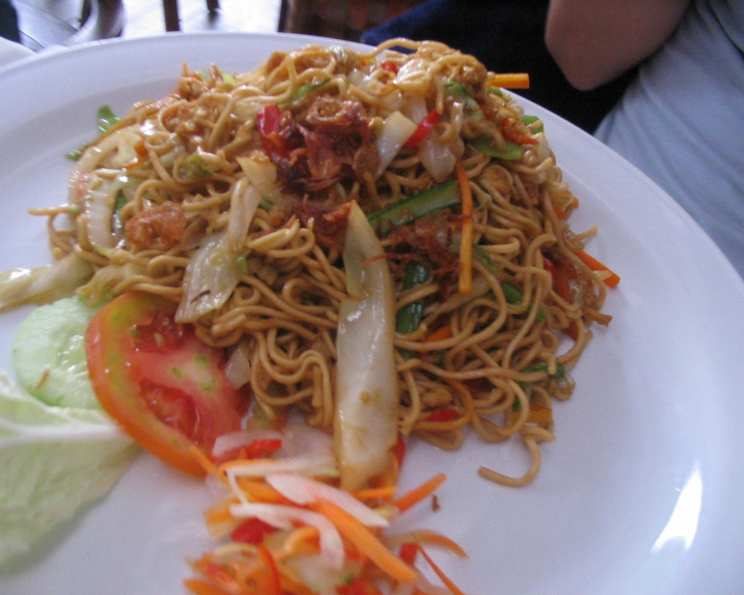
Vegetarian Mi Goreng: A Taste of Indonesian Street Food
The first time I encountered Mi Goreng wasn’t in a fancy restaurant, but in a bustling hostel kitchen halfway across the world. The air buzzed with languages and the aroma of spices, and every night someone would be whipping up a batch of these savory noodles. It was a communal experience – a shared love for a dish that was both comforting and exotic. The sizzle of the wok, the vibrant colors of the vegetables, and the explosion of flavors – sweet, spicy, and umami – created a memory that still makes my mouth water. Now, I’m recreating that hostel magic at home.
Recipe Overview
- Prep Time: 15 minutes
- Cook Time: 10 minutes
- Total Time: 25 minutes
- Servings: 6
- Dietary Type: Vegetarian
Ingredients
- 1 lb uncooked soba noodles (ramen work great and are inexpensive) or 1 lb any other kind Asian noodles (ramen work great and are inexpensive)
- 2-4 tablespoons peanut oil
- 1 onion, finely chopped
- 3 minced garlic cloves
- ½ inch gingerroot, peeled and grated
- 2 leeks (green & white parts) or 6 scallions, chopped (green & white parts)
- 1 ½ cups snow peas
- 1 ½ cups mung bean sprouts
- 3 tablespoons ketjap manis (or 3 tbs soy sauce mixed with 1 ½ tbs brown sugar)
- 1-2 tablespoon sambal oelek chili paste or 1-2 tablespoon cayenne pepper, to taste
- 2 eggs, scrambled (recommended) (optional)
- 1 lb firm tofu, drained and cubed (optional)
Equipment Needed
- Large pot
- Wok or large skillet
Instructions
- Prepare the noodles according to the package directions. Once cooked, drain them well and set aside. It’s crucial to not overcook the noodles; aim for al dente, as they’ll cook further in the wok.
- In a wok or large skillet, heat the peanut oil over medium-high heat. The wok should be hot before adding the oil to prevent sticking.
- Add the onion, garlic, and ginger to the hot oil. Stir-fry until the onion is limp and translucent, usually about 2-3 minutes. The aroma should be fragrant and enticing. Be careful not to burn the garlic.
- Stir in the leeks or scallions, snow peas, and bean sprouts. Cook until the vegetables are tender-crisp, approximately 3-5 minutes. Stir frequently to ensure even cooking.
- Add the cooked noodles to the wok. Then, stir in the ketjap manis (or soy sauce mixture) and sambal oelek (or cayenne pepper).
- If using, add the eggs or tofu.
- Mix thoroughly until everything is heated through, about 5 minutes. Ensure the noodles are evenly coated with the sauce and the eggs or tofu are well-distributed.
- Serve hot immediately.
Expert Tips & Tricks
- Noodle Choice Matters: While ramen is a budget-friendly option, soba noodles or udon noodles provide a chewier texture that stands up well to stir-frying. Experiment with different types to find your favorite.
- Spice Level: Adjust the amount of sambal oelek or cayenne pepper to your desired level of spiciness. Start with a small amount and add more to taste. Remember, you can always add more, but you can’t take it away!
- Ketjap Manis Substitute: If you can’t find ketjap manis (Indonesian sweet soy sauce), the soy sauce and brown sugar mixture works well. For an even richer flavor, add a touch of molasses.
- Don’t Overcrowd the Wok: If you’re making a large batch, it’s better to cook in batches to avoid overcrowding the wok. Overcrowding lowers the temperature and results in soggy noodles.
- Protein Boost: Besides tofu and eggs, consider adding other vegetarian protein sources like tempeh or edamame for added nutrients and texture.
Serving & Storage Suggestions
Serve your Vegetarian Mi Goreng hot, garnished with a sprinkle of chopped scallions or a drizzle of sriracha for extra heat. This dish is best enjoyed immediately after cooking, but leftovers can be stored in an airtight container in the refrigerator for up to 2 days. Reheat in a wok or skillet over medium heat, adding a splash of water or broth if needed to prevent the noodles from drying out. Freezing is not recommended, as the noodles can become mushy upon thawing.
Nutritional Information
| Nutrient | Amount per Serving | % Daily Value |
|---|---|---|
| Calories | 341 kcal | 17% |
| Total Fat | 5.2 g | 7% |
| Saturated Fat | 0.9 g | 4% |
| Cholesterol | 0 mg | 0% |
| Sodium | 611 mg | 26% |
| Total Carbohydrate | 66.7 g | 22% |
| Dietary Fiber | 1.9 g | 7% |
| Sugars | 4 g | 8% |
| Protein | 13.1 g | 26% |
Variations & Substitutions
- Gluten-Free: Use gluten-free rice noodles or soba noodles made from 100% buckwheat flour. Ensure your soy sauce or ketjap manis substitute is also gluten-free.
- Vegan: Omit the eggs and use only tofu or other plant-based protein sources. Double-check that your chili paste doesn’t contain any animal-derived ingredients.
- Vegetable Medley: Feel free to add other vegetables like bell peppers, broccoli florets, or carrots for a more colorful and nutritious dish.
- Nutty Twist: Sprinkle chopped peanuts or cashews on top for added crunch and flavor. A drizzle of sesame oil can also enhance the aroma.
- Spicy Kick: For those who crave extra heat, add a chopped chili pepper to the wok along with the garlic and ginger.
FAQs (Frequently Asked Questions)
Q: Can I make this ahead of time?
A: While best enjoyed fresh, you can prep the ingredients in advance. Chop the vegetables, grate the ginger, and mince the garlic. Store them separately and combine just before cooking.
Q: What if I don’t have ketjap manis?
A: A mixture of soy sauce and brown sugar is a good substitute. Use 3 tablespoons of soy sauce mixed with 1 ½ tablespoons of brown sugar.
Q: Can I use different types of noodles?
A: Absolutely! Ramen, soba, udon, or even spaghetti will work. Adjust the cooking time according to the package directions.
Q: How do I prevent the noodles from sticking?
A: Make sure your wok or skillet is hot before adding the oil. Don’t overcrowd the pan, and stir frequently to prevent sticking.
Q: Can I add meat to this recipe?
A: While this recipe is vegetarian, you can certainly add cooked chicken, shrimp, or beef if you prefer. Add the cooked meat along with the vegetables.
Final Thoughts
Vegetarian Mi Goreng is more than just a recipe; it’s a celebration of flavors, textures, and memories. It’s a dish that’s adaptable, forgiving, and endlessly customizable. So, gather your ingredients, fire up your wok, and embark on a culinary adventure. Don’t be afraid to experiment with different vegetables, spices, and protein sources to create your own signature version. And most importantly, share it with friends and family and let the flavors transport you to a bustling street food market in Indonesia. Enjoy, and happy cooking!