
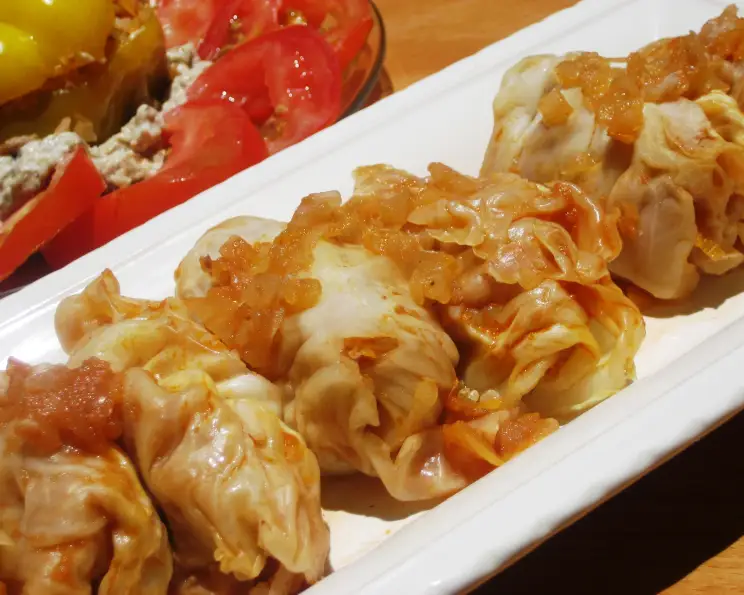
Vegetarian Sarmale: A Taste of Romanian Tradition
The aroma alone transports me back to my travels through Transylvania. I remember stumbling upon a small village festival where the air was thick with the scent of woodsmoke and simmering cabbage. An elderly woman, her face etched with the wisdom of generations, pressed a plate of steaming sarmale into my hands. That first bite—the savory filling, the tender cabbage, the subtle tang—was a revelation, a connection to a culture and a history I instantly fell in love with. Now, recreating these vegetarian sarmale in my own kitchen brings that cherished memory vividly back to life.
Recipe Overview
- Prep Time: 45 minutes
- Cook Time: 1 hour 45 minutes
- Total Time: 2 hours 30 minutes
- Servings: 20
- Yield: Approximately 20 cabbage rolls
- Dietary Type: Vegetarian
Ingredients
- 2 large cabbages
- 5 white onions
- 2 carrots
- 1/2 lb rice, washed and drained
- 9 ounces tomato paste
- 1/2 lb granulated gluten or 1/2 lb soy crumbles
- 1/4 lb walnuts
- 3 1/2 ounces tomato sauce
- 2-3 bay leaves
- Canola oil, to saute the vegetables
- Pepper, to taste
- Salt, to taste
- Soy sauce or Bragg’s liquid aminos, to taste
- Other spices, to your taste (optional)
Equipment Needed
- Large pot or bowl
- Large stockpot
- Large soup plate (that fits inside the stockpot)
Instructions
- Prepare the Filling: Finely chop 4 of the onions and grate one of the carrots.
- Sauté the Vegetables: Heat about 2 tablespoons of canola oil in a large pan. Add the chopped onions and grated carrot and sauté for a couple of minutes until softened.
- Add the Rice: Add the washed and drained rice to the pan. Continue to sauté for 10 minutes, stirring frequently. Add a small amount of water to prevent sticking.
- Incorporate Other Ingredients: Add the tomato paste, walnuts, and granulated gluten (or soy crumbles) to the pan. Season generously with salt, pepper, a dash of soy sauce (or Bragg’s liquid aminos), and any other spices you desire.
- Heat and Cool: Heat the filling mixture for a minute or two, then remove from the heat and allow it to cool slightly.
- Prepare the Cabbage: Remove the hard core from the cabbages. Place the cabbages in a large pot or bowl filled with hot, salted water for 5-10 minutes. This will soften the leaves, making them easier to remove without tearing. Do not soak for too long, as the leaves will become fragile.
- Drain and Cool: Drain the cabbages and allow them to cool until you can comfortably handle them.
- Separate the Leaves: Carefully remove the cabbage leaves, separating them one by one. Aim for approximately 20 medium-sized leaves.
- Remove the Spine: Cut out the thick spine from each cabbage leaf, leaving two halves (each about the size of your hand). Some leaves may tear during this process; set these aside for later use.
- Prepare the Base: Chop the remaining onion and carrot, as well as any torn cabbage leaves that were set aside earlier.
- Sauté the Base Vegetables: Heat a little canola oil in a large stockpot. Add the chopped onion, carrot, and torn cabbage leaves and sauté until softened.
- Add Tomato Sauce: Add the tomato sauce to the stockpot and mix well.
- Add Bay Leaves: Place 2-3 bay leaves over the vegetable mixture in the pot. Turn off the heat and set aside. This mixture will serve as the base for the cabbage rolls.
- Assemble the Sarmale: On each cabbage leaf, place about 1 tablespoon of the filling mixture (prepared in steps 1-5).
- Roll the Sarmale: Roll the cabbage leaf by folding one of the width sides over the filling, then roll the length of the leaf. One side of the roll should remain open. Use your finger to tuck the open side in, creating a sealed roll. If there is too much filling to tuck, remove a little.
- Layer the Sarmale: In the large stockpot with the sautéed vegetables (from steps 10-13), carefully arrange the cabbage rolls in a circle, ensuring they do not touch the sides of the pot.
- Add a Cabbage Heart (Optional): Place the heart of the cabbage (or more chopped cabbage) in the center of the pot to help keep the cabbage rolls in place during boiling.
- Create Layers: Once a circle of cabbage rolls has been created, you can add more layers on top, forming another circle. Continue until all the cabbage rolls are arranged in the pot.
- Add Water and Lemon Juice: In another pot, boil enough water to completely cover the cabbage rolls. If desired, add lemon juice to the water for a touch of sourness.
- Pour Over Sarmale: Pour the boiling water and lemon juice mixture into the stockpot, ensuring that the cabbage rolls are fully submerged.
- Keep Sarmale in Place: Place a large soup plate over the cabbage rolls to keep them submerged and prevent them from unraveling during cooking.
- Simmer: Cook the sarmale on a low flame for 1 1/2 to 2 hours, adding more water if necessary to maintain the water level.
Expert Tips & Tricks
- Cabbage Preparation: Soaking the cabbage in hot water is crucial for pliability. However, don’t oversoak, or the leaves will tear easily.
- Filling Consistency: If the filling is too dry, add a little more water or tomato paste to bind it together. If it’s too wet, add a bit more rice or gluten/soy crumbles.
- Flavor Enhancement: For a deeper, richer flavor, consider adding smoked paprika or a pinch of dried thyme to the filling.
- Preventing Sticking: To prevent the sarmale from sticking to the bottom of the pot, line the bottom with a layer of chopped cabbage or sauerkraut before adding the sauteed base vegetables.
Serving & Storage Suggestions
Sarmale are best served hot, straight from the pot. Traditionally, they are accompanied by a dollop of sour cream or plain yogurt (if you’re not strictly vegan, of course!). A side of mamaliga (Romanian polenta) is also a popular accompaniment.
Leftovers can be stored in the refrigerator for up to 3-4 days in an airtight container. They can also be frozen for up to 2-3 months. To reheat, simply simmer them gently on the stovetop with a little water or broth, or microwave them until heated through.
Nutritional Information
| Nutrient | Amount per Serving | % Daily Value |
|---|---|---|
| Calories | 136.4 kcal | N/A |
| Calories from Fat | 36 g | 27% |
| Total Fat | 4 g | 6% |
| Saturated Fat | 0.4 g | 2% |
| Cholesterol | 0 mg | 0% |
| Sodium | 155.5 mg | 6% |
| Total Carbohydrate | 23.4 g | 7% |
| Dietary Fiber | 4.6 g | 18% |
| Sugars | 7.8 g | 31% |
| Protein | 4.4 g | 8% |
Variations & Substitutions
- Gluten-Free Sarmale: Substitute the granulated gluten with soy crumbles or a mixture of cooked quinoa and lentils. Ensure your soy sauce or Bragg’s liquid aminos is also gluten-free.
- Spicy Sarmale: Add a pinch of red pepper flakes or a finely chopped chili pepper to the filling for a bit of heat.
- Smoked Flavor: Include some smoked tofu or tempeh in the filling mixture for a smoky depth.
- Seasonal Vegetables: Incorporate other seasonal vegetables like mushrooms, bell peppers, or zucchini into the filling for added flavor and nutrition.
- Vegan Sour Cream: Top with your favorite brand of vegan sour cream, or make your own by blending soaked cashews with lemon juice and salt.
FAQs (Frequently Asked Questions)
Q: Can I use frozen cabbage leaves?
A: Yes, but thaw them completely first and pat them dry before using. Frozen leaves can be more delicate, so handle them with care.
Q: How do I prevent the cabbage rolls from falling apart during cooking?
A: Ensure they are tightly rolled and packed snugly in the pot. The soup plate placed on top also helps to keep them in place.
Q: Can I make these sarmale in a slow cooker?
A: Yes, you can! Layer the sarmale in the slow cooker, cover with water or broth, and cook on low for 6-8 hours.
Q: What other spices can I add to the filling?
A: Smoked paprika, dried thyme, marjoram, and caraway seeds are all excellent additions that complement the flavors of the dish.
Q: Can I add sauerkraut to the pot for extra flavor?
A: Absolutely! Adding a layer of sauerkraut to the bottom of the pot before layering the sarmale will impart a wonderful tangy flavor.
Final Thoughts
Vegetarian sarmale, though a bit of a labor of love, are a deeply satisfying and flavorful dish that connects you to the heart of Romanian cuisine. Don’t be intimidated by the rolling process—with a little practice, you’ll become a pro! I encourage you to try this recipe and share your own variations and feedback. Perhaps pair it with a robust red wine or a refreshing Romanian beer for a truly authentic experience. Poftă bună! (Enjoy your meal!)