
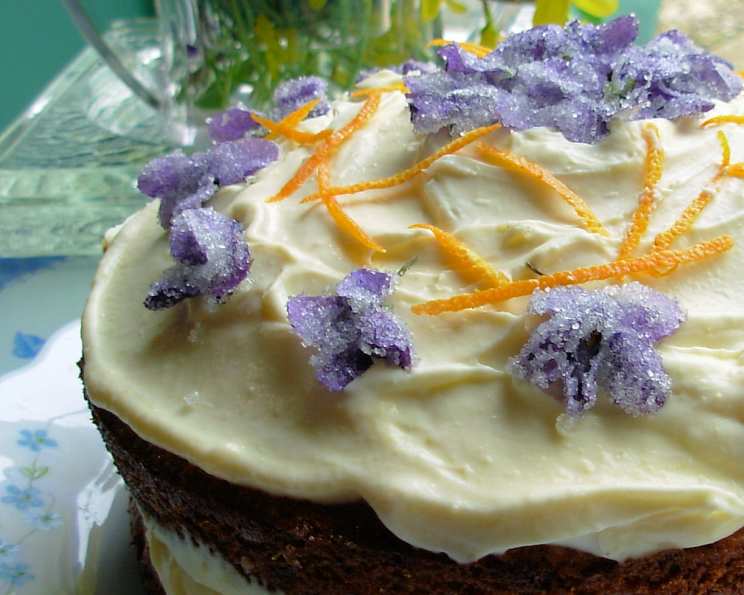
Victorian Spring Posy Cake for Easter or Mother’s Day
The scent of orange blossoms always takes me back to my grandmother’s garden. Tucked away behind her Victorian house, it was a riot of color and fragrance, especially in the spring. Violets peeked out from under rose bushes, and the air hummed with the buzz of bees drawn to the citrus trees laden with fruit. This cake, with its bright citrus notes and delicate floral decoration, is my attempt to capture a bit of that springtime magic, a tribute to her and those happy memories.
Recipe Overview
- Prep Time: 20 minutes
- Cook Time: 25-35 minutes
- Total Time: 55 minutes
- Servings: 8-12
- Yield: 1 Large Cake
- Dietary Type: Not Gluten-Free
Ingredients
- 8 ounces (1 cup or 2 sticks) butter, softened
- 8 ounces (1 cup) caster sugar
- 4 eggs, beaten
- 8 ounces (1 cup) self-raising flour, sifted
- 2 large oranges, zest and juice
- 8 ounces mascarpone cheese
- 8 tablespoons lemon curd or 8 tablespoons orange curd
- Lemon curd, to spread
- Crystallised violets or sugar flowers, to decorate
- Orange curls, for garnish
Equipment Needed
- Two 8-inch sandwich tins/sponge cake tins
- Mixing bowls
- Electric mixer (or whisk)
- Metal spoon
- Cooling rack
- Cake plate
Instructions
- Preheat your oven to 150°C (300°F). This lower temperature ensures a gentle bake, preventing the cake from drying out.
- Grease and line two 8-inch sandwich tins/sponge cake tins. This will prevent the cakes from sticking and make them easy to remove. Use parchment paper to line the bottom of the tins.
- In a large bowl, beat the softened butter and caster sugar together until light, fluffy, and almost white in color. This step is crucial for a light and airy sponge cake. It can take up to 5 minutes with an electric mixer. The goal is to incorporate as much air as possible.
- Gently add the grated zest of the two oranges to the butter and sugar mixture. This will infuse the cake with a bright citrus aroma.
- Gradually add the beaten eggs, mixing well after each addition. If the mixture starts to curdle, add a tablespoon of the sifted flour.
- Gently fold the sifted self-raising flour into the wet ingredients using a metal spoon. Be careful not to overmix, as this can develop the gluten in the flour and result in a tough cake. Fold until just combined, and no streaks of flour remain.
- Divide the batter evenly between the two prepared cake tins.
- Bake for 25 to 35 minutes, or until the cakes are light golden brown and risen. To check for doneness, insert a skewer into the center of one of the cakes. If it comes out clean, the cakes are done.
- While the cakes are still warm, poke small holes in the top of each cake with a toothpick or skewer. Slowly pour a little of the orange juice over the cakes, allowing them to absorb the juice. This will add moisture and enhance the orange flavor. Reserve the remaining juice for other uses, such as adding to drinks.
- Allow the cakes to cool in the tins for 5 minutes before turning them out onto a wire rack to cool completely. Make sure the cakes are completely cool before decorating and icing.
- While the cakes are cooling, prepare the mascarpone cream. In a bowl, fold the lemon curd (or orange curd) into the mascarpone cheese and mix well. You can add more curd to taste, depending on your preference. Sometimes, I add at least half a large jar for a more intense flavor.
- Once the cakes are completely cool, spread some lemon curd (or orange curd) onto one side of both cakes. This acts as a barrier, preventing the mascarpone cream from making the cakes too soggy.
- Place one cake on a cake plate, curd side up. Swirl some of the mascarpone cream over the cake.
- Place the other cake, curd side down, on top of the mascarpone-covered cake, creating a sandwich.
- Finish decorating the top of the cake with the remaining mascarpone cream, swirling it over the surface.
- Just before serving, decorate the cake with crystallised violets or other preserved/sugar flowers. Grate some orange curls and sprinkle them over the top for a final touch of elegance.
- Serve and enjoy!
Expert Tips & Tricks
- Make sure your butter is truly softened before creaming it with the sugar. This will ensure a smooth and even mixture.
- To prevent the cake from sticking, you can use baking spray in addition to greasing and lining the tins with parchment paper.
- If you don’t have self-raising flour, you can make your own by adding 2 teaspoons of baking powder per cup of all-purpose flour.
- If you want to make a three-layer cake, simply double the recipe and use three 8-inch tins, or carefully slice each cake in half horizontally.
- For a more intense citrus flavor, you can add a teaspoon of orange extract to the batter.
- If your mascarpone cheese is too firm, let it sit at room temperature for a few minutes to soften before mixing it with the curd.
- To create beautiful orange curls, use a vegetable peeler to peel strips of orange zest, then curl them around a chopstick or skewer.
Serving & Storage Suggestions
This Victorian Spring Posy Cake is best served at room temperature. It pairs perfectly with a cup of Earl Grey tea or a glass of sparkling wine.
If you have any leftovers, store them in an airtight container in a cool place. The cake will keep for up to one week.
You can also freeze the sponge cakes before icing. Wrap them tightly in plastic wrap and store them in the freezer for up to 2 months. Allow them to defrost for 4 to 6 hours on a cooling rack before icing and decorating.
Nutritional Information
| Nutrient | Amount per Serving | % Daily Value |
|---|---|---|
| Calories | 480.6 kcal | N/A |
| Total Fat | 25.8 g | 39% |
| Saturated Fat | 15.4 g | 76% |
| Cholesterol | 166.7 mg | 55% |
| Sodium | 198.9 mg | 8% |
| Total Carbohydrate | 56.9 g | 18% |
| Dietary Fiber | 1.9 g | 7% |
| Sugars | 32.9 g | N/A |
| Protein | 6.9 g | 13% |
Note: Nutritional information is an estimate and may vary based on specific ingredients and serving sizes.
Variations & Substitutions
- Gluten-Free Version: Substitute the self-raising flour with a gluten-free self-raising flour blend. You may also need to add a binding agent, such as xanthan gum, to help hold the cake together.
- Vegan Version: This recipe is difficult to make vegan without significantly altering the texture.
- Different Citrus: Experiment with other citrus fruits, such as grapefruit or blood oranges, for a unique flavor twist.
- Floral Infusion: Add a teaspoon of orange blossom water or rosewater to the mascarpone cream for a more pronounced floral flavor.
- Seasonal Fruits: Decorate the cake with seasonal fruits, such as berries, sliced peaches, or cherries.
FAQs (Frequently Asked Questions)
Q: Can I use store-bought curd instead of homemade?
A: Absolutely! Store-bought lemon or orange curd works perfectly fine. Just make sure to choose a high-quality brand for the best flavor.
Q: Can I make this cake ahead of time?
A: Yes, the sponge cakes can be baked a day or two in advance and stored in an airtight container at room temperature. The mascarpone cream is best made fresh, but can be prepared a few hours ahead and stored in the refrigerator.
Q: What if I don’t have crystallised violets?
A: Not a problem! You can use any sugar flowers, fresh edible flowers, or even just a simple dusting of powdered sugar for decoration.
Q: My cake is sinking in the middle. What did I do wrong?
A: A sinking cake can be caused by a few factors, such as overmixing the batter, opening the oven door too early during baking, or using an oven temperature that is too low. Make sure to follow the recipe carefully and avoid opening the oven door until the cake is mostly baked.
Q: Can I freeze the entire cake after it’s been iced?
A: While you can freeze the entire cake, the texture of the mascarpone cream may change slightly upon thawing. It’s best to freeze the sponge cakes before icing for optimal results.
Final Thoughts
This Victorian Spring Posy Cake is more than just a recipe; it’s an invitation to create a beautiful and delicious centerpiece for your Easter celebration or Mother’s Day gathering. Don’t be afraid to get creative with the decorations and make it your own. Whether you choose to adorn it with crystallised violets, sugar flowers, or fresh fruit, this cake is sure to impress. I encourage you to try this recipe and share your own unique creations! Perhaps pair it with a refreshing glass of elderflower cordial for a truly delightful spring treat.