
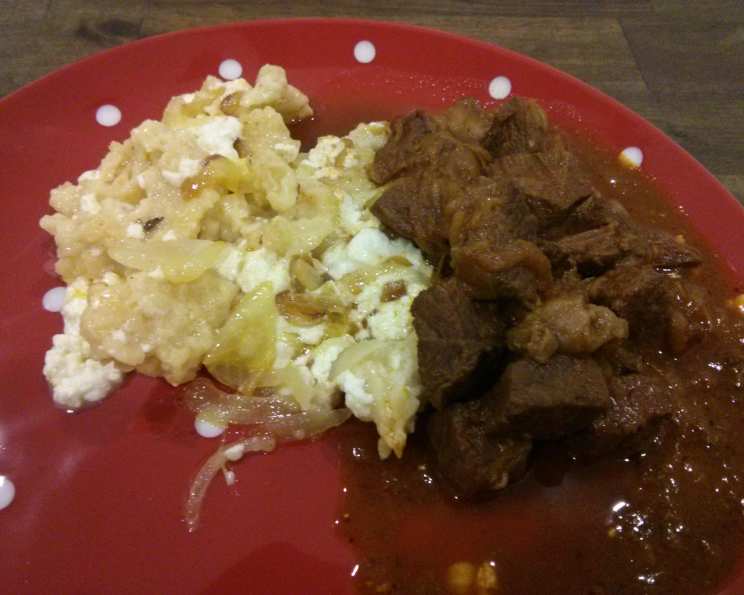
Wiener Rindsgulasch: A Taste of Vienna
The aroma alone transports me back to cobblestone streets and cozy, candlelit Beisls (Austrian pubs). I remember being a young culinary student, intimidated by the sheer simplicity of Viennese Goulash, yet mesmerized by its depth of flavor. It was a cold November evening, and the warmth radiating from that bowl, the tender beef melting in my mouth, the subtle spice – it was more than just food; it was a comforting embrace, a taste of history, a culinary revelation that has stayed with me ever since. To this day, every time I prepare this dish, it feels like a warm hug from Vienna itself.
Recipe Overview
- Prep Time: 30 minutes
- Cook Time: 2-4 hours
- Total Time: 2.5-4.5 hours
- Servings: 8-10
- Yield: 8-10 servings
- Dietary Type: Not Gluten-Free, Dairy-Free
Ingredients
- 2-4 tablespoons vegetable oil
- 2 lbs lean beef, cubed (shoulder or shank)
- 2 lbs onions or 2 lbs shallots, finely chopped
- 2 tablespoons tomato paste
- 2-3 tablespoons paprika (Hungarian)
- ½ – 1 teaspoon hot paprika (optional)
- ¼ lemon, zest of
- 1 teaspoon caraway seed (ground or whole)
- 1 teaspoon chopped fresh garlic
- 1 teaspoon dried marjoram
- 2 bay leaves
- 2 cups chicken stock
- Salt and pepper, to taste
Equipment Needed
- Large Pot (Dutch oven preferred)
Instructions
- Begin by heating the vegetable oil in a large pot or Dutch oven over medium-high heat. The pot should be large enough to accommodate all the ingredients comfortably.
- Once the oil is shimmering hot, add the cubed beef. It’s crucial to brown the beef in batches to avoid overcrowding the pot, which can lower the temperature and result in steaming instead of browning. Brown the beef on all sides until a rich, deep color is achieved. Remove the browned beef from the pot and set aside.
- Reduce the heat to medium and add the finely chopped onions (or shallots) to the pot. Cook them in the rendered beef fat, stirring frequently, until they become transparent and develop a shiny appearance, about 5 minutes. This step is essential as the onions form the base of the sauce. Don’t rush it; let them sweat and soften nicely.
- Stir in the tomato paste, paprika (both regular and hot, if using), lemon zest, caraway seed, chopped fresh garlic, and dried marjoram. Continue stirring well for about 1-2 minutes, allowing the spices to bloom and release their aromas. This step is crucial for developing the characteristic flavor of Wiener Rindsgulasch. Be careful not to burn the paprika; keep the heat at medium or medium-low.
- Return the browned beef to the pot.
- Pour in the chicken stock and stir well to combine all the ingredients. Make sure to scrape the bottom of the pot to loosen any browned bits (fond) that have accumulated during the browning process. This adds depth and richness to the sauce.
- Add the bay leaves. Season with a little salt and pepper. Remember it’s always better to undersalt at the beginning and adjust the seasoning later once the meat is cooked. This prevents over-seasoning as the sauce reduces.
- Bring the pot to a boil, then immediately reduce the heat to low or medium-low. The goulash should simmer gently, barely bubbling.
- Cover the pot and let the goulash cook slowly until the beef is incredibly tender, typically 2-4 hours, depending on the cut of meat used. Check the goulash periodically, stirring occasionally to prevent sticking. If the liquid evaporates too quickly, add small amounts of water (about ½ cup at a time) as needed to maintain a thick, sauce-like consistency without making the goulash watery. The onions will break down and act as a natural thickening agent. I find adding about 1 cup of additional water in two additions is usually just about right.
- Once the beef is fork-tender and the sauce has thickened, taste and adjust the seasoning with more salt and pepper as needed. Remove the bay leaves before serving.
Expert Tips & Tricks
- Browning is Key: Don’t skip the browning step! It’s essential for developing deep, rich flavor in the goulash. Work in batches to ensure proper browning.
- Paprika Power: Use good quality Hungarian paprika for the best flavor and color. Sweet and/or hot paprika can be used according to your preference.
- Low and Slow: The longer the goulash simmers, the more tender the beef will become and the more the flavors will meld together. Be patient and allow ample time for the cooking process.
- The Onion Secret: The onions are the key to thickening the sauce naturally. Don’t skimp on the onions and make sure they cook down properly before adding the other ingredients.
- Deglazing the Pot: Scraping up those browned bits from the bottom of the pot after browning the beef adds a ton of flavor to the goulash.
- Lemon Zest Lift: Don’t underestimate the power of the lemon zest! It adds a subtle brightness and complexity to the goulash.
- Make Ahead Magic: Viennese Goulash is even better the next day! The flavors deepen and meld together beautifully overnight in the refrigerator.
- Spice It Up: If you like your goulash with a bit more heat, add a pinch of cayenne pepper along with the hot paprika.
- Meat Selection: While shoulder or shank are traditional, chuck roast also works well. The key is to use a cut of beef that benefits from long, slow cooking.
Serving & Storage Suggestions
Wiener Rindsgulasch is traditionally served hot, often with a generous spoonful of the rich sauce. Classic accompaniments include boiled potatoes, spaetzle, or bread dumplings (Semmelknödel). A dollop of sour cream or a sprinkle of fresh parsley can also be added as a garnish. Leftover goulash can be stored in an airtight container in the refrigerator for up to 3-4 days. It can also be frozen for up to 2-3 months. To reheat, simply warm gently in a saucepan over low heat, stirring occasionally, until heated through. If frozen, thaw completely in the refrigerator before reheating.
Nutritional Information
| Nutrient | Amount per Serving | % Daily Value |
|---|---|---|
| Calories | 311.5 kcal | N/A |
| Calories from Fat | N/A | 51% |
| Total Fat | 17.5 g | 26% |
| Saturated Fat | 6.4 g | 32% |
| Cholesterol | 81.2 mg | 27% |
| Sodium | 215.3 mg | 8% |
| Total Carbohydrate | 14.9 g | 4% |
| Dietary Fiber | 2.9 g | 11% |
| Sugars | 6.5 g | 25% |
| Protein | 25 g | 50% |
Variations & Substitutions
- Spicy Goulash: Increase the amount of hot paprika or add a pinch of cayenne pepper for a spicier kick.
- Vegetarian Goulash: Substitute the beef with mushrooms and root vegetables like parsnips and carrots for a vegetarian version. Use vegetable broth instead of chicken stock.
- Wine-Infused Goulash: Add a cup of dry red wine along with the chicken stock for a richer, more complex flavor.
- Beer Goulash: Use dark beer instead of red wine or a portion of the chicken stock.
- Potato Goulash: Add cubed potatoes to the goulash during the last hour of cooking for a heartier, one-pot meal.
- Caraway Seed Alternative: Feel free to use fennel seeds instead of caraway if you do not have the latter available.
FAQs (Frequently Asked Questions)
Q: Can I use a different cut of beef?
A: Yes, while shoulder or shank are traditional, chuck roast also works well. Look for a cut that benefits from long, slow cooking to become tender.
Q: Can I make this in a slow cooker?
A: Yes, you can adapt this recipe for a slow cooker. Brown the beef and onions as directed, then transfer everything to the slow cooker. Cook on low for 6-8 hours, or until the beef is very tender.
Q: How can I thicken the sauce if it’s too thin?
A: If the sauce is too thin, you can remove some of the liquid and reduce it separately in a saucepan until it thickens. Alternatively, you can mix a tablespoon of cornstarch with a tablespoon of cold water to make a slurry, then stir it into the goulash during the last 30 minutes of cooking.
Q: Can I freeze Viennese Goulash?
A: Yes, Viennese Goulash freezes very well. Allow it to cool completely before transferring it to an airtight container or freezer bag. It can be frozen for up to 2-3 months.
Q: What’s the best way to reheat leftover goulash?
A: Gently reheat the goulash in a saucepan over low heat, stirring occasionally, until heated through. You may need to add a splash of water or broth if it has thickened too much during storage.
Final Thoughts
Wiener Rindsgulasch is more than just a recipe; it’s a culinary journey, a comforting tradition, a taste of Austrian hospitality. I encourage you to try this recipe and experience the magic for yourself. Don’t be afraid to experiment with the variations and find your own perfect version. Share your creations with friends and family, and let them savor the warmth and flavor of this classic dish. Perhaps pair it with a crisp Grüner Veltliner for a truly authentic Viennese experience. Guten Appetit!