
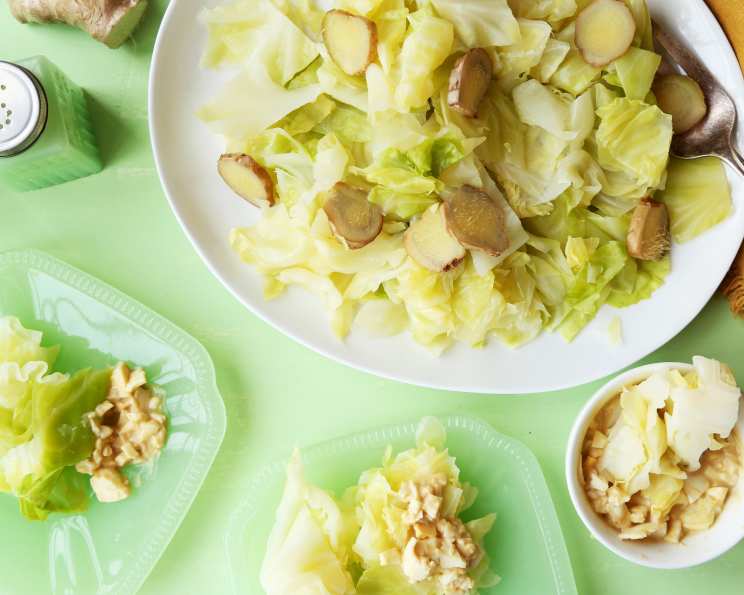
Vietnamese Boiled Cabbage with Egg and Fish Sauce
The memory is etched in my mind: steam rising from a simple white bowl, the pale green of the cabbage glistening faintly, and the unmistakable aroma of nước mắm. Growing up, my family didn’t have much, and my mother, a recent immigrant, was still learning the ropes of American cooking. Her culinary repertoire, born of necessity and a longing for home, was simple. While she mastered other dishes later, Vietnamese Boiled Cabbage (Bắp Cải Luộc) was a staple, a constant on our family table. It wasn’t fancy, but it was ours – a taste of Vietnam in a new world, a reminder of home in every bite. This dish represents comfort, simplicity, and the enduring power of food to connect us to our roots.
Recipe Overview
- Prep Time: 5 minutes
- Cook Time: 9 minutes
- Total Time: 14 minutes
- Servings: 4
- Dietary Type: Gluten-Free
Ingredients
- ½ large head of cabbage, chopped into large 2-inch squares
- 1 tablespoon fresh ginger (about 1-inch piece, cut into 1/8-inch thick slices, skin on or off)
- ½ teaspoon salt (optional)
Sauce
- 1 egg, hard-boiled
- 2 tablespoons fish sauce (to taste)
Equipment Needed
- Medium pot
- Small bowl
- Fork
Instructions
- In a medium pot, combine the chopped cabbage and sliced ginger. Add enough water to cover the cabbage. If desired, add salt.
- Bring the water to a boil over high heat. Once boiling, reduce the heat to a simmer.
- Cook the cabbage for approximately 4 minutes, or until it is cooked through but not too soft. You’ll know it’s ready when the color becomes slightly clear but the pieces still retain some firmness.
- Drain the pot of water (you can save the broth for soup, if desired!). Immediately fill the pot with cold water to stop the cooking process. This helps the cabbage retain its bright color and prevents it from becoming mushy.
- Drain the cabbage completely and transfer it to a serving dish.
- Garnish with the ginger slices. While they add visual appeal, they aren’t typically eaten.
- Prepare the sauce: Peel the hard-boiled egg and place it in a small bowl. Pour the fish sauce over the egg.
- Using a fork, mash the egg and fish sauce together, breaking the egg white into small pieces.
- To serve, dip pieces of the boiled cabbage into the sauce and enjoy.
Expert Tips & Tricks
- Don’t overcook the cabbage! The goal is for it to be tender-crisp, not mushy. Overcooked cabbage will lose its flavor and become unpleasant in texture.
- Using cold water to stop the cooking is crucial. This technique, known as blanching, helps preserve the vibrant green color of the cabbage and maintains its slightly crunchy texture.
- Adjust the amount of fish sauce in the sauce to your liking. Start with a small amount and add more until it reaches your desired level of saltiness and umami.
- If you are using the broth as a soup, be sure to taste and adjust the seasoning with additional fish sauce and a squeeze of fresh lime juice.
- For a spicier kick, add a few drops of your favorite hot sauce, such as Tabasco or Sriracha, to the broth or the dipping sauce.
- If you don’t have fresh ginger, you can use a pinch of ground ginger, but the flavor will be less vibrant.
- To ensure the egg is perfectly hard-boiled, place the egg in a saucepan and cover with cold water. Bring to a boil, then remove from heat, cover, and let sit for 10-12 minutes. Immediately transfer to an ice bath to stop the cooking.
Serving & Storage Suggestions
Vietnamese Boiled Cabbage is best served immediately after cooking. Arrange the boiled cabbage attractively in a serving dish and garnish with the ginger slices. Serve the egg and fish sauce mixture in a separate small bowl for dipping.
Leftovers can be stored in an airtight container in the refrigerator for up to 2 days. The cabbage may become slightly softer over time, but it will still be flavorful. Reheat gently in a microwave or on the stovetop before serving. The egg and fish sauce mixture should also be stored in the refrigerator and consumed within 2 days. It’s not recommended to freeze this dish as the texture of the cabbage will deteriorate upon thawing.
Nutritional Information
| Nutrient | Amount per Serving | % Daily Value |
|---|---|---|
| Calories | 61.2 kcal | N/A |
| Calories from Fat | 12 g | 20% |
| Total Fat | 1.4 g | 2% |
| Saturated Fat | 0.5 g | 2% |
| Cholesterol | 46.5 mg | 15% |
| Sodium | 752.6 mg | 31% |
| Total Carbohydrate | 9.7 g | 3% |
| Dietary Fiber | 3.9 g | 15% |
| Sugars | 5.4 g | N/A |
| Protein | 4 g | 8% |
Variations & Substitutions
- Vegetarian/Vegan: Omit the hard-boiled egg in the sauce. Instead, create a dipping sauce using soy sauce, a touch of sesame oil, and a squeeze of lime juice. You can also add a pinch of sugar for sweetness.
- Spicy: Add a finely chopped chili pepper to the dipping sauce for a spicy kick.
- Herbal: Add fresh herbs like cilantro or mint to the serving dish for added freshness and flavor.
- Broccoli or Bok Choy: Substitute cabbage with broccoli florets or bok choy for a different flavor and texture. Adjust cooking time accordingly. Broccoli may need slightly longer cooking time, while bok choy cooks very quickly.
FAQs (Frequently Asked Questions)
Q: Can I use pre-shredded cabbage for this recipe?
A: While you can, it’s best to chop the cabbage into larger chunks. Pre-shredded cabbage tends to become mushy when boiled.
Q: Is fish sauce essential for the sauce?
A: Fish sauce provides a unique umami flavor that’s characteristic of Vietnamese cuisine, but you can substitute it with soy sauce or tamari (for gluten-free) in a pinch. The flavor profile will be different, but still delicious.
Q: Can I make this dish ahead of time?
A: It’s best to serve this dish fresh. However, you can chop the cabbage in advance and store it in the refrigerator for up to 24 hours. Prepare the egg and fish sauce mixture right before serving.
Q: How can I make the broth more flavorful if I’m serving it as a soup?
A: Add a squeeze of fresh lime juice, a pinch of sugar, and additional fish sauce to taste. You can also add a few slices of chili pepper for heat.
Q: Can I use different types of cabbage?
A: Green cabbage is most commonly used, but you can also experiment with Napa cabbage or Savoy cabbage. The cooking time may vary slightly depending on the type of cabbage you use.
Final Thoughts
Vietnamese Boiled Cabbage is more than just a simple vegetable dish; it’s a testament to the beauty of simple flavors and the power of food to evoke memories. I encourage you to try this recipe and experience the comforting taste of Vietnamese home cooking. Feel free to adapt it to your own preferences and don’t hesitate to experiment with different variations. And please, share your creations and feedback! I’d love to hear how this simple dish brings a little taste of Vietnam to your table. Pair it with grilled pork chops or braised fish for a complete and satisfying meal. Chúc ngon miệng! (Bon appétit!)