
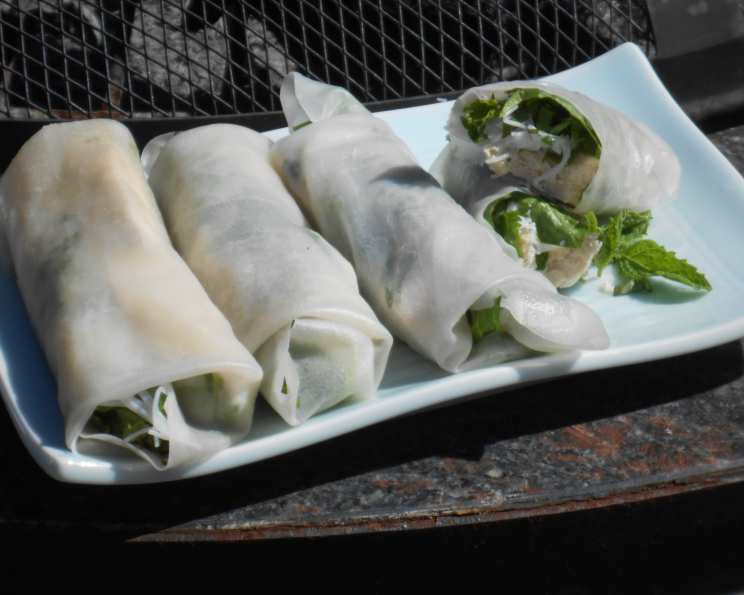
Vietnamese Fresh Spring Rolls: A Culinary Breath of Fresh Air
My first encounter with Vietnamese spring rolls wasn’t in a restaurant, but at a bustling farmer’s market, where the vibrant colors of the herbs and vegetables spilling out of the stalls mirrored the rolls themselves. A vendor, with a warm smile and nimble fingers, assembled these delicate bundles of flavor right before my eyes. The explosion of textures and tastes – the cool crunch of lettuce, the delicate sweetness of shrimp, the aromatic herbs – was unlike anything I’d ever experienced. From that day on, I was hooked, always seeking out ways to recreate that refreshing experience in my own kitchen.
Recipe Overview
- Prep Time: 30 minutes
- Cook Time: 5 minutes
- Total Time: 35 minutes
- Servings: 8
- Yield: 8 spring rolls
- Dietary Type: Gluten-Free, Dairy-Free
Ingredients
- 2 ounces rice vermicelli
- 8 rice paper sheets (8.5 inch diameter)
- 8 large cooked shrimp, peeled, deveined, and cut in half
- 1 1/3 tablespoons chopped fresh Thai basil
- 3 tablespoons chopped fresh mint leaves
- 3 tablespoons chopped fresh cilantro
- 2 leaves lettuce, chopped
- 4 teaspoons fish sauce
- 1/4 cup water
- 2 tablespoons fresh lime juice
- 1 garlic clove, minced
- 2 tablespoons white sugar
- 1/2 teaspoon chili-garlic sauce
- 3 tablespoons hoisin sauce
- 1 teaspoon finely chopped peanuts
Equipment Needed
- Medium saucepan
- Large bowl
- Small bowls
- Cutting board
- Knife
Instructions
-
Begin by cooking the rice vermicelli. Bring a medium saucepan of water to a boil over high heat. Add the rice vermicelli and boil for 3 to 5 minutes, or until al dente. Be careful not to overcook them, as they will become mushy. Once cooked, drain the vermicelli immediately in a colander and rinse with cold water to stop the cooking process. Set aside.
-
Prepare the rice paper wrappers. Fill a large bowl with warm water. The water should be warm enough to soften the rice paper, but not so hot that it burns your hands.
-
Now, you’re ready to assemble the spring rolls. Dip one rice paper sheet into the warm water for just 1 second to soften. Over-soaking will cause the wrapper to become too sticky and difficult to work with.
-
Lay the softened rice paper wrapper flat on a clean, dry surface, such as a cutting board.
-
Arrange the filling ingredients in a row across the center of the wrapper. Start with 2 shrimp halves, placing them cut-side up for a visually appealing presentation. Add a handful of the cooked rice vermicelli, followed by the chopped fresh Thai basil, mint leaves, cilantro, and lettuce. Leave about 2 inches uncovered on each side of the filling.
-
Folding is the key to a well-formed spring roll. Fold the uncovered sides of the wrapper inward, over the filling. Then, tightly roll up the wrapper, beginning at the end closest to you with the lettuce. Think of it like rolling a burrito, keeping everything snug as you go.
-
Repeat the process with the remaining rice paper sheets and filling ingredients until all the spring rolls are assembled.
-
Prepare the dipping sauces. In a small bowl, whisk together the fish sauce, water, lime juice, garlic, sugar, and chili-garlic sauce until the sugar is dissolved. Taste and adjust the seasoning as needed, adding more lime juice for tanginess or chili-garlic sauce for heat.
-
In another small bowl, combine the hoisin sauce and finely chopped peanuts. Stir well to incorporate the peanuts evenly.
-
Serve the rolled spring rolls immediately with both the fish sauce mixture and the hoisin sauce mixture for dipping.
Expert Tips & Tricks
- Don’t over-soak the rice paper: A quick dip is all it takes. Over-soaked wrappers are prone to tearing and sticking together.
- Keep your fillings dry: Excess moisture can make the rice paper soggy. Pat dry any wet ingredients like lettuce before adding them to the rolls.
- Roll tightly: A tightly rolled spring roll will hold its shape better and be easier to handle.
- Use fresh herbs: The herbs are a key component of the flavor, so use the freshest ones you can find.
- Make ahead: You can assemble the spring rolls a few hours in advance. Wrap them individually in damp paper towels and store them in an airtight container in the refrigerator to prevent them from drying out.
- Ingredient Prep: Prepare all your ingredients before you start assembling. This makes the whole process go much faster and smoother.
Serving & Storage Suggestions
Serve the fresh spring rolls immediately for the best flavor and texture. Arrange them artfully on a platter, accompanied by small bowls of both dipping sauces. A garnish of extra fresh herbs or a sprinkle of peanuts adds a nice visual touch.
If you have leftovers, store them in an airtight container lined with damp paper towels in the refrigerator. They are best consumed within 1-2 days, as the rice paper can become sticky over time. Avoid freezing the spring rolls, as the rice paper will become brittle and the fillings will lose their texture.
Nutritional Information
| Nutrient | Amount per Serving | % Daily Value |
|---|---|---|
| Calories | 64.5 kcal | N/A |
| Calories from Fat | 5 g | 9% |
| Total Fat | 0.7 g | 1% |
| Saturated Fat | 0.1 g | 0% |
| Cholesterol | 11.8 mg | 3% |
| Sodium | 398.4 mg | 16% |
| Total Carbohydrate | 12.6 g | 4% |
| Dietary Fiber | 0.4 g | 1% |
| Sugars | 5 g | 19% |
| Protein | 2.1 g | 4% |
Note: Nutritional information is an estimate and can vary based on specific ingredients and portion sizes.
Variations & Substitutions
- Vegetarian/Vegan: Substitute the shrimp with firm tofu, sautéed mushrooms, or julienned carrots for a delicious vegetarian or vegan option. Ensure your hoisin sauce is vegan-friendly.
- Protein Power: Add cooked chicken, pork, or beef for a heartier spring roll.
- Spice It Up: Increase the amount of chili-garlic sauce in the fish sauce mixture for a spicier kick. You could also add a pinch of red pepper flakes to the filling.
- Herb Variations: Experiment with different herbs such as perilla leaves or Vietnamese coriander for unique flavor profiles.
- Peanut-Free: Omit the peanuts from the hoisin sauce or substitute with toasted sesame seeds.
- Sauce Swaps: Try a peanut sauce, a sweet chili sauce, or a tangy tamarind sauce instead of, or in addition to, the provided sauces.
FAQs (Frequently Asked Questions)
Q: My rice paper keeps tearing. What am I doing wrong?
A: You’re likely either over-soaking the rice paper or using water that’s too hot. Dip the rice paper in warm water for only 1 second and ensure the water is not scalding.
Q: Can I make these spring rolls ahead of time?
A: Yes, you can assemble the spring rolls a few hours in advance. Wrap them individually in damp paper towels and store them in an airtight container in the refrigerator.
Q: What can I use if I don’t have fish sauce?
A: If you don’t have fish sauce, you can substitute with soy sauce or tamari, but the flavor will be slightly different. Consider adding a squeeze of lime juice to mimic the tanginess of fish sauce.
Q: Can I freeze these spring rolls?
A: Freezing is not recommended as the rice paper wrappers become brittle and the fillings can lose their texture.
Q: How do I prevent the spring rolls from sticking together?
A: Make sure to wrap each spring roll tightly and avoid overfilling them. Storing them individually wrapped in damp paper towels also helps.
Final Thoughts
Vietnamese Fresh Spring Rolls are more than just a dish; they’re an experience. The vibrant flavors, the satisfying textures, and the visual appeal make them a perfect appetizer, light lunch, or refreshing snack. Don’t be intimidated by the rolling process – with a little practice, you’ll be creating these delicious bundles of goodness in no time. So, gather your ingredients, invite some friends over, and embark on a culinary adventure that will transport you to the bustling streets of Vietnam. I encourage you to experiment with different fillings and sauces to create your own signature spring roll recipe. And, as always, I’d love to hear your feedback and see your creations!