
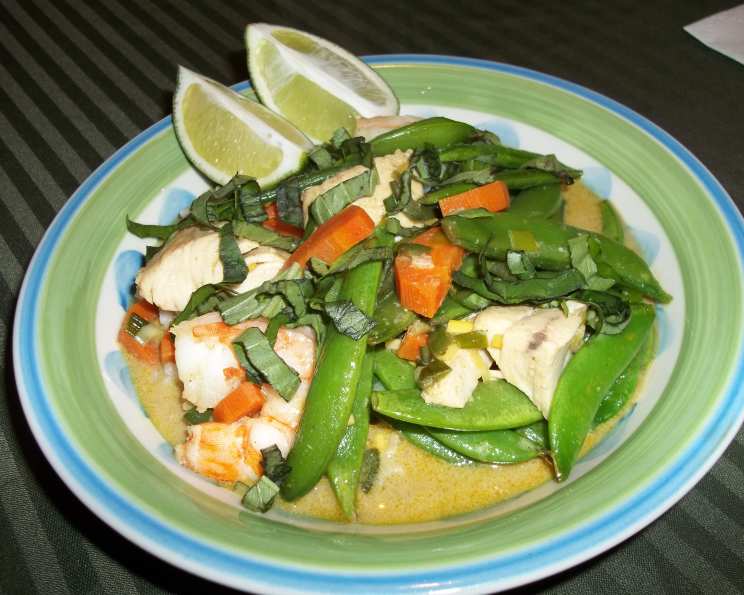
Vietnamese Seafood Curry: A Symphony of Flavors
The first time I tasted Vietnamese seafood curry, it was at a tiny, unassuming restaurant tucked away in a bustling district of Hanoi. The air hummed with the sounds of sizzling woks and animated conversations. I remember the aroma – an intoxicating blend of lemongrass, chilies, and the sweet, creamy scent of coconut milk. Each spoonful was an explosion of textures and tastes: tender fish, succulent prawns, crisp sugar snap peas, all bathed in a fragrant, slightly spicy broth. It was a revelation, a dish that transported me to a sun-drenched coastline, and it sparked a lifelong love affair with Vietnamese cuisine. Now, years later, I’m thrilled to share my version of this culinary masterpiece with you.
Recipe Overview
- Prep Time: 15 minutes
- Cook Time: 20 minutes
- Total Time: 35 minutes
- Servings: 4
- Dietary Type: Gluten-Free (if using gluten-free curry powder and fish sauce)
Ingredients
- 8 teaspoons vegetable oil
- 2 garlic cloves, finely chopped
- 2 green onions, thinly sliced
- 1 small carrot, halved lengthways, thinly sliced on the diagonal
- 2 lemongrass stalks, white part only, finely chopped
- 2 small red chilies, seeded, finely chopped
- 2 teaspoons mild Indian curry powder (gluten-free if required for diet)
- 1 cup coconut milk
- 1 tablespoon fish sauce (gluten-free if required for diet)
- 750 g firm-fleshed white boneless fish fillets, cut into 6cm pieces
- 750 g medium green king prawns, peeled, deveined, leaving tails intact
- 300 g sugar snap peas, trimmed (or 300 g snow peas)
- ½ cup Thai basil (use regular basil if Thai basil not available)
- Steamed jasmine rice and lime wedges, to serve
Equipment Needed
- Heavy-based saucepan
- Knife
- Cutting board
- Measuring spoons and cups
Instructions
-
Heat the vegetable oil in a heavy-based saucepan over medium heat. Ensure the saucepan is large enough to accommodate all the ingredients.
-
Add the garlic, green onions, and carrot to the hot oil and cook, stirring frequently, for 1-2 minutes, or until the vegetables begin to soften and become fragrant. Be careful not to burn the garlic; lower the heat if necessary.
-
Incorporate the lemongrass, chilies, and curry powder into the saucepan. Cook, stirring constantly, for 3 minutes, or until the spices release their aromatic oils and the curry powder is fragrant. This step is crucial for building the depth of flavor in the curry.
-
Pour in the coconut milk, 1 cup of water, and the fish sauce into the pan. Stir well to combine all the ingredients. Bring the mixture to a simmer.
-
Gently add the fish pieces to the simmering curry. Reduce the heat to low, partially cover the saucepan, and simmer gently for 3 minutes. Avoid stirring too vigorously, as this can cause the fish to break apart.
-
Introduce the prawns and sugar snap peas (or snow peas) to the pan. Stir gently to distribute the seafood and vegetables evenly. Continue to simmer, partially covered, for an additional 2 minutes, or until the prawns turn pink and opaque and the seafood is cooked through. Ensure the internal temperature of the fish reaches 145°F (63°C).
-
Remove the saucepan from the heat. Stir in the Thai basil. The basil will wilt slightly, infusing the curry with its distinctive aroma.
-
Serve immediately, scattered with extra basil leaves, alongside freshly steamed jasmine rice and lime wedges. The lime juice adds a bright, acidic counterpoint to the richness of the curry.
Expert Tips & Tricks
- Spice Level Adjustment: For a milder curry, ensure the chilies are thoroughly seeded and deveined. For a spicier kick, leave the seeds in or add a pinch of cayenne pepper.
- Seafood Selection: Use the freshest seafood possible. If fresh prawns are unavailable, frozen prawns can be used, but ensure they are fully thawed before adding them to the curry. Other fish options include cod, haddock, or snapper.
- Aromatic Enhancement: For a more intense lemongrass flavor, bruise the lemongrass stalks before chopping them. This releases more of the essential oils.
- Vegetable Variation: Feel free to add other vegetables such as bell peppers, mushrooms, or bamboo shoots to the curry. Adjust the cooking time accordingly.
- Make-Ahead Tip: The curry base (without the seafood) can be prepared a day ahead. Store it in the refrigerator and add the seafood just before serving.
Serving & Storage Suggestions
Serve the Vietnamese seafood curry hot, garnished with fresh Thai basil leaves and accompanied by steamed jasmine rice. A squeeze of fresh lime juice adds a vibrant touch. Leftovers can be stored in an airtight container in the refrigerator for up to 2 days. To reheat, gently warm the curry in a saucepan over medium-low heat, stirring occasionally. Avoid overheating, as this can make the seafood tough. Freezing is not recommended as it affects the texture of the seafood.
Nutritional Information
| Nutrient | Amount per Serving | % Daily Value |
|---|---|---|
| Calories | 528 kcal | N/A |
| Total Fat | 23.5g | 36% |
| Saturated Fat | 12.9g | 64% |
| Cholesterol | 236.2mg | 78% |
| Sodium | 1454.8mg | 60% |
| Total Carbohydrate | 52.1g | 17% |
| Dietary Fiber | 3.9g | 15% |
| Sugars | 41.5g | N/A |
| Protein | 29.1g | 58% |
Note: Nutritional information is an estimate and may vary based on specific ingredients and portion sizes.
Variations & Substitutions
- Vegetarian/Vegan Option: Substitute the fish and prawns with firm tofu or a mix of vegetables like eggplant, mushrooms, and bell peppers. Use vegetable broth instead of fish sauce, or a vegan fish sauce alternative.
- Gluten-Free: Ensure the curry powder and fish sauce used are certified gluten-free.
- Creamier Curry: Add an extra half cup of coconut milk for a richer, creamier curry.
- Spicier Curry: Add a pinch of cayenne pepper or a few drops of chili oil for extra heat.
- Seasonal Adaptation: In the winter, consider adding hearty root vegetables like sweet potatoes or parsnips. In the summer, zucchini or yellow squash would be a delightful addition.
FAQs (Frequently Asked Questions)
Q: Can I use frozen fish for this recipe?
A: Yes, you can use frozen fish, but ensure it is fully thawed before cooking. Pat it dry to remove excess moisture, which can dilute the flavor of the curry.
Q: What can I substitute for fish sauce?
A: If you don’t have fish sauce, you can use soy sauce or tamari (for a gluten-free option) as a substitute, but it will slightly alter the flavor profile. Start with half the amount and adjust to taste.
Q: Can I make this curry in a slow cooker?
A: While not ideal, you can adapt this recipe for a slow cooker. Sauté the garlic, green onions, carrot, lemongrass, chilies, and curry powder in a skillet first, then transfer them to the slow cooker with the coconut milk, water, and fish sauce. Cook on low for 3-4 hours, then add the fish, prawns, and peas during the last 30 minutes of cooking.
Q: How do I prevent the fish from overcooking?
A: The key is to add the fish towards the end of the cooking process and simmer gently. Overcooked fish can become dry and rubbery.
Q: Can I use regular basil instead of Thai basil?
A: Yes, you can use regular basil if Thai basil is unavailable. However, Thai basil has a more distinct anise-like flavor that complements the curry beautifully.
Final Thoughts
Vietnamese Seafood Curry is more than just a dish; it’s an experience, a journey for your taste buds. The vibrant flavors, the delicate balance of sweet, spicy, and savory, and the tender seafood create a symphony of sensations that will leave you craving more. So, gather your ingredients, follow the steps, and prepare to be transported to the sun-kissed shores of Vietnam. Don’t be afraid to experiment with variations to suit your personal preferences. And most importantly, share this delicious creation with friends and family – good food is always best enjoyed in good company. Chúc ngon miệng! (Enjoy your meal!)