
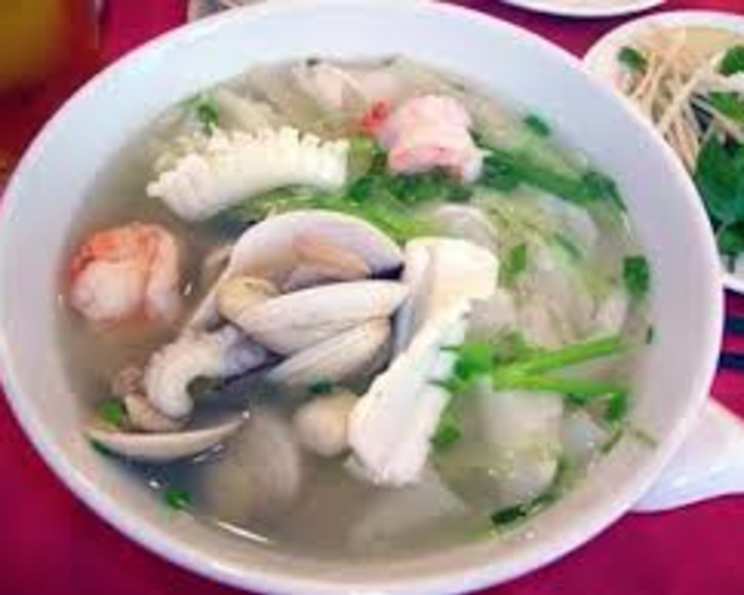
Vietnamese Seafood Pho (Pho Hai San): A Taste of the Coast
The aroma of pho, that deeply savory and comforting noodle soup, always transports me back to the bustling streets of Hanoi. While beef pho reigns supreme in many minds, it was a tiny, unassuming stall near the coast that truly captured my heart. There, I discovered pho hai san – seafood pho. The broth, infused with the sweet essence of shrimp, the delicate saltiness of the sea, and the warmth of aromatic spices, was a revelation. It was a symphony of flavors that danced on my tongue, a reminder of the boundless possibilities within Vietnamese cuisine. Today, I’m thrilled to share my version of this coastal treasure with you.
Recipe Overview
- Prep Time: 30 minutes
- Cook Time: 1 hour
- Total Time: 1 hour 30 minutes
- Servings: 4
- Dietary Type: Varies (see Variations & Substitutions)
Ingredients
- 1 ½ liters vegetable stock
- 1 onion, sliced
- 500 g pho noodles (banh pho)
- 2 tablespoons coriander, chopped fresh
- 300 g shrimp, peeled and deveined
- 300 g cuttlefish, cleaned and sliced
- 300 g white fish fillets, such as cod or tilapia, sliced (optional) or 300 g basil clams (optional)
- 50 g field mushrooms, sliced
- 2 tablespoons chopped fresh coriander, for garnish
- 1 black cardamom pod
- 2 green cardamom pods
- 1 cinnamon stick
- 2 star anise
- 1 teaspoon coriander seeds
- 1 teaspoon sea salt, or to taste
- ½ teaspoon fennel seeds
- 2 cloves
- Chicken bones (optional, for richer broth)
Equipment Needed
- Large stockpot
- Slotted spoon
- Large bowls
Instructions
-
Prepare the Seafood: Begin by hard boiling the shrimp. Once cooked, remove the shells and set aside. Clean and slice the cuttlefish into bite-sized pieces. If using, slice the white fish fillets into thin pieces as well. If you prefer basil clams, scrub them clean and set them aside.
-
Infuse the Broth: In a large stockpot, bring the vegetable stock to a boil. Add the reserved water from boiling the seafood (this intensifies the seafood flavor). If desired, add chicken bones for a richer, more complex broth. Char the sliced onion over an open flame or in a dry pan until slightly blackened; this adds a smoky depth to the broth. Add the charred onion and sliced field mushrooms to the boiling stock.
-
Spice the Broth: Add the black cardamom pod, green cardamom pods, cinnamon stick, star anise, coriander seeds, sea salt, fennel seeds, and cloves to the broth. Reduce the heat to low and simmer for at least 40 minutes, or up to 1 hour, allowing the spices to fully infuse the broth. The longer it simmers, the more flavorful it will become.
-
Prepare the Noodles: While the broth simmers, prepare the pho noodles. Submerge the banh pho in boiling water for a few seconds, just until they are soft and pliable. Be careful not to overcook them, as they will become mushy. Drain the noodles thoroughly.
-
Assemble the Pho: Divide the cooked pho noodles among deep bowls. Ladle the hot, fragrant broth over the noodles. Arrange the cooked shrimp, cuttlefish, and white fish (or basil clams) on top of the noodles.
-
Garnish and Serve: Garnish generously with chopped fresh coriander and sliced onions. Serve immediately and enjoy!
Expert Tips & Tricks
- Broth Depth: For an even more intense seafood flavor, consider using shrimp shells to make a quick shrimp stock. Simply sauté the shells with a little oil and then simmer them in water for about 20 minutes before straining and adding the resulting stock to the vegetable stock.
- Spice Adjustment: Adjust the amount of spices according to your preference. If you prefer a milder flavor, reduce the amount of star anise or cloves. For a spicier broth, add a pinch of red pepper flakes.
- Seafood Freshness: Fresh seafood is key to a delicious pho hai san. Choose seafood that is firm, smells fresh, and has a vibrant color.
- Noodle Perfection: To prevent the noodles from sticking together, toss them with a small amount of oil after draining.
- Broth Clarity: For a crystal-clear broth, strain it through a fine-mesh sieve or cheesecloth before serving.
Serving & Storage Suggestions
Serve Vietnamese Seafood Pho immediately for the best flavor and texture. The hot broth will continue to cook the seafood slightly, ensuring it’s perfectly tender.
Leftovers can be stored separately. Keep the broth in an airtight container in the refrigerator for up to 2 days. Store the cooked noodles and seafood separately in airtight containers in the refrigerator for up to 1 day. To reheat, bring the broth to a simmer on the stovetop. Add the noodles and seafood to the broth and heat through. Garnish with fresh coriander and onions before serving.
Avoid freezing the noodles, as they tend to become mushy when thawed. Freezing the broth is possible; however, the texture may change slightly upon thawing.
Nutritional Information
Note: Nutritional information is an estimate and may vary based on specific ingredients and portion sizes.
| Nutrient | Amount per Serving | % Daily Value |
|---|---|---|
| Calories | 450 kcal | 23% |
| Total Fat | 10g | 15% |
| Saturated Fat | 2g | 10% |
| Cholesterol | 150mg | 50% |
| Sodium | 800mg | 35% |
| Total Carbohydrate | 60g | 20% |
| Dietary Fiber | 5g | 20% |
| Sugars | 5g | – |
| Protein | 30g | 60% |
Variations & Substitutions
- Gluten-Free: Ensure the vegetable stock and pho noodles are gluten-free. Rice noodles are naturally gluten-free.
- Vegetarian/Vegan: Substitute the seafood with tofu or other plant-based protein. Use a mushroom-based broth for a deeper umami flavor.
- Spicy Pho: Add a sliced chili pepper or a spoonful of chili garlic sauce to the broth for extra heat.
- Herbs: Experiment with different herbs such as Thai basil, mint, or cilantro to customize the flavor profile.
- Regional Variations: In some coastal regions of Vietnam, crab or lobster might be added to pho hai san. Feel free to incorporate your favorite seafood!
FAQs (Frequently Asked Questions)
Q: Can I use frozen seafood for this recipe?
A: Yes, you can use frozen seafood. Make sure to thaw it completely before cooking. Pat the seafood dry to remove excess moisture before adding it to the pho.
Q: How can I make the broth more flavorful?
A: Roasting the spices before adding them to the broth can enhance their flavor. Toast them in a dry pan over medium heat until fragrant. Also, simmering chicken bones with the broth adds richness.
Q: Can I make this pho ahead of time?
A: The broth can be made ahead of time and stored in the refrigerator for up to 2 days. Cook the noodles and seafood just before serving to prevent them from becoming overcooked.
Q: What if I can’t find field mushrooms?
A: You can substitute field mushrooms with other varieties of mushrooms such as shiitake, oyster, or cremini mushrooms.
Q: Is it necessary to char the onion?
A: Charring the onion adds a smoky flavor to the broth, but it’s not essential. If you prefer, you can skip this step or simply sauté the onion until softened.
Final Thoughts
Vietnamese Seafood Pho is more than just a soup; it’s an experience. It’s a celebration of fresh ingredients, aromatic spices, and the vibrant flavors of Vietnam. I encourage you to try this recipe and let the flavors transport you to the bustling streets of a coastal town. Feel free to experiment with different seafood and herbs to create your own unique version. And most importantly, don’t be afraid to share your culinary creations with friends and family. Bon appétit!