
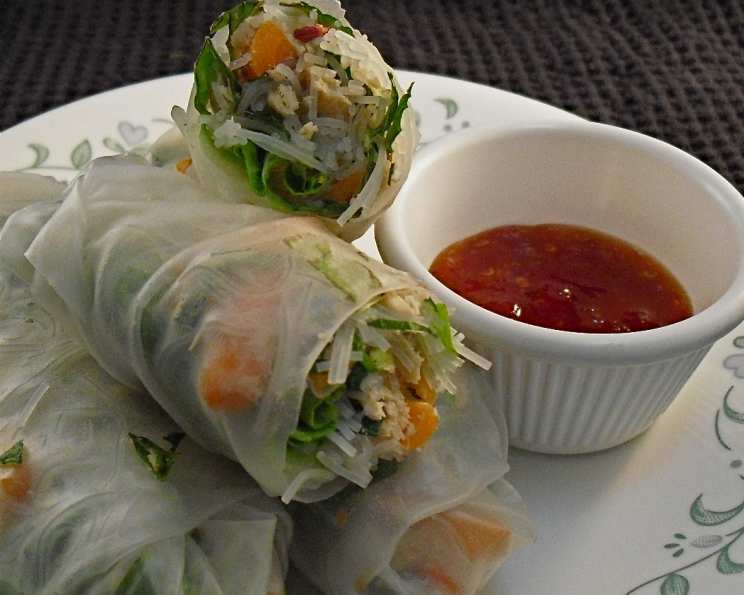
Vietnamese-Style Fresh Spring Rolls With Salmon
The first time I had a fresh spring roll, I was wandering through a bustling market in Hanoi. The air was thick with the smells of spices and grilling meats, but then I saw it – a vendor meticulously assembling delicate rolls filled with vibrant greens and translucent noodles. She handed me one, and the explosion of freshness was unlike anything I’d ever tasted. The cool rice paper, the crisp herbs, the delicate sweetness of the shrimp (or in this case, salmon!), all harmonized perfectly. It was an instant love affair, and I’ve been recreating that taste of Vietnam ever since.
Recipe Overview
- Prep Time: 20 minutes
- Cook Time: 5 minutes
- Total Time: 25 minutes
- Servings: 5
- Dietary Type: Gluten-Free
Ingredients
- 5 (8 inch) rice paper sheets (banh trang)
- ½ cup fresh cilantro or ½ cup fresh basil sprigs, loosely packed
- 1 cup fresh mint leaves, loosely packed
- 4 leaves crisp green lettuce, sliced (remove ribs)
- 1 large carrot, shredded
- 2 ounces rice vermicelli
- 2 ounces cooked salmon (flaked gently into small pieces) or 2 ounces canned salmon (flaked gently into small pieces)
Equipment Needed
- Saucepan
- Colander
- Pie pan or wide pot (wider than 8″ in diameter)
- Sharp, serrated knife
- Cutting board
Instructions
- Begin by cooking the rice vermicelli. Bring a quart of water to a boil in a saucepan.
- Turn off the heat and submerge the vermicelli noodles in the hot water. Soak for 3-5 minutes, or until the noodles are tender. Check them frequently to avoid overcooking, which can make them gummy.
- Once tender, immediately rinse the noodles with cold water in a colander to stop the cooking process. Drain the noodles thoroughly.
- Prepare the rice paper wrappers. Fill a pie pan or pot that is wider than 8 inches in diameter with hot water. The water should be hot enough to soften the rice paper, but not so hot that it burns your hands.
- Carefully remove one rice paper wrapper from the package and submerge it in the hot water. Let it soak until it’s soft and pliable. Don’t oversoak it, as it will become too sticky and difficult to handle. For easier handling, it’s okay if parts of the sheet remain a little bit stiff, especially those of the hatch marks that are in the design of most rice papers.
- Remove the softened rice paper from the water very carefully. It will be delicate and prone to tearing.
- Place the rice paper wrapper on a smooth, dry surface. This is crucial, as rice paper wrappers can stick to wooden surfaces. Ceramic, plastic, or glass surfaces work best.
- Now, it’s time to assemble the spring roll. Take 1/5 of the cooked noodles and arrange them lengthwise about 1 inch from the bottom edge of the wrapper. Leave 1-2 inches of the wrapper uncovered on the sides.
- Add your other fillings on top of the noodles. Arrange the mint, cilantro or basil, lettuce, and 1/5 of the flaked salmon as separate layers on top of the vermicelli.
- Begin the rolling process. Pull the bottom edge of the wrapper up and over the filling.
- Next, fold both sides of the wrapper inwards to cover the edges of the filling, creating a closed end.
- Continue rolling the spring roll, tucking the filling in towards you with your fingers as you go. Roll tightly so that the roll remains firm, but be careful not to over-tighten and rip the rice paper.
- Once the spring roll is complete, carefully move it to a cutting board.
- Using a sharp, serrated knife, cut the spring roll in half diagonally. This makes it easier to eat and also shows off the colorful filling inside.
- Repeat these steps with the remainder of the ingredients until all the rolls are assembled.
- Serve immediately with your favorite sweet and spicy peanut dipping sauce.
Expert Tips & Tricks
- Rice Paper Selection: Ensure you are using rice spring roll papers and not eggroll or wonton wrappers. Look for “Banh Trang” on the package.
- Salmon Preparation: Using leftover baked salmon is a great way to reduce food waste and adds a lovely depth of flavor, especially if it was prepared with herbs like cilantro. You can also use canned salmon for convenience. Ensure any bones are removed before flaking the salmon.
- Herb Placement: Layering the herbs carefully will maximize their flavor in each bite. Don’t be afraid to use generous amounts of mint and cilantro!
- Rolling Technique: The key to a tight roll is to tuck and pull gently as you roll. This ensures that the filling is secure and the roll doesn’t fall apart. Practice makes perfect!
- Preventing Sticking: If the spring rolls start to stick together, lightly brush them with a bit of oil or place a sheet of parchment paper between them.
Serving & Storage Suggestions
Serve these fresh spring rolls immediately for the best texture and flavor. They are a perfect light lunch, appetizer, or snack. A classic accompaniment is a sweet and spicy peanut dipping sauce. You can also serve them with hoisin sauce or a Vietnamese dipping sauce called nuoc cham.
If you have leftover spring rolls, store them in an airtight container in the refrigerator. They are best consumed within 24 hours, as the rice paper can become sticky and the herbs can wilt. It’s generally not recommended to freeze fresh spring rolls, as the texture of the rice paper will deteriorate upon thawing.
Nutritional Information
| Nutrient | Amount per Serving | % Daily Value |
|---|---|---|
| Calories | 69 kcal | 3% |
| Total Fat | 1g | 1% |
| Saturated Fat | 0g | 0% |
| Cholesterol | 8mg | 2% |
| Sodium | 44mg | 2% |
| Total Carbohydrate | 12g | 4% |
| Dietary Fiber | 1g | 4% |
| Sugars | 1g | – |
| Protein | 4g | 8% |
Note: Nutritional information is an estimate and can vary based on specific ingredients and preparation methods.
Variations & Substitutions
- Vegetarian Spring Rolls: Omit the salmon and add extra shredded carrots, cucumber, or bean sprouts for a vegetarian version. You can also use firm tofu cut into thin strips.
- Shrimp Spring Rolls: Replace the salmon with cooked shrimp.
- Chicken Spring Rolls: Use shredded cooked chicken instead of salmon.
- Herbs: Experiment with different herbs like Thai basil or perilla leaves for a unique flavor profile.
- Dipping Sauce: Instead of peanut sauce, try a Vietnamese nuoc cham dipping sauce, made with fish sauce, lime juice, sugar, and chili.
FAQs (Frequently Asked Questions)
Q: Why is my rice paper tearing when I try to roll the spring rolls?
A: The rice paper may be oversoaked. Try soaking it for a shorter amount of time, leaving it slightly stiff. Also, make sure your rolling surface is smooth and dry.
Q: How can I prevent the spring rolls from sticking together?
A: Lightly brush the finished spring rolls with a tiny bit of oil or place a sheet of parchment paper between them when storing.
Q: Can I make these ahead of time?
A: While best served immediately, you can prepare the fillings in advance. Store the cooked noodles, vegetables, and salmon separately in airtight containers in the refrigerator. Assemble the spring rolls just before serving.
Q: Where can I find rice paper wrappers?
A: Rice paper wrappers are available at most Asian supermarkets and some well-stocked grocery stores. Look for “Banh Trang.”
Q: What if I don’t like cilantro?
A: You can substitute it with more basil or mint, or simply omit it. The spring rolls will still be delicious!
Final Thoughts
These Vietnamese-style fresh spring rolls with salmon are a delightful and healthy way to enjoy a taste of Southeast Asia. Don’t be intimidated by the rolling process – with a little practice, you’ll be whipping up these refreshing rolls in no time. Feel free to experiment with different fillings and dipping sauces to create your own signature version. I encourage you to give this recipe a try and share your feedback! They pair beautifully with a crisp, cold glass of Sauvignon Blanc or a light Vietnamese beer. Enjoy the journey of flavor!